Newsletter Subscribe
Enter your email address below and subscribe to our newsletter
[forminator_form id="25163"]

All voices matter
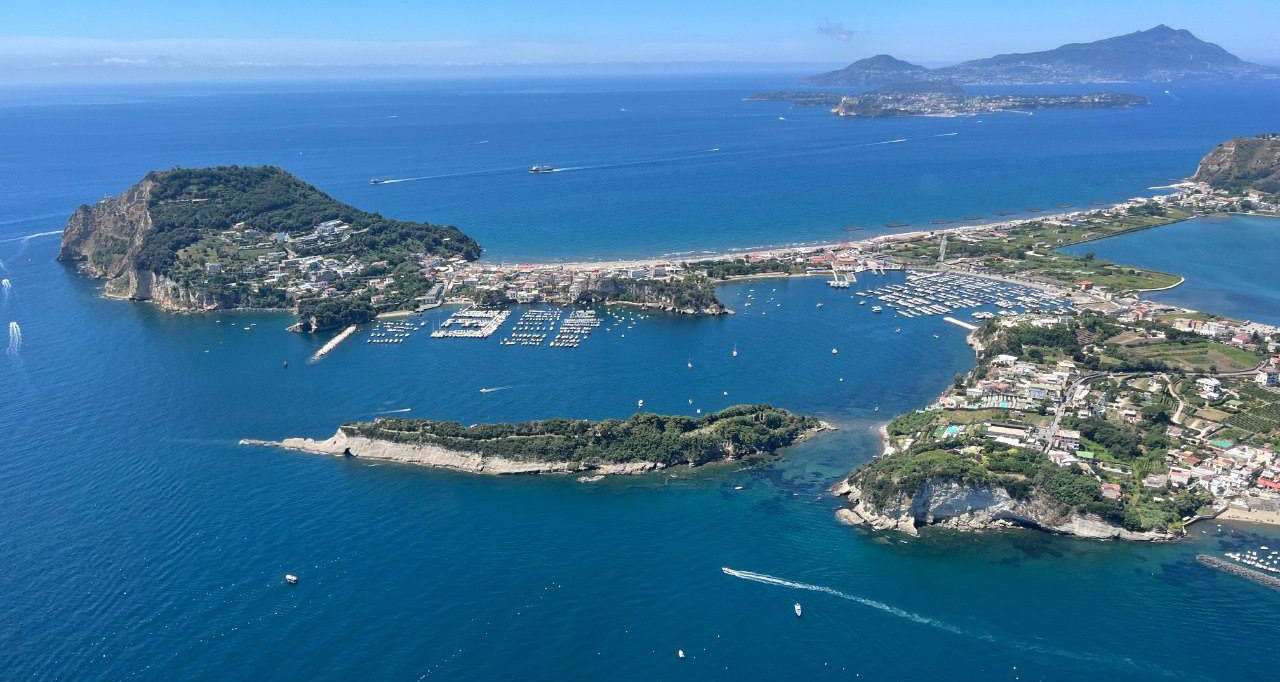
greekreporter+1.greekreporter+1.archaeology+1.greekreporter+1.greekreporter+1.Underwater archaeologists have discovered a remarkable Roman-era breakwater at the ancient port of Misenum near Bacoli, Italy, revealing how Imperial engineers ingeniously repurposed architectural fragments, columns, and sculptural elements to create a 295-foot-long protective barrier that shielded the Roman Empire's most powerful naval fleet from fierce Sirocco winds.
Portus Iulius was the first harbor specifically constructed to serve as a base for the Roman western naval fleet, known as the classis Misenensis. Created during the civil wars in 39-36 BC under Octavian (later Augustus), the harbor's ingenious design was masterminded by Marcus Agrippa and his architect Cocceius. The complex engineering feat connected Lake Avernus to Lake Lucrinus via a canal, with a second hidden canal linking Lake Lucrino to the sea—creating a sheltered, secret naval base invisible from surrounding waters. This strategic invisibility allowed Rome to build and train a fleet away from the prying eyes of Sextus Pompeius, who had been disrupting Italy's vital grain supply routes.wikipedia+1
The harbor featured impressive defensive infrastructure, including a long sea wall from Punta dell'Epitaffio to Punta Caruso along Lake Lucrinus, which accommodated the Via Herculanea. The outer harbor behind Cape Misenum likely housed active vessels and provided training space, while the inner harbor served the reserve fleet and repair operations. Additionally, a 1-kilometer-long underground passage called Grotta di Cocceio connected Lake Avernus to Cumae, wide enough for chariots to pass through. Though Portus Iulius eventually became unsuitable for military purposes due to seismic activity—necessitating the construction of a new harbor at Misenum—it continued to thrive as a prosperous civilian port and suburb of Puteoli.x+2
The Romans demonstrated remarkable ingenuity in their marble engineering techniques, particularly in how they recycled and repurposed this valuable material. Rather than using solid marble blocks for all construction, they perfected the technique of "mouldable" marbles by mixing marble dust with lime mortars to create panels that could be plastered onto other surfaces like walls and pillar cores. This approach gave the appearance of solid marble while significantly reducing weight and cost. Different marble dusts were cleverly combined to mimic various types of marble, allowing for aesthetic versatility without the expense of quarrying rare varieties.reddit
For larger marble elements, Roman engineers employed sophisticated extraction and cutting methods. They used a "panel" technique that involved cutting deep holes in stone and inserting metal chisels to separate uniform blocks from mountains. Once extracted, water-powered sawmills were used to cut thin slabs approximately 5/8 inch thick, with material loss during production less than 30% – remarkably efficient even by modern standards. These slabs were often transported whole to construction sites for final cutting and polishing, reducing breakage to around 5%. The practice of using thin marble veneers as cladding over less expensive stone became widespread, allowing the Romans to create visually stunning structures while economizing on this precious resource.cmpstone+1
The ancient Romans designed their breakwater at Misenum specifically to counter the Sirocco winds, powerful southeasterly Mediterranean currents that posed significant threats to naval operations. This strategic barrier wasn't merely a passive structure but an engineered response to specific meteorological challenges. The breakwater's intentional placement between Punta Terone and Punta Pennata created a protective shield for the harbor, functioning remarkably similar to modern maritime barriers.arkeonews+1
Archaeological evidence reveals sophisticated design considerations in these wind protection systems:
archaeologymagarkeonewsarchaeologymaggreekreporter