Newsletter Subscribe
Enter your email address below and subscribe to our newsletter
[forminator_form id="25163"]

All voices matter
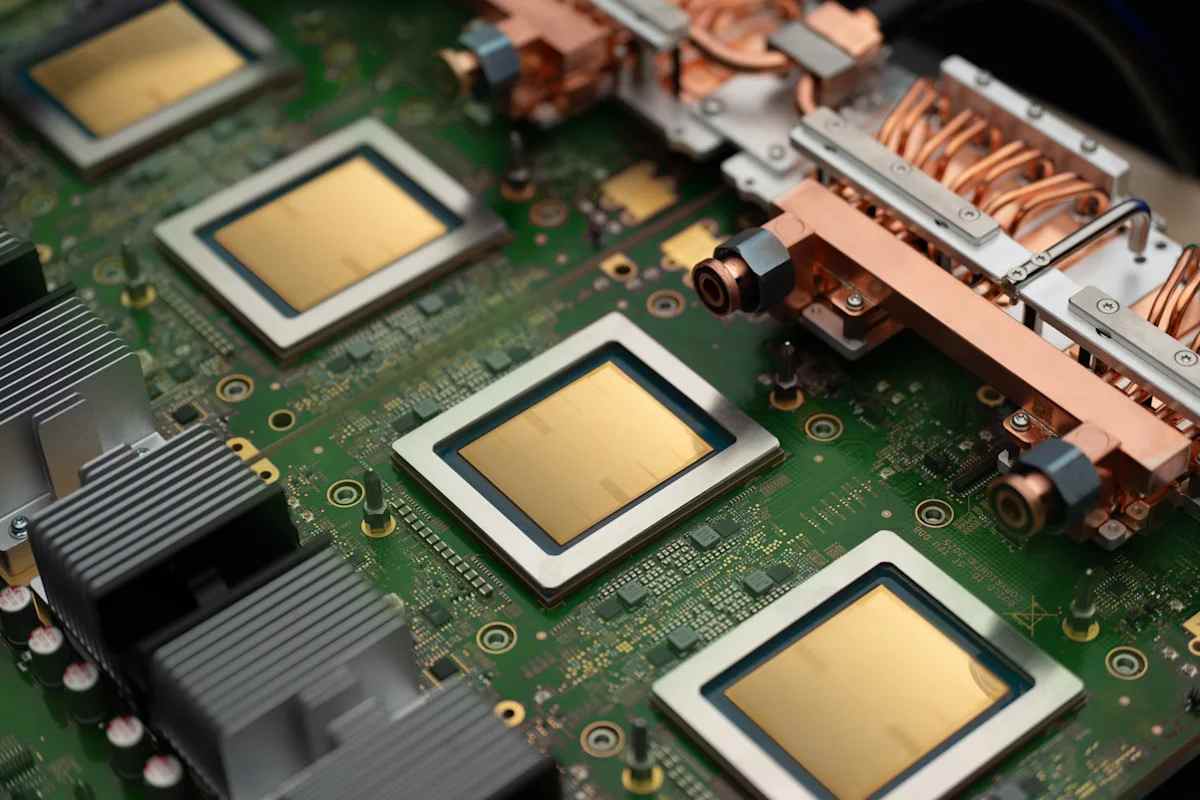
tomshardwarefirstpostxGoogle Alphabet Inc. has reportedly enlisted AMD Advanced Micro Devices, Inc. to help develop one of its 10th-generation Tensor Processing Units, a collaboration that would mark AMD's first major involvement in a custom AI accelerator project and signal a shift toward CPU-heavy chip designs tailored for reinforcement learning workloads.
The partnership was disclosed in a client note from semiconductor research firm SemiAnalysis, first surfacing publicly on August 14. "Market chatter suggests [Google] is working with AMD on a TPU project in the v10 generation," the note reads, as cited by Tom's Hardware. Analysts believe AMD's appeal lies in its CPU intellectual property, advanced packaging expertise, and experience building hybrid designs that combine x86 processors with AI accelerators on a single package.tomshardware
Google has developed nine generations of TPUs with Broadcom serving as the primary silicon designer and holds a long-term supply agreement with Broadcom extending through at least 2031. Given that depth of in-house accelerator expertise, analysts consider it unlikely that AMD would design a conventional training or inference TPU. Instead, Google appears to be exploring a new variant — one that places general-purpose CPU cores directly alongside tensor compute chiplets within the same package.firstpost+2
The rationale centers on reinforcement learning and agentic AI workloads, which demand more general-purpose compute than standard large language model training. Google has already been increasing CPU resources around its latest chips: TPU 8i systems pair one Google Axion CPU with every two TPUs, double the ratio used with seventh-generation hardware. SemiAnalysis suggests that in some configurations a 1:1 CPU-to-accelerator ratio may be optimal.tomshardware
AMD's Instinct MI300A, which integrates x86 and accelerator chiplets in a single package, provides a direct precedent for the kind of hybrid design Google may be pursuing.firstpost
If confirmed, the collaboration would expand AMD's AI business beyond its Instinct GPU line and its custom work with Meta, giving it a foothold in the fast-growing custom ASIC segment. Analyst Patrick Moorhead noted on social media that any AMD-Google chip "HAS to integrate either GPU and/or CPU" rather than follow a conventional TPU architecture. The nature and scope of AMD's role remain unclear, and both companies have not publicly commented. What may matter most is not the partnership itself but the underlying bet: that the next generation of AI workloads will require far more CPU horsepower than the industry has so far assumed.techpowerup+1