


Newsletter Subscribe
Enter your email address below and subscribe to our newsletter
[forminator_form id="25163"]

All voices matter
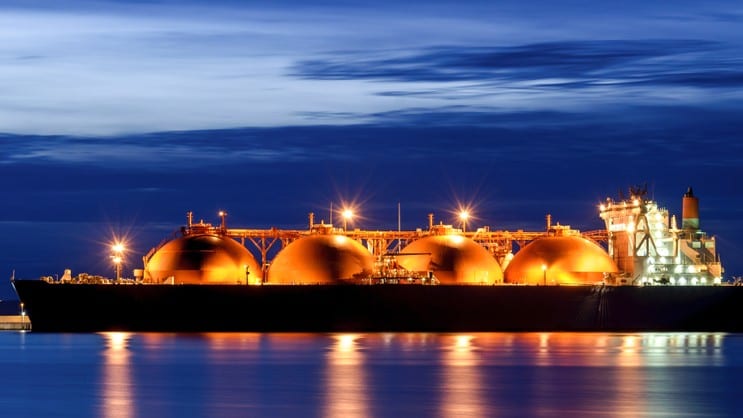
thediplomat+1thediplomatthediplomat+1Asian spot prices for liquefied natural gas have surged to levels not seen since early 2023, as the ongoing U.S.-Iran conflict continues to choke off Qatari exports through the Strait of Hormuz and intensifies a scramble for winter supply between European and Asian buyers.
The Japan Korea Marker, the spot benchmark for Northeast Asian LNG deliveries, rose to the mid-$24 range per million British thermal units in late August and was trading near $23.76 as of September 2. Forward prices for October through December cargoes remain above $22 per MMBtu, well above the 2026 average of roughly $17, signaling that traders expect tightness to persist through the heating season.thediplomat+2
The squeeze traces back to the U.S.-Iran military conflict that began in late February, which has effectively shut down regular LNG shipping through the Strait of Hormuz. QatarEnergy has extended force majeure on LNG deliveries into at least November, canceling shipments to buyers across Asia and Europe. Iran's continued threats to tankers and expanded restrictions on vessels have compounded the disruption.fxempire+2
Qatar and the United Arab Emirates have resorted to rare ship-to-ship LNG transfers outside the strait to keep some cargoes moving. Three cargoes were transferred between vessels in international waters off Oman and the UAE in August, with deliveries continuing toward India and Japan, according to ship-tracking data reviewed by Reuters Thomson Reuters Corporation . The workaround adds cost and operational complexity, and volumes remain a fraction of pre-conflict flows.indiaseatradenews+1
The disruption is hitting Japan harder than its European counterparts. The International Energy Agency projects Japan's average wholesale electricity prices will climb nearly 40 percent year-on-year in the second half of 2026, reaching roughly $105 per megawatt-hour — compared with an approximately 25 percent increase across the European Union. Natural gas accounted for 32 percent of Japan's power generation in fiscal year 2024, nearly all of it imported as LNG, meaning price shocks in the cargo market feed directly into generation costs.vibetrader+1
The gap owes much to contract structure. Traditional Asian LNG supply is priced against crude oil, tethering Japanese utility costs to a barrel of Middle Eastern crude at a time of acute supply uncertainty. American LNG, by contrast, is indexed to Henry Hub, which responds to U.S. domestic conditions rather than Gulf risk. Europe also benefits from greater grid interconnection and more options for fuel substitution.thediplomat
Japanese buyers are now bidding against European utilities rebuilding storage, as well as Chinese, Korean and South Asian buyers seeking winter cover. Portfolio sellers such as Shell and TotalEnergies , along with trading houses including Vitol and Gunvor, hold much of the uncommitted flexible supply — and their decisions about cargo destinations are effectively the transmission mechanism through which the Middle East disruption reaches Asian electricity bills.thediplomat
New U.S. liquefaction capacity will reach the market over the coming years, but offtake for much of it is being negotiated now, and sellers hold the leverage as long as the forward curve remains elevated.thediplomat


