Newsletter Subscribe
Enter your email address below and subscribe to our newsletter

All voices matter
popular-archaeology+1.popular-archaeology+1.press.uni-mainz+1.livescience+1.press.uni-mainz.According to recent research published in Science Advances, archaeologists have discovered evidence that Neanderthals operated a sophisticated "fat factory" in present-day Germany approximately 125,000 years ago, where they systematically processed bones from at least 172 large mammals to extract nutrient-rich bone grease, pushing back the timeline for this type of resource intensification by nearly 100,000 years.
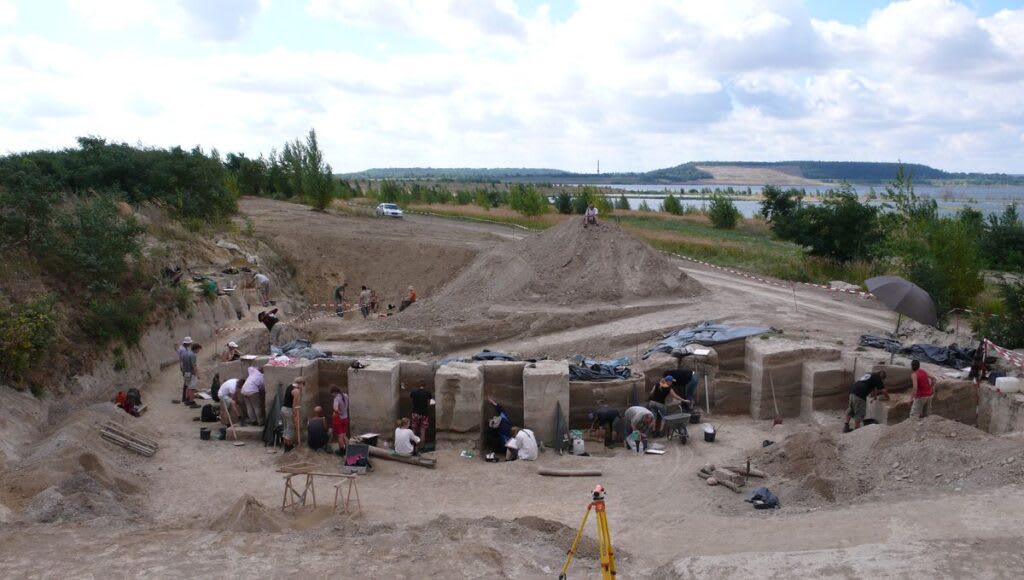
The Neumark-Nord archaeological site complex, located approximately 10 km south of Halle in Germany, stands as one of the largest Pleistocene archaeological sites, spanning over 74 acres (30 hectares). Discovered in the 1980s by German archaeologist Dietrich Mania, the site has yielded extraordinary preservation of Last Interglacial flora and fauna. What makes Neumark-Nord particularly significant is its comprehensive ecosystem preservation, featuring two ancient lakes where Neanderthals actively shaped their environment around 125,000 years ago.idw-online+4
The site has revealed remarkable findings, including remains of approximately 70 straight-tusked elephants (over 1,500 skeletal parts), hundreds of slaughtered animals, numerous stone tools, and abundant charcoal remains. Beyond elephants, researchers have identified over 200 animal species ranging from small beetles to pike, hyenas, rhinoceroses, and cave lions. One particularly noteworthy discovery was a flint scraper containing residue of concentrated oak acid, evidence that Neanderthals were producing biological agents for tanning animal hides—challenging simplistic views of Neanderthal capabilities. The site's exceptional preservation has allowed researchers to document how Neanderthals transformed dense forest into open landscape through controlled burning and sustained hunting activities over at least 2,000 years.sci+2
The Neanderthals at Neumark-Nord employed sophisticated techniques to extract valuable bone grease, demonstrating remarkable resource management skills. They systematically crushed bones into tens of thousands of small fragments, specifically targeting fat-rich skeletal elements, and then heated these fragments in water to render the calorie-rich grease. This labor-intensive process required careful planning and coordination, as evidenced by the tightly clustered archaeological remains found within a 50-square-meter area alongside signs of fire use.iflscience+1
What makes this discovery particularly significant is the scale and efficiency of the operation. Archaeologists recovered over 120,000 small bone fragments and more than 16,000 flint tools from the site, suggesting a well-organized production system. The Neanderthals likely employed a strategic caching system, storing surplus carcass parts throughout the year before bringing them to the lakeside location for processing. This level of resource management challenges previous assumptions about Neanderthal capabilities, revealing them as sophisticated planners who understood both the nutritional value of fat and how to efficiently extract it from animal remains.academia+2
The fat extraction techniques employed by Neanderthals at Neumark-Nord likely served a critical survival function beyond mere resource efficiency. Neanderthals faced a significant risk of protein poisoning (also called rabbit starvation), a potentially lethal condition that occurs when humans consume too much lean protein without adequate fat or carbohydrates. This condition would have been particularly dangerous to pregnant women and newborns in Neanderthal communities. By systematically extracting bone grease, Neanderthals could maintain a balanced diet despite their heavily meat-based nutrition.livescience+2
To avoid this nutritional hazard, Neanderthals developed sophisticated dietary strategies across their range:
rune.unerune.unerune.unerune.unerune.uneThe "fat factory" discovery represents a remarkable adaptation that helped Neanderthals survive in environments where protein was abundant but other nutrients were seasonally scarce. This sophisticated nutritional understanding challenges outdated views of Neanderthals as primitive and highlights their advanced survival strategies.livescience