Newsletter Subscribe
Enter your email address below and subscribe to our newsletter
[forminator_form id="25163"]

All voices matter
cnn+1japantimescnnThe world's oceans are warming at an accelerating and unprecedented rate, with far-reaching consequences for marine life, coastal communities and global weather patterns, according to a landmark report published Wednesday by more than 100 international scientists.
The tenth annual Copernicus Ocean State Report, produced by Mercator Ocean International for the European Union's Copernicus Marine Service, draws on more than four decades of satellite, buoy and sensor data to document what it calls its "starkest warning yet" about the changes sweeping the planet's seas.marine.copernicus+1
"The ocean is transforming before our eyes: warming, rising seas and ecosystem degradation are interconnected signs of significant and long-term change," said Pierre Bahurel, Director General of Mercator Ocean International.cnn
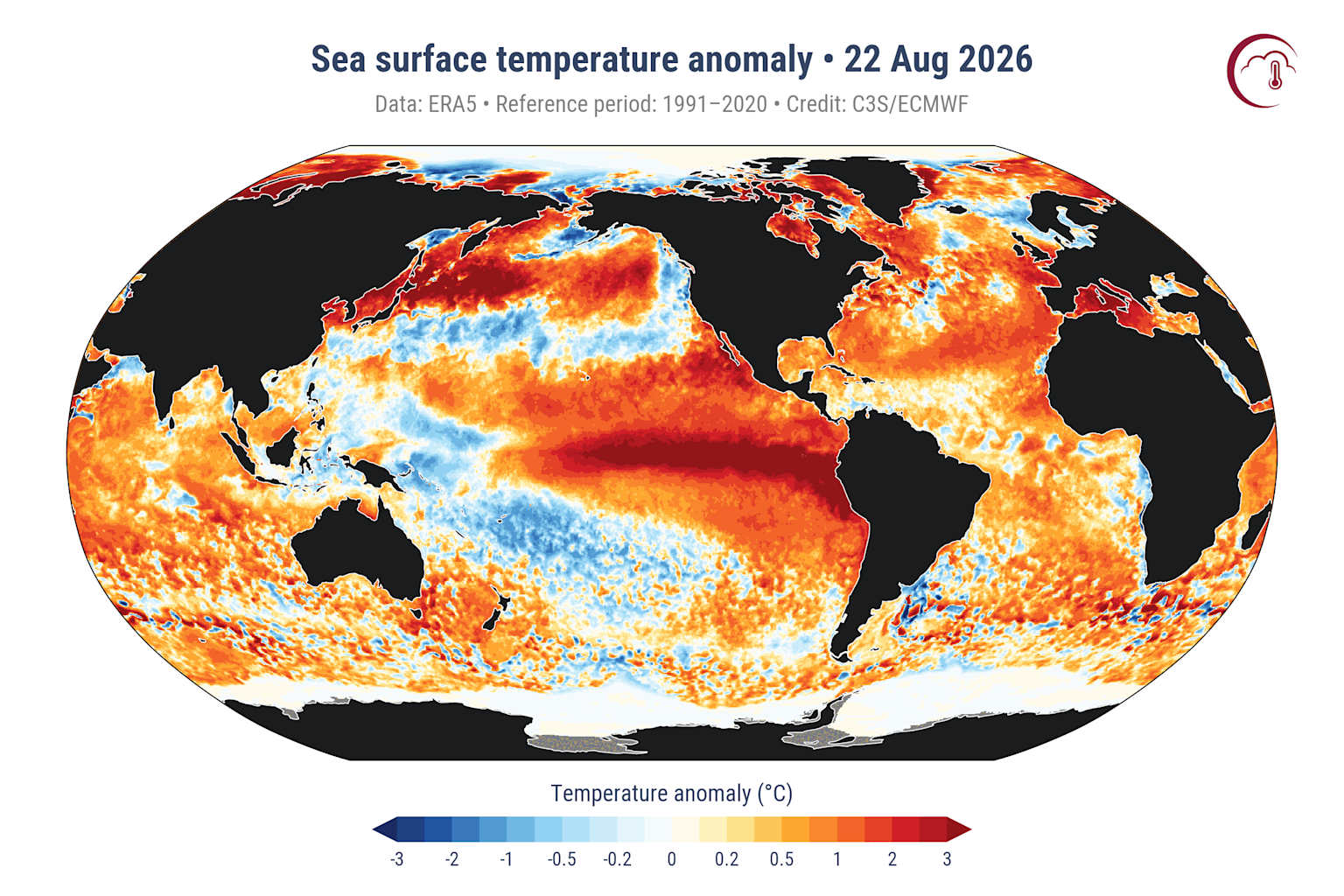
The rate of ocean warming has doubled over the past 20 years, with sea surface temperatures reaching record highs in 2023, 2024 and again in 2026, the report found. Last year, the world's oceans absorbed an additional 23 zettajoules of heat — a new record for the ninth consecutive year, equivalent to roughly 40 times the energy the world consumed in 2025. Global oceans absorb roughly 90 percent of the excess heat produced by burning fossil fuels, while a monster El Niño — on track to be the most intense on record — is adding further pressure.cnn
Global average sea levels have risen by about 3.8 millimeters per year since 1999, with rates accelerating since 2012, threatening the hundreds of millions who live in coastal areas. The oceans have also become around 17 percent more acidic since 1985.cnn
Some of the most dramatic changes are unfolding at the poles. Arctic sea surface and sea-ice temperatures have climbed 4.2 degrees Celsius between 1982 and 2024, while sea ice has shrunk by nearly half a million square kilometers per decade since 1979 — equivalent to losing an area the size of Spain every 10 years. In the Kara Sea north of Siberia, temperatures have surged 6.7 degrees Celsius since 1982.japantimes
At the other end of the world, record-low Antarctic sea ice in 2022 coincided with the first recorded mass breeding failure of emperor penguins. The species was upgraded from "near threatened" to "endangered" by the IUCN in April, with more than 90 percent of colonies projected to be near-extinct by 2100 if current ice loss continues.japantimes
European seas, meanwhile, are under "intense pressure." The Mediterranean and Black Seas both experienced record-breaking marine heatwaves in 2024, with some lasting more than 30 days and pushing water temperatures more than 4.6 degrees Celsius above average.cnn
The report underscores the acute vulnerability of small island developing states, which face rising seas, intensifying cyclones and coral reef die-offs. "For island states, ocean change is not a distant environmental issue; it is an immediate economic, development and security challenge," said Karina von Schuckmann, director of the report.cnn
The scientists called for sustained ocean monitoring to ensure governments and communities can prepare. "It is our responsibility to build the permanent capacity to anticipate this transformation," Bahurel said.cnn