Newsletter Subscribe
Enter your email address below and subscribe to our newsletter
[forminator_form id="25163"]

All voices matter

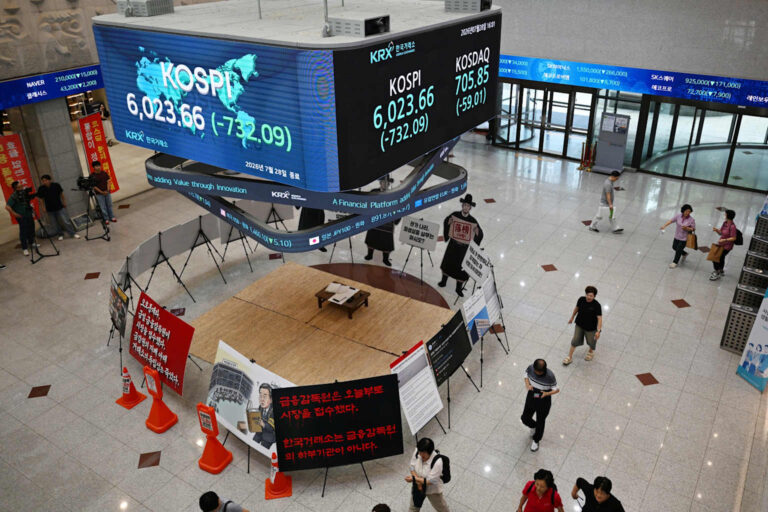
money.usnews+1matterfact+1x+1The Japanese yen rallied sharply on Friday after Finance Minister Satsuki Katayama said Japan is considering ways to encourage pension funds, including the world's largest, to increase their holdings of domestic financial assets. The move sent USD/JPY tumbling below the 162 level, reversing earlier weakness and reviving fears of a broader unwinding of the yen carry trade that could ripple through global markets.
At the center of the shift is the Government Pension Investment Fund, or GPIF, which manages roughly ¥293.6 trillion ($1.81 trillion) in assets. According to Reuters, GPIF holds about $931 billion in foreign assets, with overseas equities and bonds making up a substantial share of its portfolio. As of June, 21 percent of the fund's investments were in local stocks and 39 percent in domestic bonds, while overseas equities totaled 21 percent.facebook+3
The prospect of redirecting even a fraction of that capital back home carries outsized implications. Japan held a record 561.75 trillion yen ($3.53 trillion) in foreign assets in 2025, making it the third-largest global holder after Germany and China. Analysts at Reuters described the potential repatriation as "the missing piece in Japan's reflation journey".kfgo+1
The yen had been trading near 40-year lows against the dollar, hovering around 162 per dollar through much of early July despite a Bank of Japan rate hike to 1 percent in June and a record ¥11.73 trillion intervention campaign. The pension pivot now gives markets a new catalyst to worry about on top of existing intervention risks, with the U.S. Treasury having placed Japan on its 2026 monitoring list.kucoin+2
The Wall Street Journal News Corp reported that Katayama said the government is considering ways to encourage investors to buy more domestic securities. Bloomberg reported the yen was boosted from near multi-decade lows on the announcement.bloomberg+1
A carry trade unwind — in which investors rapidly exit positions funded by cheap yen borrowing — remains a key risk. A similar episode in August 2024 hit U.S. momentum stocks and AI-related equities particularly hard. With the S&P 500 and Nasdaq Composite heavily weighted toward technology names that benefited from carry-trade-fueled flows, analysts have warned that a repeat could again punish those trades.wellington+2
The pension shift represents a strategic departure from the Abe era, during which Japanese capital flowed aggressively overseas in search of higher returns. If GPIF meaningfully increases its domestic allocation, the consequences would extend well beyond currency markets — potentially reducing demand for U.S. Treasuries and other foreign bonds at a moment when the U.S. government faces elevated borrowing needs. For now, traders are watching whether the yen's Friday bounce marks the start of a sustained reversal or merely another temporary reprieve in a currency that has defied repeated efforts to strengthen it.x+1