Newsletter Subscribe
Enter your email address below and subscribe to our newsletter
[forminator_form id="25163"]

All voices matter
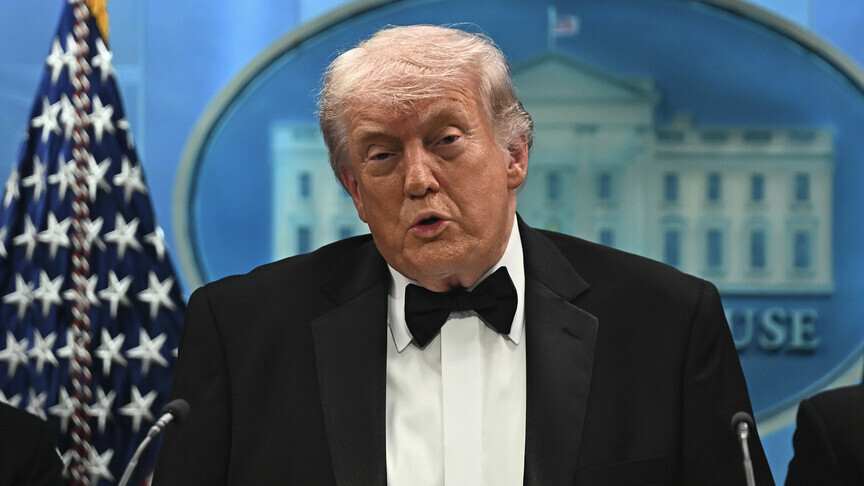
arabtimesonline+1cryptobriefing+1newarabUS President Donald Trump endorsed the Mecca Joint Defense Agreement signed by Saudi Arabia, Turkey, and Pakistan, calling the trilateral pact a "big, bold, and important first step" toward regional self-defense in a post on Truth Social.aa+1
"I am very pleased that Saudi Arabia, Turkey, and Pakistan have recently and finally signed the Makkah Joint Defense Agreement," Trump wrote. "It shows how the Middle East is coming together and how countries will finally be able to defend themselves in a more meaningful way."timesofisrael+1
The agreement, signed on August 7 by Saudi Crown Prince Mohammed bin Salman, Turkish President Recep Tayyip Erdogan, and Pakistani Prime Minister Shehbaz Sharif, includes a collective defense clause stipulating that an armed attack against any one signatory will be considered an attack against all three — a framework modeled on NATO's Article 5. The pact also provides for joint military exercises, defense industry cooperation, and greater military interoperability.arabtimesonline+2
The agreement builds on a bilateral Saudi-Pakistani defense deal signed in 2025, under which Pakistan deployed troops, air defense systems, and fighter jets to bases in the kingdom near the Saudi-Yemeni border.news.cgtn
Turkish President Erdogan said in an Al Jazeera interview airing Sunday that Egypt could join the alliance, describing Cairo's accession as "possible" and emphasizing the pact remains open to additional members. Egypt's foreign minister Badr Abdelatty said Friday that the possibility was being considered "very seriously" but required study of its constitutional and legal implications.newarab+1
Saudi Arabia also announced days before the pact's signing the creation of a 14-nation maritime coalition to protect Red Sea shipping, including Egypt, Bangladesh, Kuwait, Bahrain, Qatar, Jordan, and several other nations.news.cgtn
Trump's praise notwithstanding, the pact has prompted debate about waning American influence in the region. According to reporting by the Washington Post, cited by the Jerusalem Post, Gulf states including Saudi Arabia, the UAE, Qatar, Kuwait, and Bahrain are "united in their frustration" with Trump's Iran approach, with some governments questioning the utility of hosting US military bases.jpost
"In their mind, the US is not enough," one official told the Washington Post.jpost
The signatories have stressed the pact does not target any specific country. Erdogan told Asharq Al-Awsat that "our agreement should not be viewed as the creation of a bloc against any country," while Iran's foreign minister Abbas Araghchi offered no hostile response to the announcement. Yet influential Saudi columnist Abdulrahman Al-Rashed wrote that "the alliance tips the balance of power against Iran" with "400 million people — four times that of Iran — and more than 1,400 kilometers of land borders overlooking Iran."caliber+1