Newsletter Subscribe
Enter your email address below and subscribe to our newsletter

All voices matter

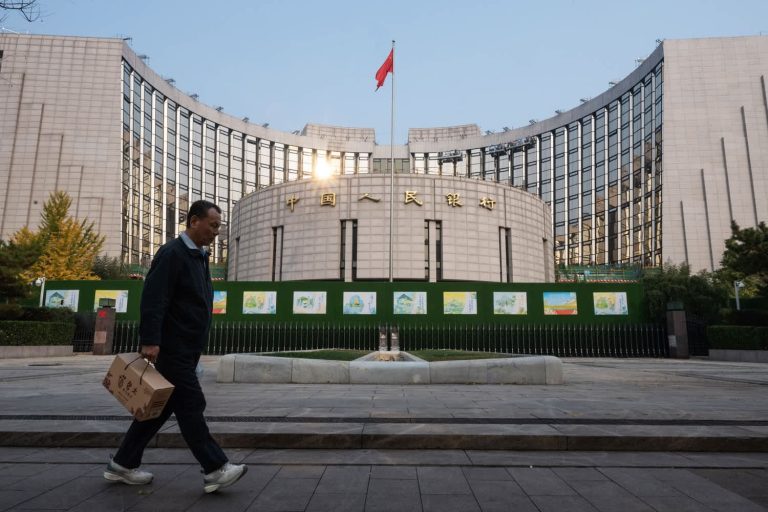
reuters+1investing+1caixinglobal+1China's central bank on Monday launched its first-ever overnight reverse repo operation, injecting 300 billion yuan ($44.1 billion) into the financial system at a rate of 1.25% — a level that came in below what traders had anticipated, in what some economists characterized as a de facto easing of short-term borrowing costs.reuters+2
The People's Bank of China set the overnight rate 15 basis points below its seven-day reverse repo rate of 1.4%, which has served as China's main policy benchmark since 2024. Analysts and traders had expected the rate to land between 1.30% and 1.35%, according to Reuters Thomson Reuters Corporation and a Bloomberg survey conducted last week.investing+2
The PBOC also injected 157.5 billion yuan through seven-day reverse repos at the unchanged 1.4% rate. The central bank had announced last week that it would conduct overnight reverse repurchases on June 29 and June 30 at a fixed rate, with the operation designed to "better match the short-term liquidity needs in the banking system."businesstimes+3
In a move that surprised markets, the PBOC did not disclose the overnight rate in its official statement, with the 1.25% figure confirmed only through sources familiar with the matter. Caixin reported that analysts interpreted the new instrument primarily as a tool to smooth month- and quarter-end liquidity crunches rather than a direct signal for near-term policy rate shifts.bloomberg+1
The volume-weighted average rate of the benchmark overnight repo traded in the interbank market fell about two basis points on Monday to 1.3533%, suggesting the new tool was already pulling down short-term borrowing costs.whtc+1
The introduction of an overnight tenor brings the PBOC's framework closer to those of major central banks such as the Federal Reserve, which uses overnight operations as a core component of its rate-setting mechanism. Trivium China noted the move "likely lays the foundations for a new policy rate," suggesting the overnight rate could eventually assume greater prominence in China's monetary architecture.triviumchina+2
Jeffrey Zhang, a strategist at Crédit Agricole CIB, had forecast the rate would be fixed at 1.3% — still above where it ultimately landed — underscoring the degree to which the PBOC surprised the market on the dovish side.theedgemalaysia