Newsletter Subscribe
Enter your email address below and subscribe to our newsletter
[forminator_form id="25163"]

All voices matter
latination+1panasiabizpanasiabizA total solar eclipse on Wednesday, August 12, will transform the skies over Greenland, Iceland, and northern Spain into a natural laboratory as NASA, the European Space Agency, and university teams deploy an array of instruments to probe the Sun's outermost atmosphere and its effects on Earth.
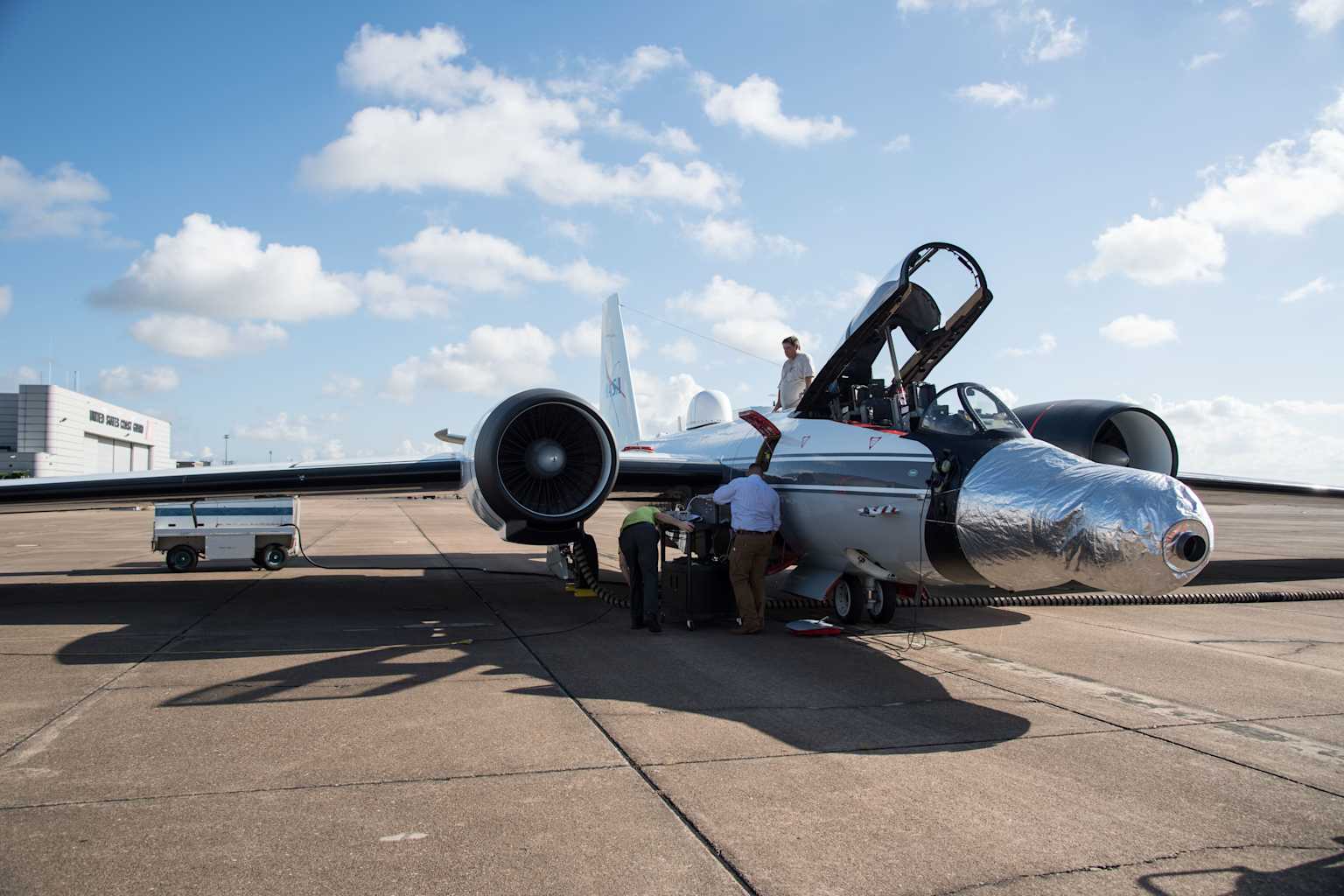
NASA's WB-57 research jet will fly at 50,000 feet — above most atmospheric haze and turbulence — to intercept the Moon's shadow as it races across the Earth. Equipped with the SCIFLI Multispectral Airborne Imager system housing four synchronized cameras, the aircraft can capture 20 images per second in visible and infrared light. Ground observers along the path of totality will see the corona for roughly two minutes and 18 seconds, but by flying in the direction of the shadow, the jet extends that window to nearly three minutes.latination+1
"From our unique perspective on Earth during a total solar eclipse, scientists can study the Sun's corona in a way we can't from anywhere else," said Kelly Korreck, NASA Eclipse Program Manager.panasiabiz
The mission aims to help answer a long-standing mystery: why the corona reaches temperatures exceeding one million degrees Celsius while the Sun's visible surface sits at roughly 6,000°C.panasiabiz
Complementing the jet, NASA-supported teams will launch 80 balloons from Iceland over a 26-hour window — from 18 hours before to 8 hours after totality — to study how the eclipse affects Earth's boundary layer, the lowest slice of the atmosphere that touches the ground. In Spain, six balloons carrying 360-degree cameras and ozone sensors will track atmospheric composition changes during the event.montana+1
Montana State University students are leading several of these balloon teams as part of NASA's Nationwide Eclipse Ballooning Project. In Spain, MSU students will work alongside teams from the University of North Florida and Connecticut's universities of Bridgeport and Hartford. "This will be an unforgettable experience for the participants and a powerful demonstration of MSU's world-class capabilities," said Angela Des Jardins, director of the Montana Space Grant Consortium.montana
ESA scientists will also analyze the eclipse to learn more about solar winds and storm propagation. "Why do solar storms propagate in this way? What are their structures, and can we develop models that allow us to predict them?" asked Carole Mundell, the ESA's director of science. ESA's Solar Orbiter probe, launched in 2020, has been collecting complementary data, and eclipses offer a chance to "test just how good our models are — or how bad," said mission co-principal investigator Miho Janvier.gmanetwork
In Catalonia, the Ebre Observatory — which has recorded solar data since 1904 — will serve as a key observation site, with Spain's meteorological service launching radiosondes before, during, and after totality. NASA will stream live coverage beginning at 11:15 a.m. MDT on August 12.ara+1