Newsletter Subscribe
Enter your email address below and subscribe to our newsletter
[forminator_form id="25163"]

All voices matter
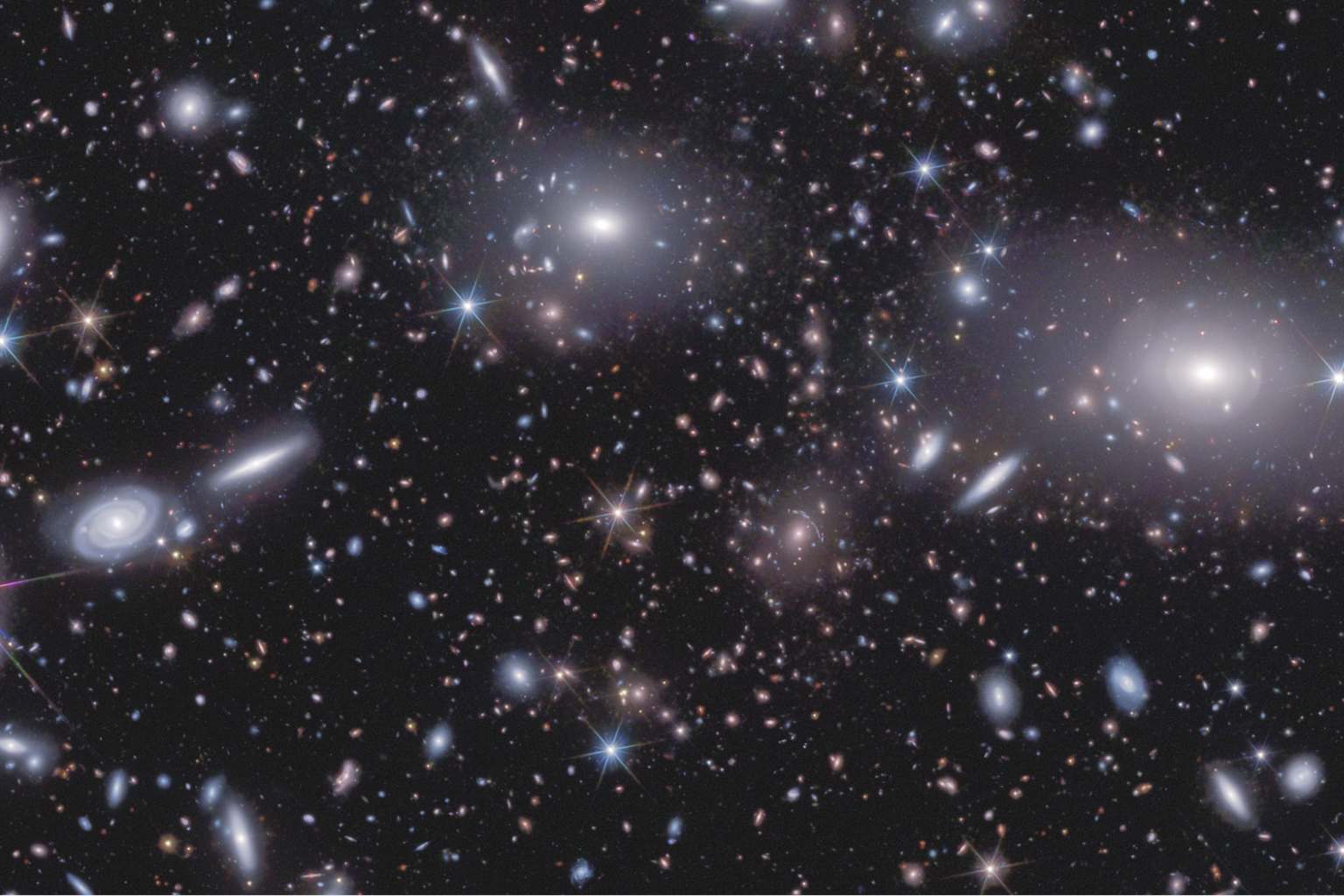
esa.int+1.reuters.com.cosmos.esa.int+2.On Thursday, Nov. 12, the European Space Agency released DR1-Foundation, the first major data release from its Euclid space telescope. It holds more than 900 million galaxies and covers a patch of sky as big as 9,500 full Moons, which ESA calls the foundation for its largest-ever 3D map of the cosmos. The data will help scientists study dark matter and dark energy, which together seem to make up about 95% of the universe's contents, Reuters reported.esa.int+1
The release covers about 13 months of observations, taken from spring 2024 to spring 2025. In that time, the Euclid Wide Survey covered about 1,900 square degrees of sky, according to ESA's mission site. Along with the galaxies, it includes about 15,000 strong gravitational lens candidates, more than 60 million quasar candidates and spectra for over 160 million sources. All of that adds up to about 1.7 million gigabytes of data.cosmos.esa.int+1
"This is a change in scale from Euclid's previous releases, which included a few days of observations over around 60 deg² of sky," said Valeria Pettorino, ESA's Euclid project scientist. ESA Director of Science Carole Mundell called the data "far more than beautiful pictures" and said it was the largest space-based survey of its kind.esa.int
According to Reuters, the strong-lens catalogue is larger than the total found over the previous half century. Researchers found the lenses with machine learning and with help from thousands of citizen scientists in the Zooniverse "Space Warps" project. "Gravitational lenses are nature's own weighing scales," said Natalie Lines, a University of Portsmouth doctoral student and Euclid Consortium member. She added that Euclid can take sharp images over a wide area, something neither ground telescopes nor Hubble and Webb can do. Some of the quasars date back to when the universe was just 5% of its current age.reuters.com+1
The data covers about 14% of the sky Euclid will map over its six-year survey. The mission was split into two releases because the galaxy-shape measurements need extra processing time. Those measurements, the weak-lensing data and the cosmological analyses will be added in June 2027 to complete the full DR1, according to the Euclid Consortium's overview paper. ESA lists June 16, 2027 as the date for DR1. Euclid launched in 2023 and aims to finish its 3D atlas, spanning more than a third of the sky, in 2031.cosmos.esa.int+3
"It will be used to map the large-scale structure of the Universe in unprecedented detail," Pettorino said. "So much discovery is yet to come."