Newsletter Subscribe
Enter your email address below and subscribe to our newsletter
[forminator_form id="25163"]

All voices matter
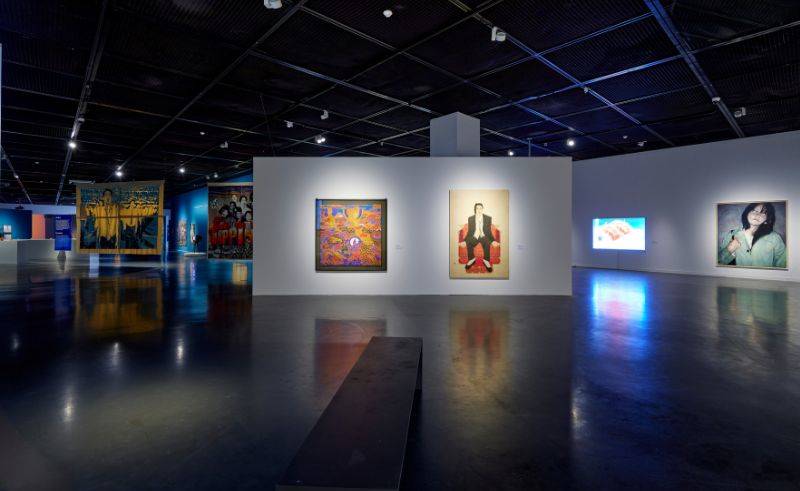
The Korea Herald+2.The Brew News+1.The Brew News+1.The Brew News+1.The Korea Herald+1.The landmark exhibition "Layered Medium: We Are in Open Circuits – Contemporary Art from Korea, 1960s to Today" at Manarat Al Saadiyat in Abu Dhabi marks the first large-scale showcase of Korean contemporary art in the Middle East, featuring 48 works by 29 artists spanning six decades of Korean artistic evolution, from Nam June Paik's pioneering video art to experimental movements that emerged post-Korean War, while also highlighting the growing cultural diplomacy between the UAE and South Korea.
Nam June Paik, widely recognized as the "Father of Video Art," created numerous groundbreaking works that revolutionized the intersection of technology and art. His most iconic installation, TV Buddha (1974), features a Buddha statue contemplating its own live image on a closed-circuit television, creating an infinite loop of watching and being watched. This meditation on self-reflection spawned several variations including Stone Buddha/Burnt TV (1982) and TV Rodin (1982), which placed Rodin's The Thinker atop a Sony Watchman.The Art Story+2
Other influential works include TV Garden (1974), where 49 television sets placed among tropical plants play Paik's Global Groove (1973), reflecting Buddhist interconnectedness between technology and nature. His collaborations with cellist Charlotte Moorman produced seminal pieces like TV Cello (1971), transforming televisions into musical instruments. In large-scale installations, Paik created The More, The Better (1988) for South Korea's National Museum of Modern and Contemporary Art—a tower of 1,003 monitors symbolically referencing Korea's founding date—and pioneered global satellite art with broadcasts like Good Morning, Mr. Orwell (1984) and Bye Bye Kipling (1986), which connected artists across continents in real-time.ArtAsiaPacific+2
The UAE and South Korea have developed robust cultural cooperation over the past decades, culminating in the landmark UAE-Korea Cultural Dialogue 2020, which marked the 40th anniversary of diplomatic relations between the two nations. This initiative, launched under the theme "Converging Cultures," aimed to foster mutual understanding through cultural exchange across heritage, literature, visual and performing arts, design, AI, and education. The dialogue built upon the Special Strategic Partnership established following high-level bilateral visits, including Sheikh Mohamed bin Zayed Al Nahyan's visit to Seoul in February 2019.fikerinstitute.org+1
Cultural infrastructure development has been central to this relationship, with the Korean Cultural Center opening in Abu Dhabi in 2016—the first of its kind in the Middle East's Gulf Cooperation Council region. This followed the 2015 signing of a Memorandum of Understanding between the two countries' foreign ministries. The relationship continues to evolve, with a 2024 agreement to expand cultural cooperation, including plans for a "Korea Season" festival in Abu Dhabi and a new exhibition hall in Dubai showcasing Korean content, beauty products, and cuisine. These initiatives reflect both nations' shared commitment to cultural preservation and exchange, creating avenues for their citizens to better understand each other's traditions and lifestyles.trendsresearch.org+2
The evolution of Korean media art is deeply rooted in the experimental art movements of the 1960s and 1970s, when artists began challenging traditional forms through new mediums like photography, videography, and performance art. This period of experimentation emerged as a response to the social and physical environment following the Korean War, with artists using technology as a form of resistance against academism and mainstream artistic conventions. Unlike their Western counterparts, Korean experimental artists followed a distinct trajectory, articulating their spirit of resistance through technological innovation while engaging with prevalent social topics like modernization and globalization.MIT Press+3
By the 1980s, small experimental groups had formed, eventually leading to the establishment of the Art Tech Group in the early 1990s. Key works from this evolution include Paik Nam-june's "Self-Portrait Dharma Wheel" and Park Hyun-ki's "TV Fishbowl" and "Video Inclining Water," which exemplify how Korean artists explored the relationship between technology, body, and perception. This experimental foundation has been crucial for contemporary Korean media art, providing the soil for diverse artistic expressions to flourish and establishing a unique genealogy that continues to influence Korean artists today. The recent exhibition "Only the Young: Experimental Art in Korea, 1960s–1970s" has further highlighted these pioneering efforts, showcasing works like Jung Kangja's early feminist piece "Kiss Me" (1967) and collaborative installations that broke through Korea's authoritarian cultural framework.Sotheby's Institute of Art+4