Newsletter Subscribe
Enter your email address below and subscribe to our newsletter
[forminator_form id="25163"]

All voices matter
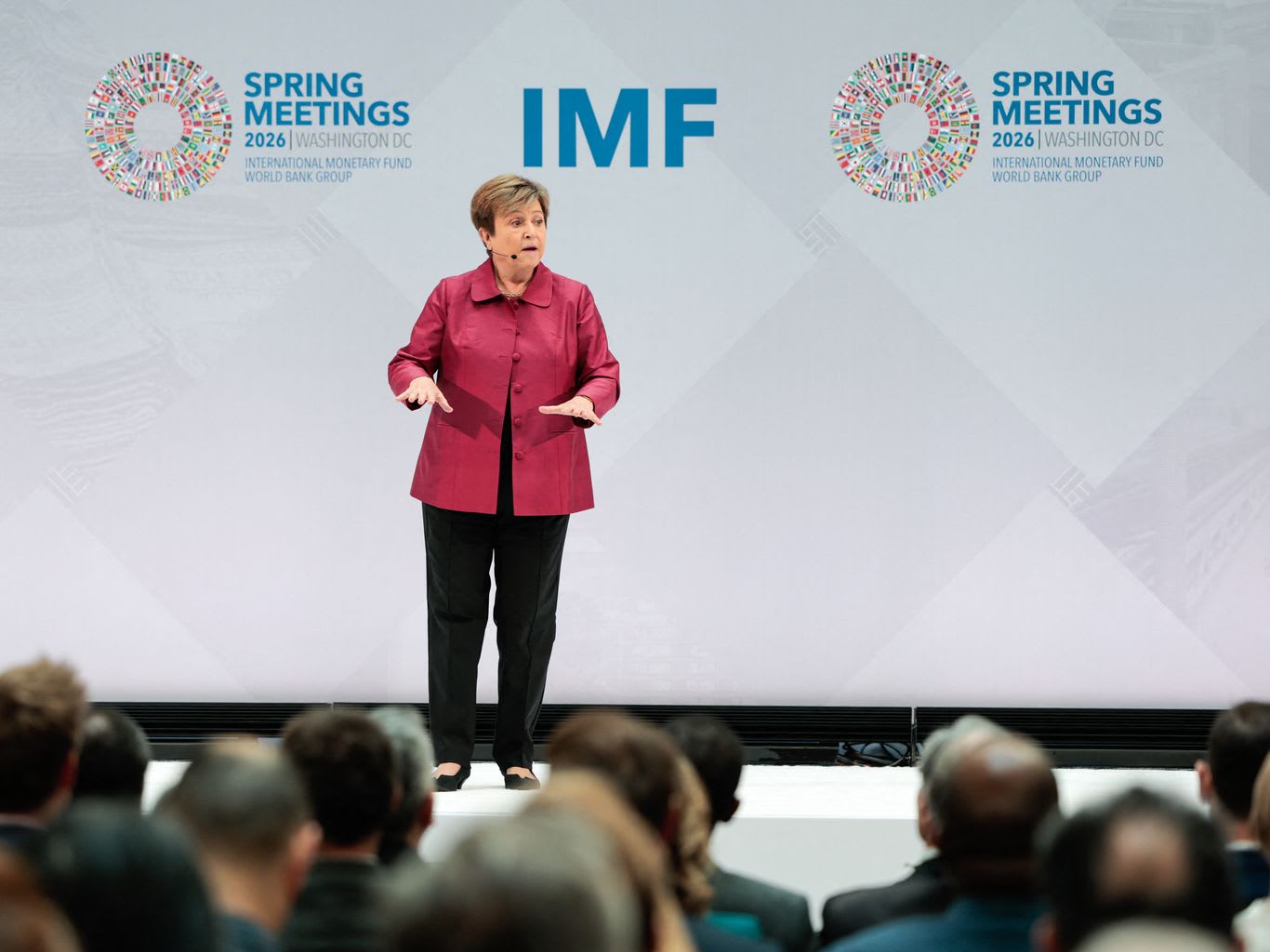
semaforunbreakwaveadvisors"Winter is coming," IMF Managing Director Kristalina Georgieva declared on Tuesday at Semafor's Next 3 Billion event in New York, warning that prices will keep climbing as the Iran conflict sends energy costs surging and forces central banks worldwide back into tightening mode.semafor
The warning came as the United Nations projected global growth at just 2.6 percent in 2026, well below the pre-pandemic pace of 3.2 percent, with Brent crude rising roughly 40 percent since February to around $100 per barrel. Georgieva cautioned that while AI investment has partially offset the energy shock, it falls short of compensating for the closure of the Strait of Hormuz. "We should prepare for people being more unhappy," she said. "Maybe on the street."un+1
The energy shock has upended the disinflationary trajectory that central banks had spent years engineering. The Federal Reserve raised rates by 25 basis points on September 16 to a range of 3.75–4.00 percent, with Fed Chair Kevin Warsh stressing that inflation had remained "too high…for too long." The European Central Bank hiked by 25 basis points on September 10, taking its deposit rate to 2.50 percent as eurozone headline inflation hit 3.3 percent in August. The Bank of Japan raised its policy rate to 1.25 percent, its highest since 1995.breakwaveadvisors
Overnight index swap markets now expect at least one additional rate hike across developed economies by year-end, with further increases anticipated in 2027, according to RSM chief economist Joseph Brusuelas. Inflation readings tell the story: the U.S. and UK are at 3.4 percent, Australia at 3.2 percent, New Zealand at 4.1 percent, and Spain at 4.6 percent.realeconomy.rsmus
Goldman Sachs The Goldman Sachs Group, Inc. offered a counterintuitive take, arguing that the United States may actually have less of a persistent inflation problem than other countries. Economist Megan Peters found that the U.S. goods inflation overshoot is driven largely by two temporary factors — tariffs adding 2.4 percentage points to core PCE goods inflation and AI-related memory price distortions adding another percentage point — both expected to fade. After adjusting for measurement differences, "core services inflation in the U.S. is actually lower than in other large DMs," Peters wrote.investing
Emerging markets, meanwhile, face what Georgieva described as "punishment for someone else's sins," as rising global interest rates wash away hard-earned fiscal gains. The UN report echoed this concern, noting that developing economies are "particularly vulnerable" given high borrowing costs and constrained fiscal space. With the Trump-Xi meeting set for September 24 in Washington and oil supply routes still under threat from Iranian proxies, the path ahead remains fraught with risk.forbes+2