Newsletter Subscribe
Enter your email address below and subscribe to our newsletter
[forminator_form id="25163"]

All voices matter
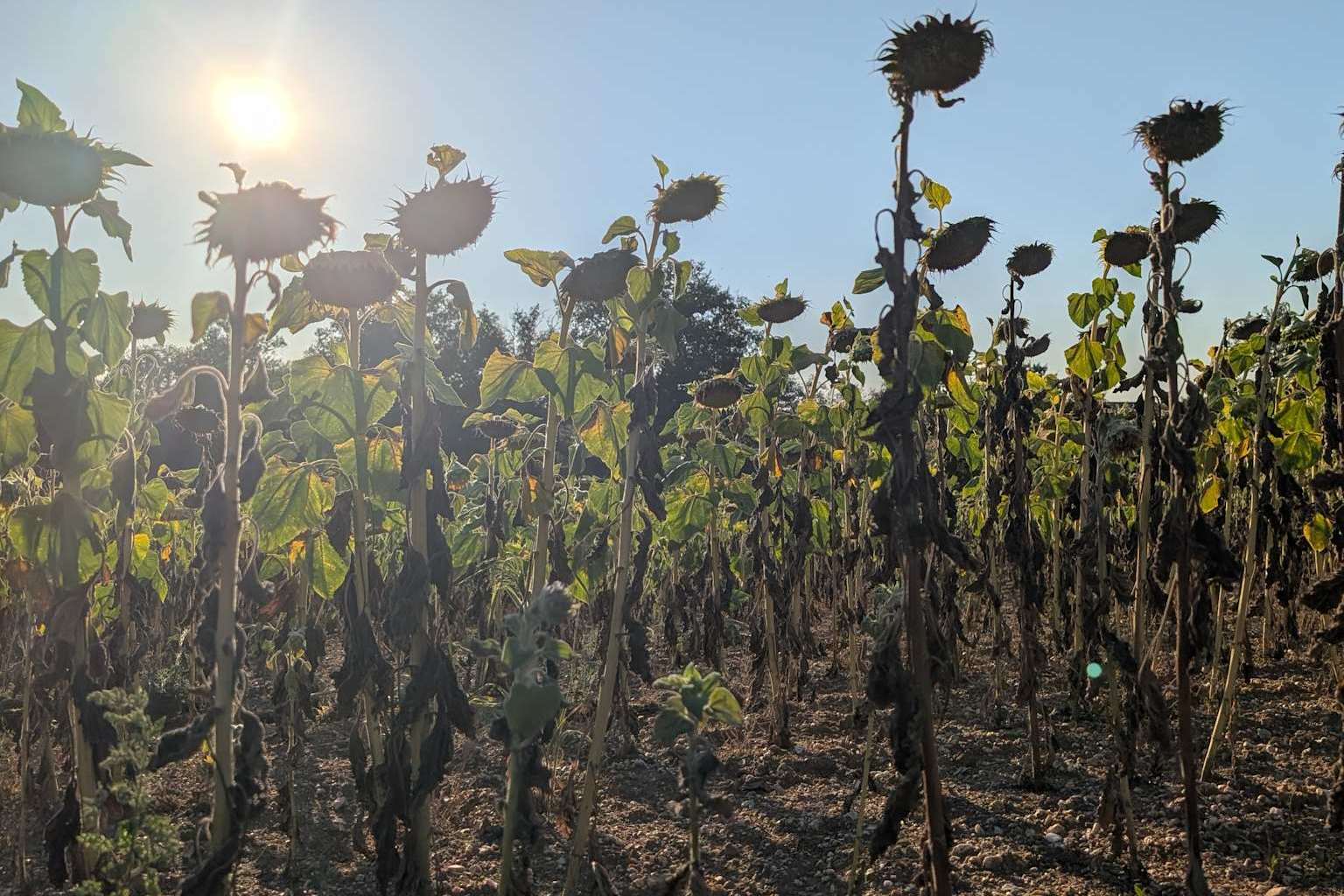
joint-research-centre.europawokvreutersA relentless summer of heat waves and drought is battering European agriculture from the Netherlands to the Balkans, threatening both summer and winter crop yields and raising alarms about food price inflation across the continent.
The Associated Press reported this week that the drought is taking a heavy toll on crops across Europe, with Dutch potato farmers seeing harvests down by a third, Bosnian corn yields collapsing from 6–7 tons per hectare to as little as 1.5 tons, and Czech hop growers warning of losses that could threaten the country's beer industry. The EU's Joint Research Centre said on August 11 that drought now affects half of EU and UK territory, comparable to the exceptional drought years of 2018 and 2022, with scarce rainfall and severe heat waves pushing major European rivers to record-low levels.wokv+2
A report by Dutch bank Triodos, first reported by Reuters on August 10, estimated that heat-related disruption could shave around 1% off the EU's gross domestic product — equivalent to roughly €180 billion — driven primarily by weaker labour productivity. Agricultural output is expected to fall by 3% to 7%, while higher food prices, constrained power generation, and disruption to roads, rail, and inland waterways compound the damage. France is expected to be hardest hit, with recurring heat waves potentially tipping it into an annual contraction of 0.6%.live.euronext+1
The FAO reported that its Food Price Index averaged 131.1 points in July 2026, with the cereal price index climbing 3.4% from June and standing 6.9% above its year-earlier level. Global wheat prices rose 5.8% amid concerns over disrupted Black Sea export flows and heat wave damage to crop yields in key producing countries. The sugar price index jumped 5.6%, driven by concerns about persistent hot and dry weather in the EU and El Niño effects in Asia.fao+1
The EU Joint Research Centre warned in late July that a dry spring followed by successive heat waves in May and June had taken a toll on winter crop yield prospects across parts of western, central, and eastern Europe. EU yield forecasts for winter crops were revised downwards by 1–4%, leaving the outlook for total cereals at 1% below the five-year average. The most affected areas include central-western France, the southern Czech Republic, western Slovakia, Hungary, and western Romania.eunews+1
On his farm in northeastern Bosnia, grain farmer Slavisa Lukic surveyed his withered corn stalks and pointed to clover fields that once grew abundantly. "Now they literally do not exist," he said. "Nothing."wokv