Newsletter Subscribe
Enter your email address below and subscribe to our newsletter
[forminator_form id="25163"]

All voices matter
themoscowtimes+1themoscowtimes+1united24mediaRussia's economy returned to growth in the second quarter of 2026, expanding 1.3% year-on-year after contracting for the first time since 2023 at the start of the year, according to data released Wednesday by the Federal Statistics Service, Rosstat. The result surpassed forecasts from both the Ministry of Economic Development, which had estimated 0.9%, and the Central Bank, which projected 0.8%.themoscowtimes+2
The rebound marked Russia's strongest quarterly performance in six quarters and came months after President Vladimir Putin publicly rebuked his economic team over the first-quarter contraction of 0.2%, demanding "concrete measures" to restore growth.united24media+1
Economist Yegor Susin attributed the improvement to a greater number of working days, improved external conditions, and a fiscal boost. Budget spending climbed 16% in the quarter, with roughly a third directed toward the military and weapons production. A temporary rise in oil revenues also supported activity, though cumulative first-half growth reached just 0.6% — roughly half the pace of a year earlier and nearly seven times slower than during the 2023–2024 wartime boom.themoscowtimes+1
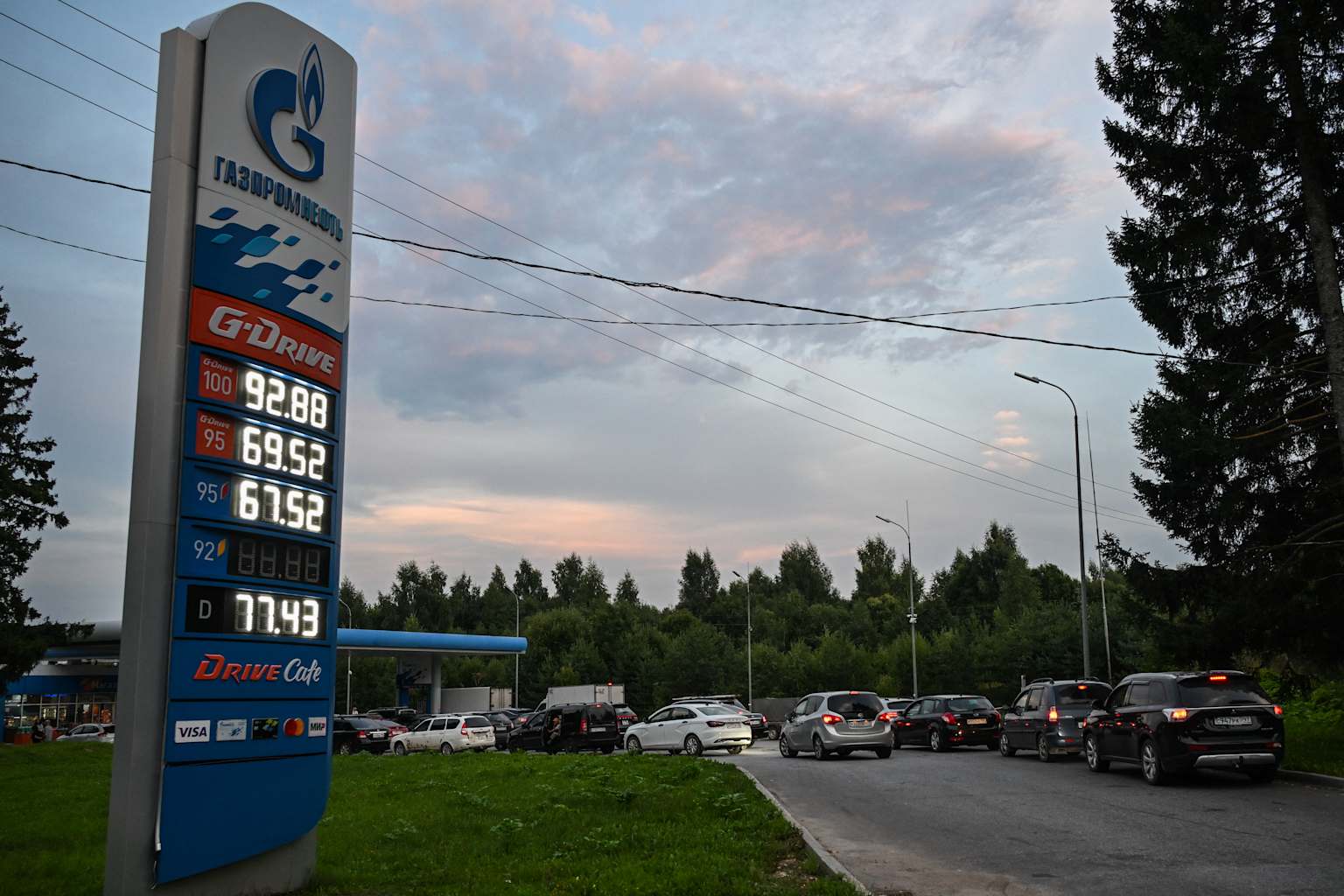
Civilian industry contracted 3.2% year-over-year and 4.6% against 2024 levels, according to the Center for Macroeconomic Analysis and Short-Term Forecasting. Ukrainian strikes on oil refineries pushed refining volumes to their lowest level in two decades, with attacks on the Ilsky refinery in Krasnodar and the Rosneft-operated Syzran plant in Samara on August 8 extending the campaign against Russia's fuel sector.united24media+1
Liam Peach of Capital Economics said he expects Russia to remain mired in stagnation, weighed down by high interest rates and a fuel crisis. Economist Vladislav Inozemtsev warned that escalating long-range strikes on refineries and major warehouses are "seriously eroding the economy," projecting inflation two to three percentage points above earlier expectations alongside stalled real incomes and a wave of business failures.united24media
Inozemtsev cast Kremlin policy — including tax increases, business seizures, and heavy regulation — as an even graver danger than external strikes. A renewed mobilization, he cautioned, "will be the end of the entire Russian economy". Bloomberg reported that the escalating wave of Ukrainian drone attacks deep inside Russia threatens to derail the fragile recovery even as headline figures improve.bloomberg+1