Newsletter Subscribe
Enter your email address below and subscribe to our newsletter
[forminator_form id="25163"]

All voices matter
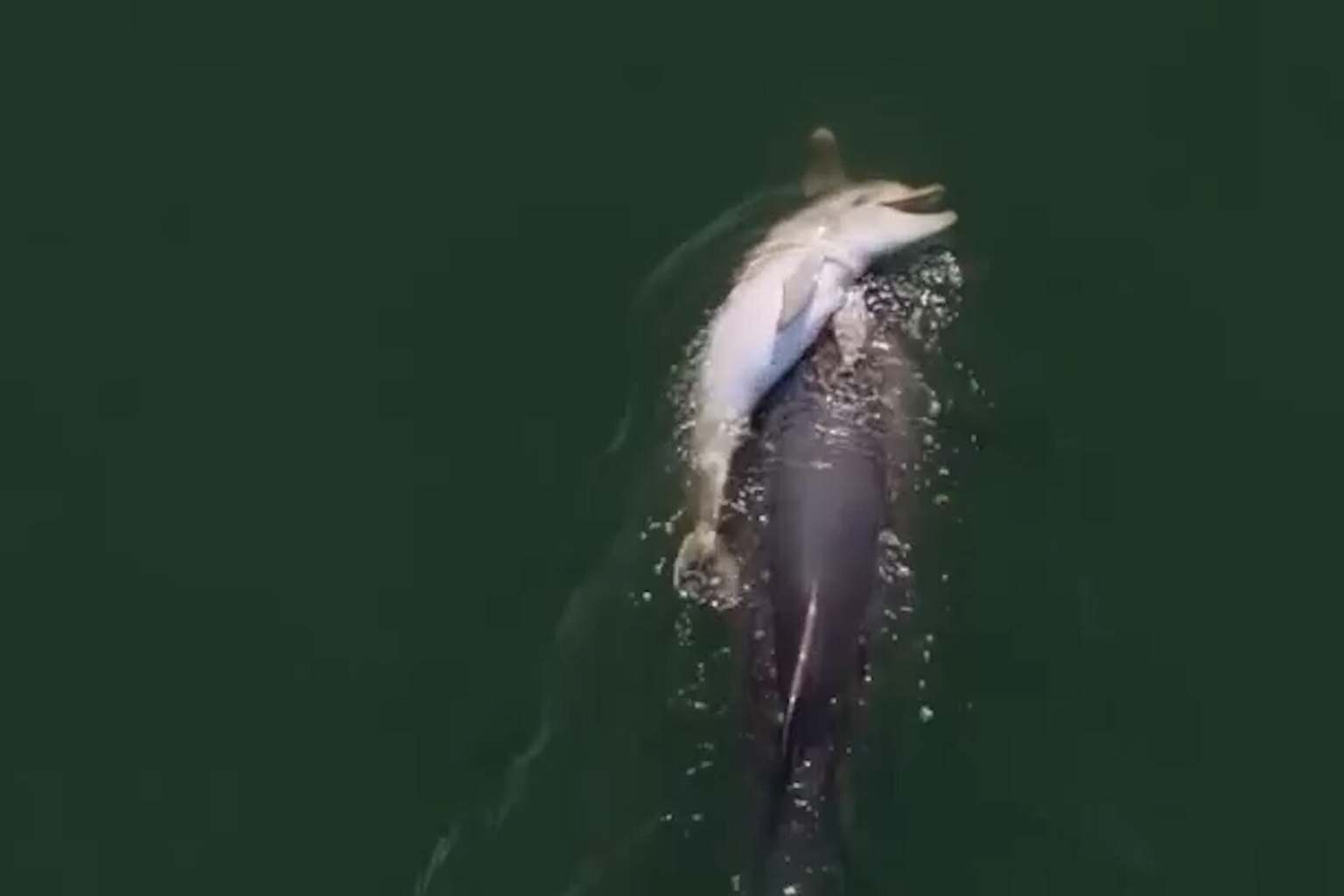
kfoxtv+1nytimes+1nytimes+1A bottlenose dolphin named Fraggle has been observed carrying the body of her two-week-old calf through Western Australia's Leschenault Estuary for several days, in what marine experts describe as a mourning ritual that highlights the deep emotional bonds among cetaceans.
Geographe Marine Research, an Australian conservation organization that monitors dolphin populations along the Western Australian coast, documented the scene late last week using drone footage. The organization reported that Fraggle has now lost her last four calves, and that researchers had anticipated the outcome after observing a high respiratory rate in the newborn, possibly indicating pneumonia.nytimes+2
"Dolphins will carry their deceased calves during a period of mourning which can last for many days, at some stage she must let go and feed to survive," the organization wrote in a social media post that has since gone viral. Researchers noted that the calf's birth during the Southern Hemisphere winter made survival particularly challenging.ndtv+1
What made this case especially striking to scientists was the behavior of other dolphins in the pod. Footage showed members of the group swimming alongside Fraggle, with some believed to have traveled into the estuary from the open ocean. Lori Marino, a neuroscientist and president of the Whale Sanctuary Project, told The New York Times that the proximity of the pod was notable. "It's not just her with a dead calf. The whole pod seems to acknowledge that something significant is happening here," Dr. Marino said.kfoxtv+2
The estuary is home to only a small resident dolphin population, and newborn calves are rarely observed there.kfoxtv
Scientists say this type of mourning behavior is well-documented among cetaceans. In 2018, an orca named Tahlequah was observed carrying her deceased calf for over two weeks and more than a thousand miles near British Columbia. Susana Monsó, a philosopher and author of "Playing Possum: How Animals Understand Death," noted that what makes dolphin mourning particularly remarkable is the physical difficulty involved. "This makes it quite challenging to hold onto the corpse and demonstrates a strong drive on the mother's part," she wrote.nytimes
Lauren Brandkamp, a stranding coordinator at Whale and Dolphin Conservation North America, emphasized that while the footage resonates deeply with viewers, the behavior itself should not come as a surprise. "They develop bonds with their offspring, as well as with other members of their pod or species. When a life is lost, they experience a similar sense of mourning and sadness," she said.nytimes