Newsletter Subscribe
Enter your email address below and subscribe to our newsletter
[forminator_form id="25163"]

All voices matter
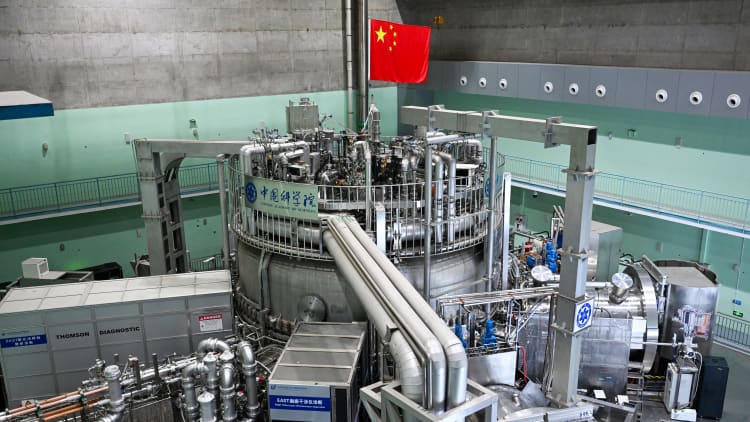
ft+1tradersunion+1news.sbs+1The explosive growth of artificial intelligence is pushing China to fast-track investments in nuclear fusion and small modular reactors, as the country seeks to secure the vast energy supplies needed to fuel its expanding network of data centers.
According to a report by the Financial Times published on September 21, more than half of the 58 conventional nuclear reactors under construction worldwide are located in China. Consulting firm Wood Mackenzie projects that China's data center power consumption will reach 774 terawatt-hours by 2030, a fourfold increase from current levels. The surge in demand, driven by AI workloads and a broader manufacturing boom, is adding urgency to Beijing's 2060 carbon neutrality target.news.sbs+2
While the Chinese government and state-owned enterprises continue to lead traditional nuclear construction, a new wave of private companies backed by state-linked funds is pouring resources into next-generation technologies. Shanghai-based Junhe Nuclear, established last year, has attracted 300 million yuan in venture investment and is designing its first demonstration small modular reactor, targeting operation by around 2031. An executive at the company told the FT that "the power supply gap caused by AI is precisely our opportunity".tradersunion+1
On the fusion front, Shanghai-based NovaFusionX is developing small modular fusion reactors using a field-reversed configuration approach, with founder Guo Houyang — who previously led fusion research projects for the U.S. Department of Energy — at the helm. The company aims to achieve its first plasma discharge by the end of this year, reach net energy gain by 2029, and build its first demonstration reactor in the early 2030s. NovaFusionX has raised roughly $247 million across two funding rounds, reaching a valuation of $1.5 billion.fusionenergybase+3
An analysis by the Special Competitive Studies Project, a U.S. think tank, found that China has mobilized approximately three times more funding for fusion commercialization than comparable U.S. Department of Energy initiatives. Fusion is listed among eight target technologies in the Chinese Communist Party's latest five-year economic plan.tradersunion+1
Zheng Mingguang, chief designer at China's State Power Investment Corporation, told the FT that "China possesses the most complete nuclear power industry supply chain and R&D workforce". Damien Ma, a non-resident fellow at Beijing-based research institution Gavekal, offered a blunter assessment: "Over the next decade, China will have the world's most dynamic and important nuclear industry by an overwhelming margin". He noted that while nuclear construction in the United States is slowed by capital costs and regulation, China is converting domestic capabilities into an export industry. The FT reported that the U.S.-China summit held in Washington this week is expected to serve as another flashpoint in the broader energy and technology rivalry between the two powers.news.sbs