Newsletter Subscribe
Enter your email address below and subscribe to our newsletter
[forminator_form id="25163"]

All voices matter
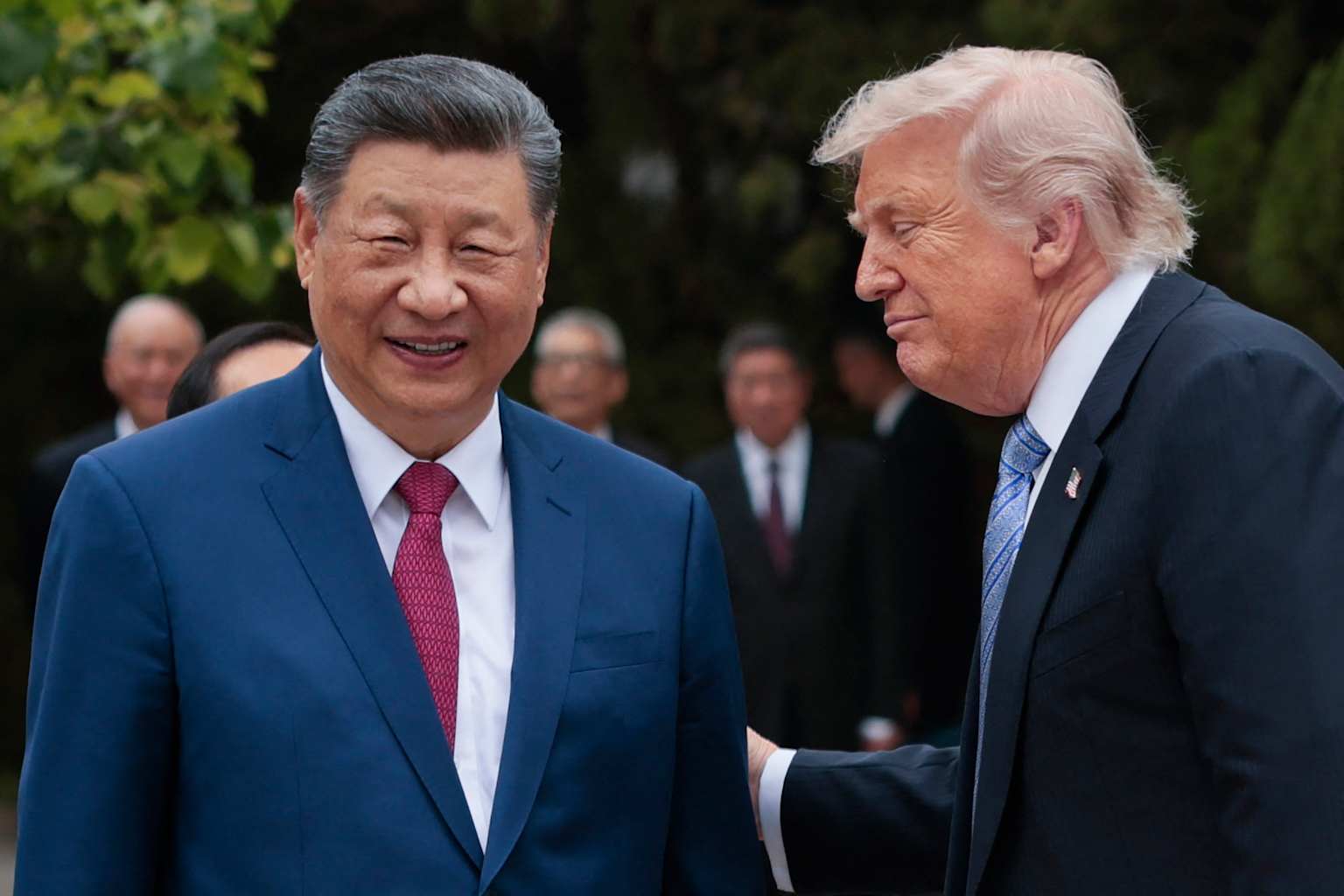
economictimes+1economictimesindependent+1Beijing mounted a two-pronged response this week to Silicon Valley's calls for slowing frontier AI development, dismissing the push as a competitive ploy while positioning China as a champion of multilateral AI governance ahead of a planned meeting between Presidents Xi Jinping and Donald Trump later this month.
On Monday, Chinese Foreign Ministry spokesperson Guo Jiakun denounced the growing chorus of US tech executives calling for restraint as "fearmongering, confrontation and vicious competition" that would "only hamper efforts toward sound global AI governance." The remarks came in direct response to Anthropic CEO Dario Amodei's September 12 essay urging a deliberate slowdown of frontier AI capabilities, a position backed by OpenAI CEO Sam Altman and xAI founder Elon Musk over the weekend.economictimes+1
State media sharpened the attack. The Global Times Alibaba Group Holding Limited described Amodei's proposal as a "Cold War playbook," while the China Daily called the industry's warnings "a coordinated play" to "blunt China's AI advance." China's Ministry of Commerce rejected US allegations of "industrial-scale distillation" of American AI models as evidence of Washington's pursuit of "technological hegemony."abcnews+1
By Tuesday, Beijing shifted to a more conciliatory register. Guo told reporters that "the faster AI technology advances, the more important it is to anchor its direction toward good and the benefit of humanity." He called for a UN-led global governance framework built on "broad-based consensus," saying no single country or company could develop effective solutions alone.indiatoday+1
Guo also highlighted the release on Monday of China's AI Safety Governance Framework 3.0, which updates the classification of AI safety risks and outlines recommendations for technological safeguards. The framework is the latest iteration of guidelines Beijing has revised multiple times as AI capabilities have advanced.geopolitechs
The diplomatic maneuvering unfolded against a backdrop of a rare and detailed warning from China's State Security Minister Chen Yixin. Writing Sunday in the state-run magazine China Cyberspace, Chen warned that AI posed a direct threat to Communist Party rule and that foreign models could be weaponized for cyberattacks, espionage, and propaganda campaigns against China. He specifically cited advanced US models as examples of threats to China's critical infrastructure.nytimes
The New York Times reported that the essay represents the highest-level articulation yet of how Beijing views AI's security risks, effectively drawing a red line before bilateral talks expected ahead of Xi's visit to Washington around September 24. As Henry Gao, a law professor at Singapore Management University, told the Times: "Beijing is going into these talks viewing AI safety not as a shared humanitarian mission, but through an adversarial lens."nytimes
Trump, for his part, dismissed AI safety concerns on Monday as a "global warming scam," writing on Truth Social that "the only control or 'guardrails' that AI needs is a STRONG AND SMART (High IQ!) PRESIDENT."independent+1