Newsletter Subscribe
Enter your email address below and subscribe to our newsletter
[forminator_form id="25163"]

All voices matter
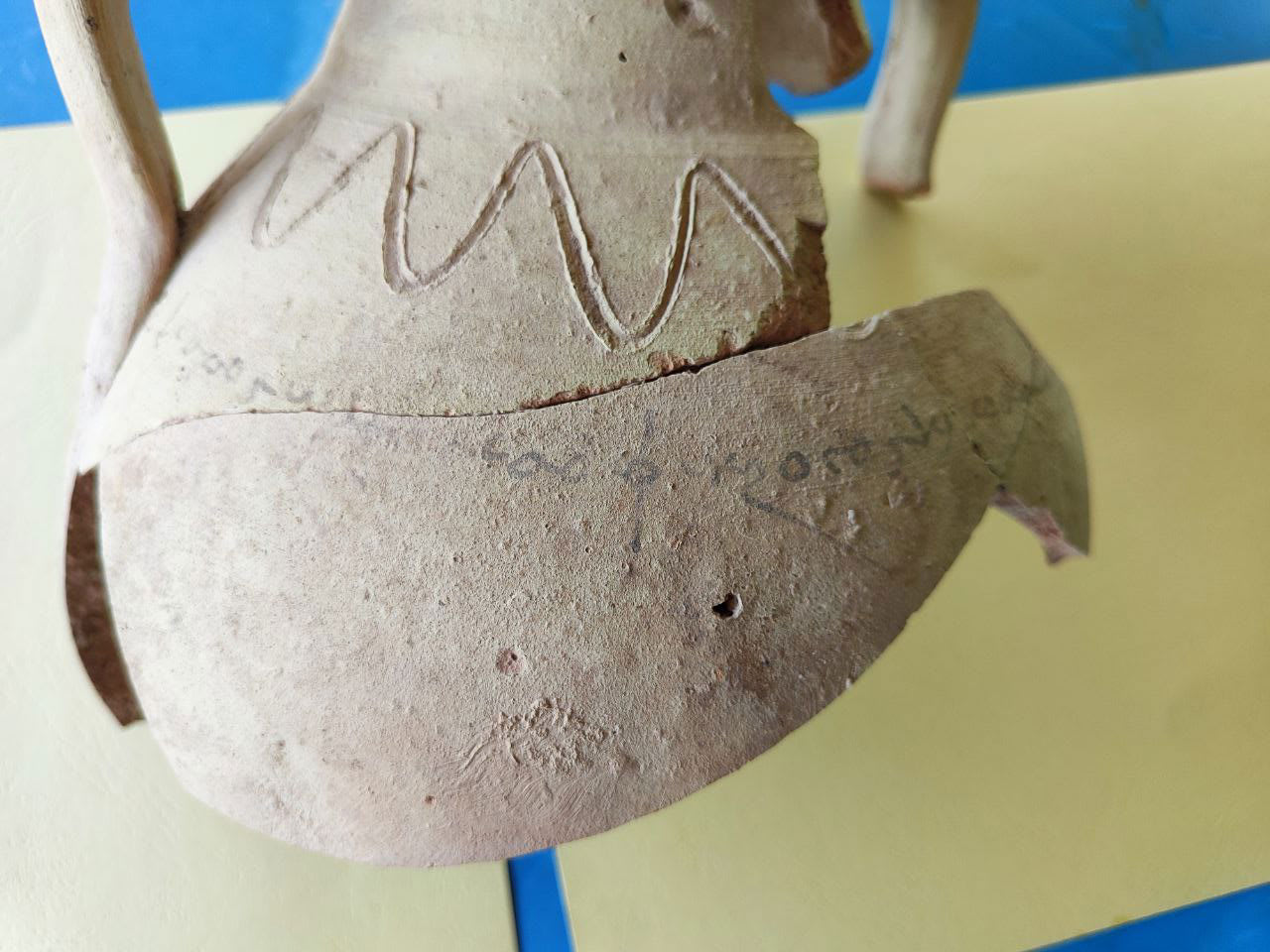
timesca+1.timesca+2.timesca+1.muslimnetwork.muslimnetwork+1.Archaeologists from the National Museum of Tajikistan have unearthed a rare clay vessel bearing a complete Bactrian inscription that reads "This water jug belongs to the woman Sagkina," offering unprecedented insight into female literacy, property ownership, and everyday life during the Kushan Empire period (1st-3rd centuries AD) when Bactrian was the official language written in Greek-derived characters, with the discovery at the Khalkhajar archaeological site representing one of the few complete Bactrian texts found in the region.
The Bactrian script found on Sagkina's vessel represents a significant linguistic artifact from the Kushan period. Written in Greek-derived characters, Bactrian was the official language of the Kushan Empire, particularly after Kanishka I's reign when it replaced Greek on official inscriptions and coinage around 127/128 CE. The inscription on this clay jug is especially valuable as complete Bactrian texts are exceedingly rare in Tajikistan.timesca+2
Unlike some contemporary artifacts that feature the partially deciphered "unknown Kushan script" (an abugida written right-to-left with less than 30 signs), Sagkina's vessel displays clear Bactrian language in Greek letters. Such inscriptions provide crucial insights into everyday life during the Kushan era, revealing not only ownership patterns but also linguistic practices. Scholars like Professor Nicholas Sims-Williams, a specialist in ancient Iranian languages, have been instrumental in translating these rare texts, which often contain vocabulary with parallels in other Iranian languages like Khotanese Saka.iranicaonline+3
The clay water jug was discovered at the Khalkhajar archaeological site in Tajikistan, where ongoing excavations continue to unearth artifacts from the Kushan Empire period. Initially recovered in fragments, the vessel was meticulously restored by conservators at the National Museum of Tajikistan, revealing its two-handled design and the rare complete Bactrian inscription. The inscription, transliterated as "eiado gō(l)z[o ]sido finzo sagkino ol(o) mo(.)" by experts, provides a unique window into everyday domestic life during this historical period.muslimnetwork+1
The significance of this discovery extends beyond linguistics into social history. The simple ownership statement suggests a level of female property rights and literacy rarely documented from this era. To authenticate and translate the inscription, museum officials consulted renowned experts including Professor Nicholas Sims-Williams and British numismatist Joe Cribb, whose expertise in ancient Iranian languages and Kushan-era artifacts proved invaluable in contextualizing this exceptional find. The vessel is expected to become a centerpiece in the National Museum of Tajikistan's collection, offering visitors tangible evidence of personal identity and domestic practices in ancient Central Asia.muslimnetwork
The discovery of Sagkina's water jug provides a rare glimpse into women's property rights in ancient Tajikistan, contrasting sharply with the complex evolution of female ownership in the region. While the Kushan Empire (c. 30–375 CE) apparently permitted some degree of female property ownership as evidenced by the vessel inscription, women's land and property rights in Tajikistan have historically been constrained by patriarchal traditions. In modern Tajikistan, women's property rights remain closely tied to their status within the family, with access to land often dependent on relationships with male relatives.wunrn+3
The struggle for women's economic autonomy in Tajikistan has deep historical roots, influenced by Soviet-era reforms that attempted to emancipate women through education and political representation. Despite these efforts and current laws that theoretically guarantee equal property rights, rural women continue to face significant barriers including limited awareness of their economic rights, deeply ingrained customs of male inheritance, and social pressure to avoid asserting ownership claims. Recent advocacy has focused on reforming land legislation to give women greater control over farms they operate, with women's groups lobbying for changes that would equate land use with other forms of property regarding individual rights.jstor+3