Newsletter Subscribe
Enter your email address below and subscribe to our newsletter
[forminator_form id="25163"]

All voices matter
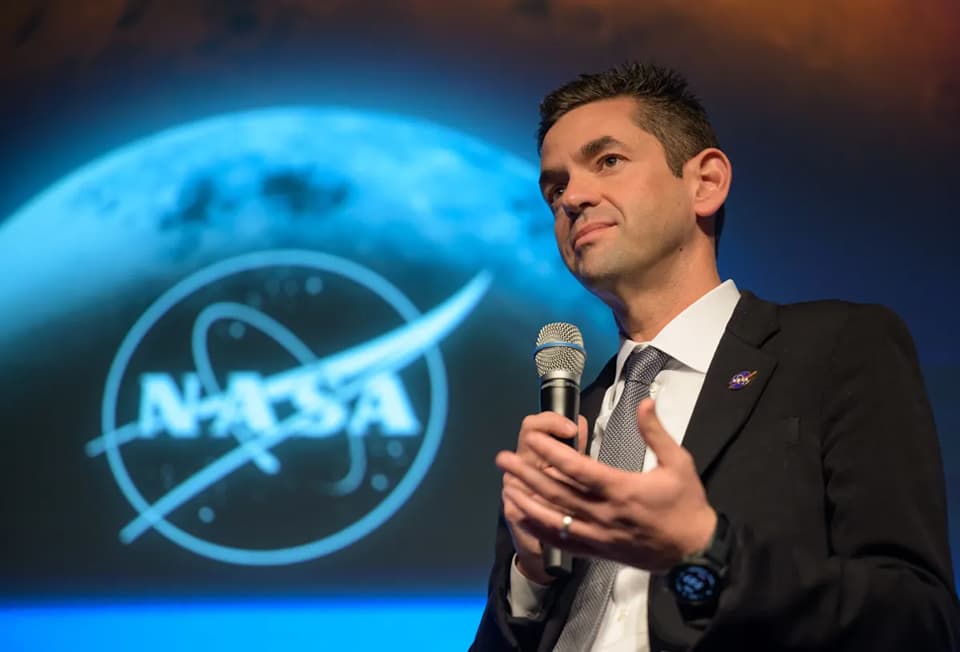
foxnews.com.dailymail.com.phys.org+1.A small near-Earth object called 1998 KY26 is speeding up in a way gravity alone can't explain. A new study has ruled out one leading explanation, and a Harvard astrophysicist has offered a much more unusual one: that the object is a Soviet probe lost in 1988. NASA Administrator Jared Isaacman said Thursday that he has seen no evidence it is "anything other than an asteroid," Fox News reported.foxnews.com
Scientists had suggested KY26 might be a "dark comet," an object that looks like an asteroid but carries buried ice that turns to gas and gives it a small push. In a study published in Icarus, Georgia Tech researchers Korbin Hansen and Masatoshi Hirabayashi found that ice would need temperatures below about –128°C to survive inside the object. Even the coldest parts of KY26 average around –47°C or warmer over its orbit, Phys.org reported. The authors concluded that the rate of water loss would "preclude 1998 KY26 being a dark comet at present". Their results instead support earlier work suggesting that sunlight pressure and heat radiating from the surface could be pushing the asteroid.foxweather.com+2
The object is about 36 feet across, reflects roughly 52% of the sunlight that hits it and spins once every 5.35 minutes. Its next close approach to Earth is expected in May 2039, at about 10.1 million miles away.foxnews.com+1
Avi Loeb and co-authors Adam Hibberd and Adam Crowl argue in an arXiv paper that the object's size, shine, fast spin and orbit fit Phobos 1, a Soviet spacecraft that went silent on its way to Mars in 1988. They say sunlight pressing on its metal surfaces and solar panels could explain the acceleration. Their simplified model of the probe closely matched eight sets of brightness observations. Still, the researchers called the idea "strongly plausible but presently unproven". "The similarity of the orbit of 1998 KY26 to the orbit of the lost Phobos 1 spacecraft suggests that the two objects are the same," Loeb said in a statement.metro.co.uk+2
Other research points to a more ordinary answer. A study published this year in Astronomy & Astrophysics found that the light KY26 reflects matches a rocky asteroid that likely came from the inner asteroid belt.foxnews.com
Speaking on "Fox & Friends," Isaacman said: "First of all, nothing is about to hit us, to be very clear on this." He added that NASA is still monitoring the object.foxnews.com
A firmer answer may come when Japan's Hayabusa2 spacecraft reaches KY26, its final target, in July 2031. Loeb has already made his prediction: "instead of an iceberg, Hayabusa 2's cameras will reveal the label 'Made in the U.S.S.R.'".thescottishsun.co.uk+1