Newsletter Subscribe
Enter your email address below and subscribe to our newsletter
[forminator_form id="25163"]

All voices matter
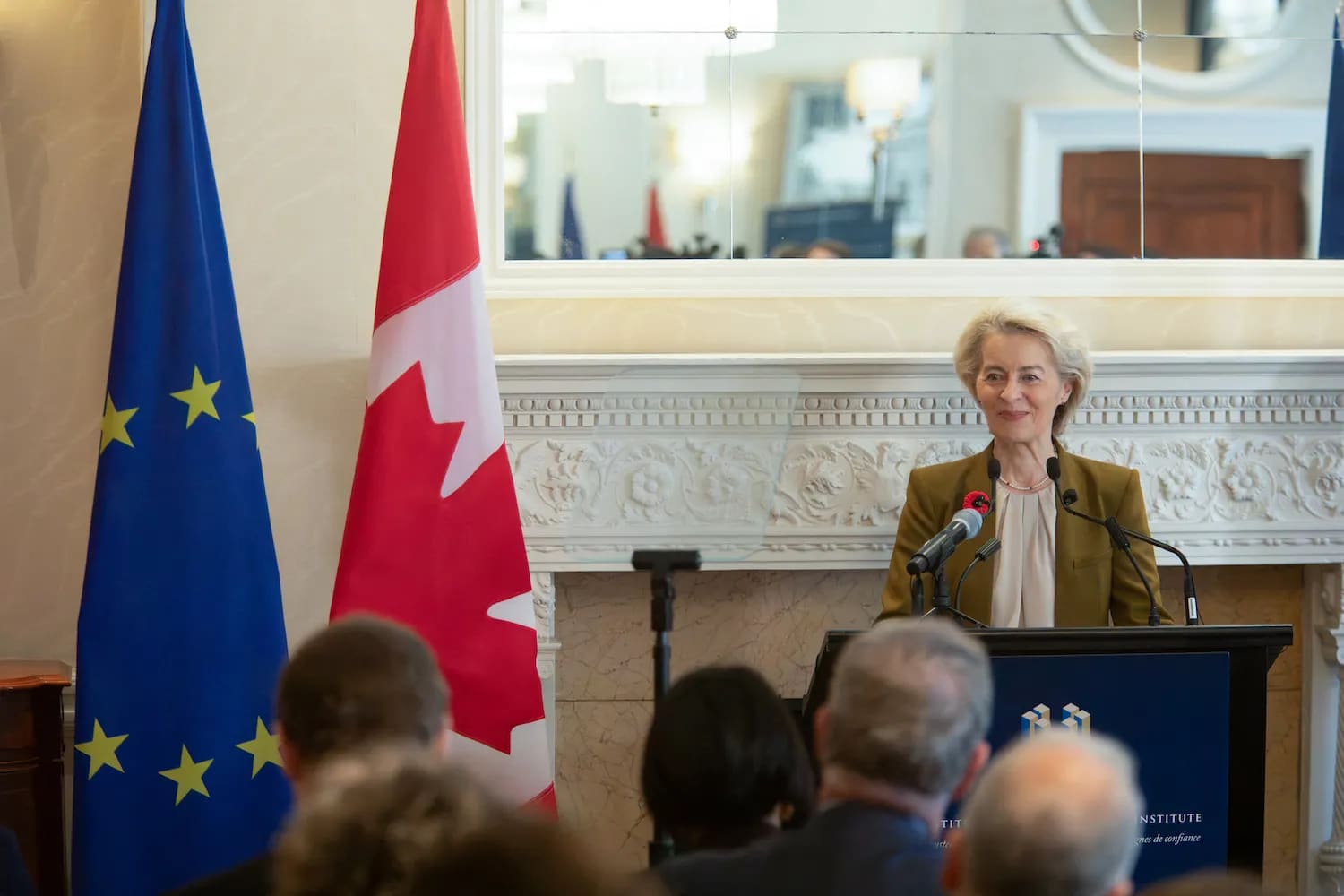
politico.eu.chronicle.lu+1.politico.eu+1.A dispute over whether to call Canada an "associate member" of the European Union is widening the split between German Chancellor Friedrich Merz and European Commission President Ursula von der Leyen. Four diplomats told Politico about the disagreement. Officials in Berlin see von der Leyen's push to give Canada the label as a rebuke of Merz's earlier proposal to offer the same status to Ukraine.politico.eu
Neither side is backing down. Germany repeated its opposition at a meeting of EU ambassadors on Wednesday, November 4, and a person familiar with von der Leyen's thinking said she has no plans to drop the term, Politico reported.politico.eu
The disagreement came to a head at the Canada-EU summit in Montreal that began on October 29. Before the summit, Canada and the EU agreed in a joint declaration to pursue "ever closer association" but left out associate membership. According to Reuters, as carried by Chronicle.lu, Germany led a group of countries that objected to a concept with no legal status that had not been worked out. Von der Leyen then used the phrase anyway. "Canada cannot become a full-fledged member of the EU because of geography," she said, describing the idea as "association without accession," the Associated Press reported. Prime Minister Mark Carney also adopted the term, after saying earlier that the partnership's "name doesn't matter," CBC News reported.cbc.ca+2
The problem for Berlin is the definition. Two EU diplomats told Politico that von der Leyen's version describes a status for countries that can never join the EU, and that this rules it out for Ukraine. "Germany had different plans for associate membership — and still does," one diplomat said.politico.eu
In May, Merz wrote to EU leaders proposing that Ukraine become an associate member as an interim step toward full membership. Under his plan, Ukraine would take part in EU institutions without voting rights and would receive a political commitment under the bloc's mutual assistance clause, Euronews reported. Ukrainian President Volodymyr Zelenskiy called the proposal "unfair," Reuters reported.euronews.com+1
Both sides say they want the same thing in substance. "We both committed to form a unique partnership that we don't have with any other country outside the European Union," a German diplomat told Politico. Commission spokesperson Paula Pinho said Brussels is focused on "building on the foundations" set at the summit.politico.eu
Still, the label fight sits alongside other disputes. Berlin has said it will not approve the Commission's proposed long-term budget of roughly €2 trillion unless it is cut by "hundreds of billions." Von der Leyen's idea for a European Security Council has also gained little support in Germany. Jan Techau of Eurasia Group said von der Leyen has taken "a strongly integrationist approach" while Merz sees national governments as the main force behind EU policy. He called the underlying tension "unresolvable."