Newsletter Subscribe
Enter your email address below and subscribe to our newsletter
[forminator_form id="25163"]

All voices matter
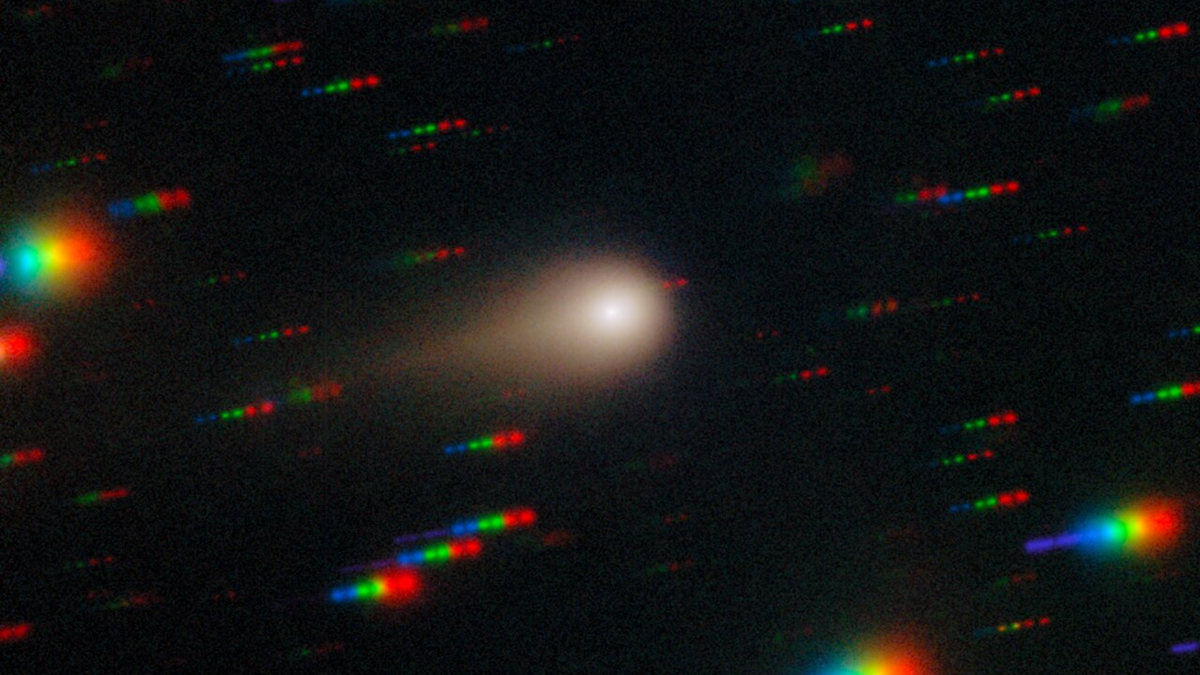
starlust+1science.nasa+1skyatnightmagazineThe interstellar comet 3I/ATLAS, only the third object from beyond our solar system ever detected, has been confirmed as unusually rich in carbon dioxide compared to comets born around our Sun, according to observations from NASA's James Webb Space Telescope Alphabet Inc. and other major observatories. A separate study published this week in the Monthly Notices of the Royal Astronomical Society has added fresh details about where this ancient traveler may have formed.
Webb's observations confirmed that 3I/ATLAS releases far more carbon dioxide relative to water than typical solar system comets, pointing to a formation environment and chemistry unlike anything in our cosmic neighborhood. The telescope also made the first direct detection of methane on an interstellar visitor, a molecule scientists believe was hidden beneath the surface and released only after solar heating reached deeper icy layers.esa+2
Astronomer Cyrielle Opitom of the University of Edinburgh, who co-led a study of the comet using the Very Large Telescope in Chile, recalled the surprises that emerged during observations. "Rather than seeing a lot of cyanogen, what I was seeing was a line of nickel," she said, describing unexpectedly high levels of metals in the comet's gas atmosphere. Earlier Webb data also revealed exceptionally high levels of deuterium — about 30 times more than seen in solar system comets — further underscoring the comet's alien origins.skyatnightmagazine+1
A new study led by Dr. Lea Ferellec of Northumbria University, published September 8, used the WEAVE instrument on the William Herschel Telescope to analyze ionized gas streaming from the comet's tail. The team identified five different types of ions and determined that 3I/ATLAS likely formed at temperatures below −240°C, suggesting it originated at the frigid outer edge of a distant star system. "This object gives us a rare chance to study material that formed somewhere completely different from our own solar system," Ferellec said.starlust+1
Opitom's own work using the Very Large Telescope, Webb, and ALMA pointed to a complementary conclusion: the comet likely formed around a star older than our Sun, one with lower metallicity, in a distant region of the Galaxy where older stars reside.eso+1
Discovered in July 2025 by the ATLAS survey telescope in Chile, the comet was observed from July 2025 through March 2026 before fading from view. Opitom noted that the Vera Rubin Observatory's Legacy Survey of Space and Time, now officially underway, could find roughly one interstellar object per year — a shift from studying these visitors one at a time to examining them as a population. "I can't wait to see what the next interstellar object will teach us," she said.skyatnightmagazine