Newsletter Subscribe
Enter your email address below and subscribe to our newsletter
[forminator_form id="25163"]

All voices matter
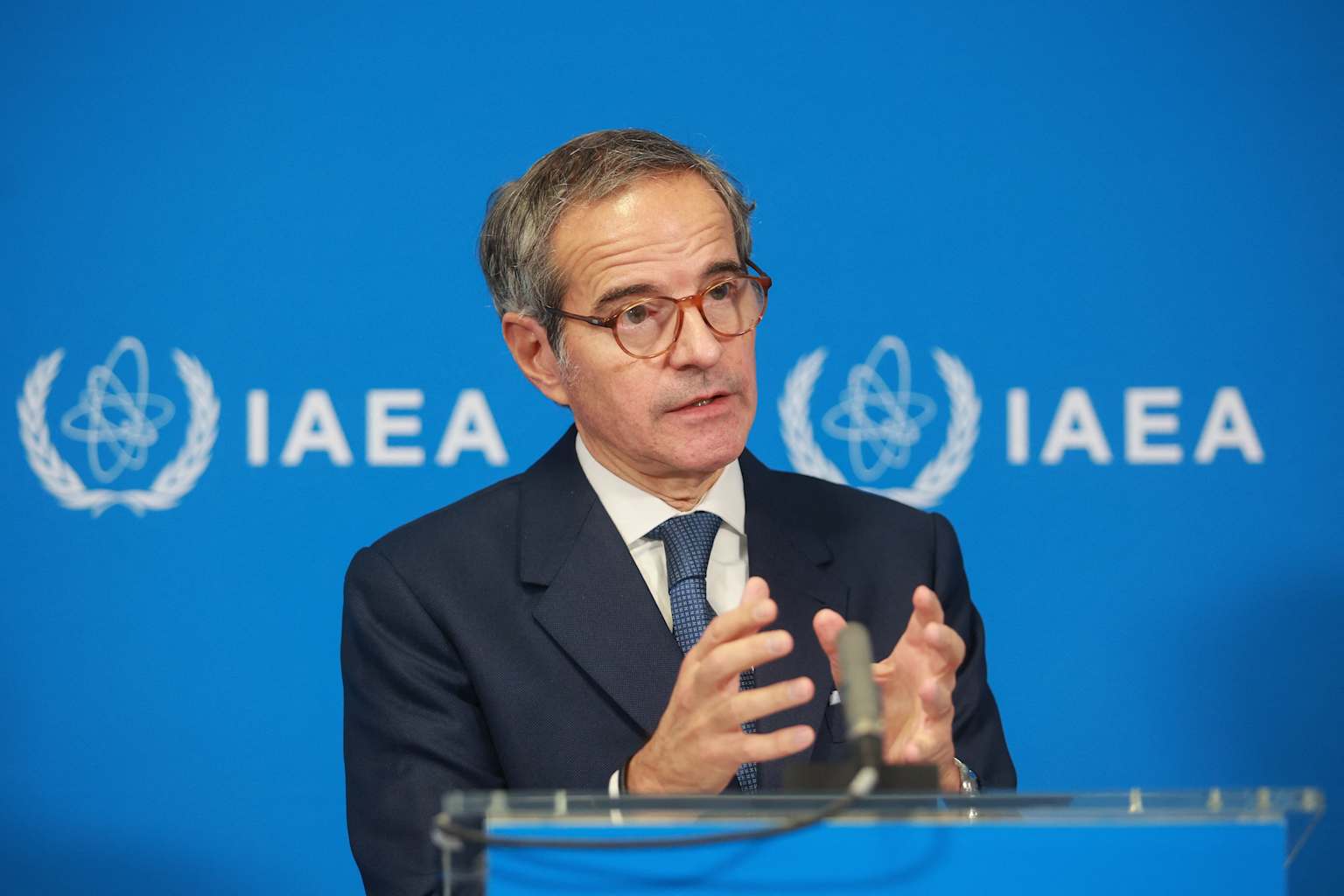
reuters.com+1.reuters.com.reuters.com+1.Rafael Grossi, head of the International Atomic Energy Agency, said on Wednesday that the inspection terms in a planned US-Saudi civil nuclear deal are "very satisfactory," even though they leave out the Additional Protocol, the UN watchdog's strictest verification standard. "I think that for the specific agreement we have, it is a very satisfactory outcome," Grossi told a press conference during a quarterly IAEA Board of Governors meeting in Vienna, Reuters reported.reuters.com
His endorsement comes as the agreement, known as a 123 agreement, waits for approval from US lawmakers. Nonproliferation experts have criticized it for not barring Riyadh from enriching uranium or reprocessing spent fuel, two possible paths to a nuclear weapon, according to Reuters.detroitnews.com
In his opening statement to the board, Grossi said Washington and Riyadh asked the agency in October "to take the necessary steps to implement safeguards and verification measures." He said the IAEA "will be provided with information about, and access to any sites for conversion, enrichment, fuel fabrication and reprocessing" in the kingdom, AFP reported via RFI. He called the deal "fully aligned with the legal framework that we have at the IAEA" and said Saudi Arabia had agreed to "additional verification measures on a voluntary basis." Once nuclear power development begins in Saudi Arabia, "we will be there," he added, according to CBS News.cbsnews.com+1
A safeguards text sent to the IAEA board and seen by Reuters allows snap inspections, but only at declared sites. It says enrichment and reprocessing will take place only "on a location on a covered site." Inspectors would get "short notice access" to any place on such sites, with at least two hours' notice when they are already on site and 24 hours' notice otherwise, Reuters reported.reuters.com
Saudi Arabia recently signed a Comprehensive Safeguards Agreement with the IAEA, which allows inspections of declared facilities. It has not signed the Additional Protocol, which would permit snap inspections at undeclared sites as well, according to Reuters. "Obviously, the AP provides more access and it is in this sense considered by many as the standard," Grossi said, adding that "perhaps this will be the case in the future."detroitnews.com
Concerns about the deal are sharpened by Crown Prince Mohammed bin Salman's statement that Saudi Arabia will develop nuclear weapons if Iran does. Reuters also noted that Grossi is running for UN secretary-general, a race in which he needs the support, or at least the acquiescence, of the five permanent Security Council members, including the United States.
The two countries announced the agreement in July, and it has raised questions about proliferation risks, AFP reported. Israel's Institute for National Security Studies said the deal marks a turning point. Washington had long required partners to give up fuel-cycle capabilities in exchange for nuclear cooperation, and it is now "adopting a more flexible approach that seeks to manage proliferation risks rather than prevent them entirely," the institute wrote.rfi.fr+1