Newsletter Subscribe
Enter your email address below and subscribe to our newsletter
[forminator_form id="25163"]

All voices matter
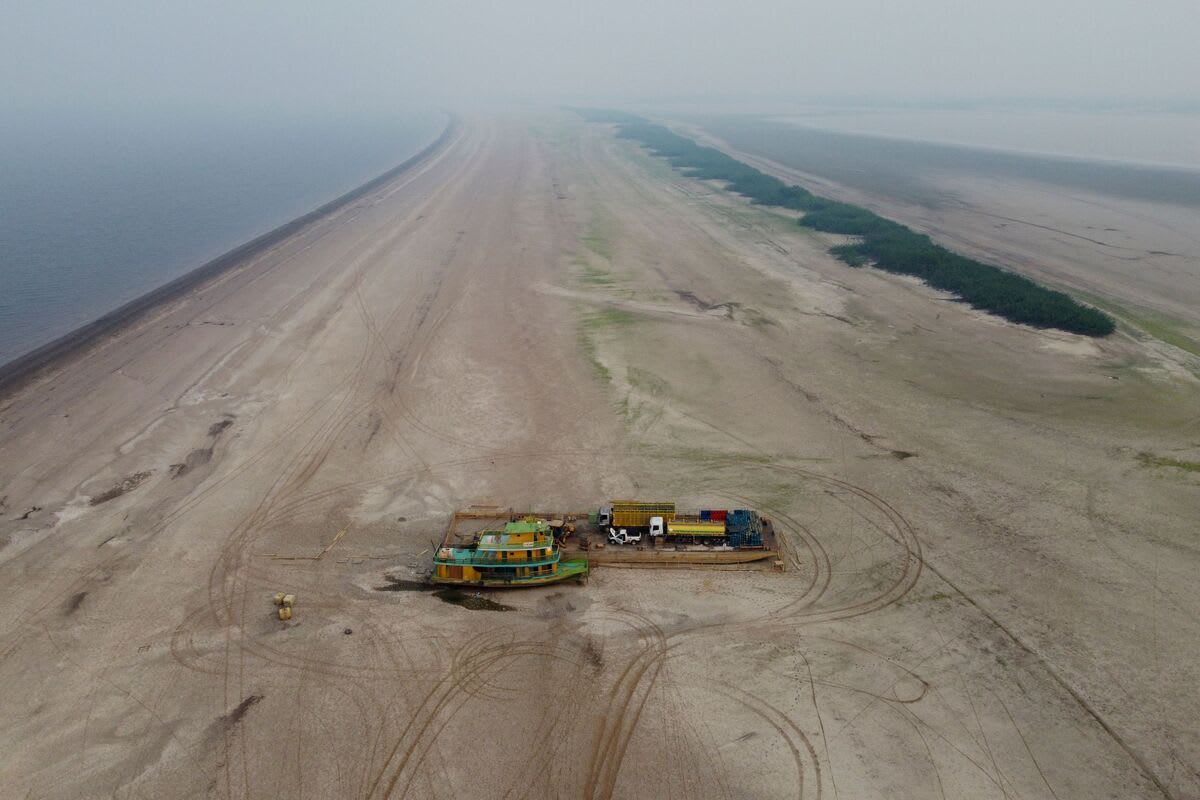
eurekalert+1eurekalertwwfThe Amazon rainforest faces a growing threat of catastrophic drought and wildfire as the 2026 El Niño — forecast to be the strongest in modern history — intensifies across the Pacific, arriving just two years after the devastating 2024 drought that left rivers at historic lows and fueled the worst fire season in two decades.
A study published on September 9 in Communications Earth & Environment, led by Lancaster University with more than 50 scientists and WWF UK, found that climate extremes across the Amazon have worsened far more rapidly than average climate measures suggest. Ten percent of the Amazon basin — an area larger than 700,000 square kilometers — has experienced dry-season temperature increases of at least 0.75°C per decade, totaling more than 3.2°C since 1981.eurekalert+2
The study identified central northern Amazonia, a region of extensive intact forest and Indigenous territories previously considered resilient, as a new hotspot for accelerating extreme heat and moisture deficit. "The rates of change that we are seeing in the most affected regions are very alarming," said Professor Jos Barlow of Lancaster University, the study's lead author.wwf+1
Separately, a MapBiomas analysis released on September 4 found that 38% of localities across the Brazilian Amazon were highly exposed to drought between September and November 2024, following the last El Niño. Surface water was 12% below the 1985–2025 average, temperatures ran 2.6°C above normal, and precipitation fell 27% below average during that period.bloomberg
The current El Niño is developing with unusual speed. Sea surface temperatures in the tropical Pacific are already well above normal and still rising. The UK Met Office's latest forecasts show a "terribly dangerous" rainfall anomaly developing over the Amazon by January, according to Adam Scaife, a Met Office scientist. Tim Li at the University of Hawaii said Amazon rainfall during June through August 2026 was already "much stronger" in its deficit than any previous El Niño at a comparable stage.newscientist
The Monitoring of the Andean Amazon Project warned that given predictions of a very strong El Niño peaking in late 2026, the best analogue is the 2015 event, which preceded the burning of nearly 1.8 million hectares of primary Amazon forest in 2016.maapprogram
Scientists warn that repeated severe droughts risk pushing the Amazon past a critical threshold where the rainforest ecosystem collapses and transitions to degraded savannah. WWF's 2025 Global Tipping Points Report found that just 20–25% deforestation could trigger this transformation; roughly 17% has already been lost.wwf
"Adaptation measures are urgently required," Barlow said, "especially in a year like 2026 with the arrival of a super El Niño".eurekalert