Newsletter Subscribe
Enter your email address below and subscribe to our newsletter
[forminator_form id="25163"]

All voices matter
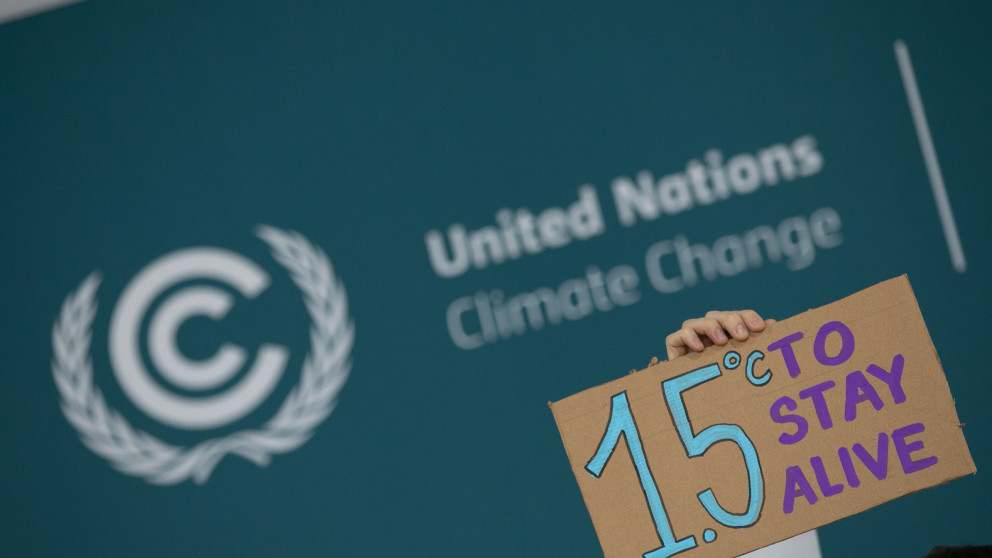
stocktitanstocktitanstocktitan+1Limiting global warming to 1.5°C is no longer achievable under any plausible trajectory, and the world is unlikely to reach net-zero emissions before the end of the century, according to a major new energy study released Thursday by S&P Global .
The Multidimensional Global Energy Pathways report projects that primary energy demand in emerging markets and developing economies could surge by more than 60% by 2060 — the equivalent of adding another China to the global energy system — overwhelming efforts to cut greenhouse gas emissions even under the most aggressive decarbonization scenarios.spglobal+1
The study, produced in collaboration with the Institute of Energy Economics, Japan, takes a bottom-up, country-level approach across twelve major developing economies including India, Brazil, Indonesia and Nigeria. Unlike many existing forecasts that work backward from predetermined climate targets, the report starts with projected demand driven by population growth, urbanization and industrialization in the developing world.spglobal
"The thinking and policies that have sought to shape the energy transition over the last decade have collided with the realities of economic development, growing energy demand, geopolitics and the pace of technological progress," said Daniel Yergin, Vice Chairman of S&P Global.stocktitan
While demand in advanced economies and China is expected to remain broadly flat, the report finds that new low-carbon energy supply in developing countries will largely serve incremental demand rather than replace existing fossil fuel use, creating what the authors describe as an "additive" transition where multiple energy sources coexist for decades.spglobal
The report's most aggressive scenario, the Emissions Reduction Pathway, could hold warming to 2°C by century's end but would require installed solar and wind capacity to rise eight-fold globally, a 25-fold increase in grid battery capacity, and $50 trillion in power-sector investment through 2060. Even under this pathway, fossil fuels remain structurally embedded, with more than $11 trillion in upstream oil and gas investment still needed as oil demand falls over 40%.stocktitan
A more probable trajectory under current policies — the Current Realities Pathway — shows total greenhouse gas emissions declining by just 17%, with warming reaching 2.8°C by 2100.stocktitan
The findings arrive weeks after a United Nations report acknowledged that the world will miss the 1.5°C target set by the 2015 Paris Agreement and should focus instead on limiting how far temperatures overshoot that mark.nytimes+1
"There are practical limits to how much power systems can expand, decarbonize and remain reliable at the required pace, at affordable cost and within the limits of available finance," said Atul Arya, Senior Vice President and Chief Energy Strategist at S&P Global Energy.stocktitan
The study introduces a new Energy Prosperity Indicator to help policymakers weigh trade-offs between affordability, energy security and emissions reduction — underscoring that there is no single roadmap for the energy transition. As Yergin wrote in the report's foreword: "Energy transition is continuous and everlasting. Its course will be multidimensional, regionally differentiated and multi-speed — not linear and rapid as promoted in the popular narrative."spglobal