Newsletter Subscribe
Enter your email address below and subscribe to our newsletter
[forminator_form id="25163"]

All voices matter
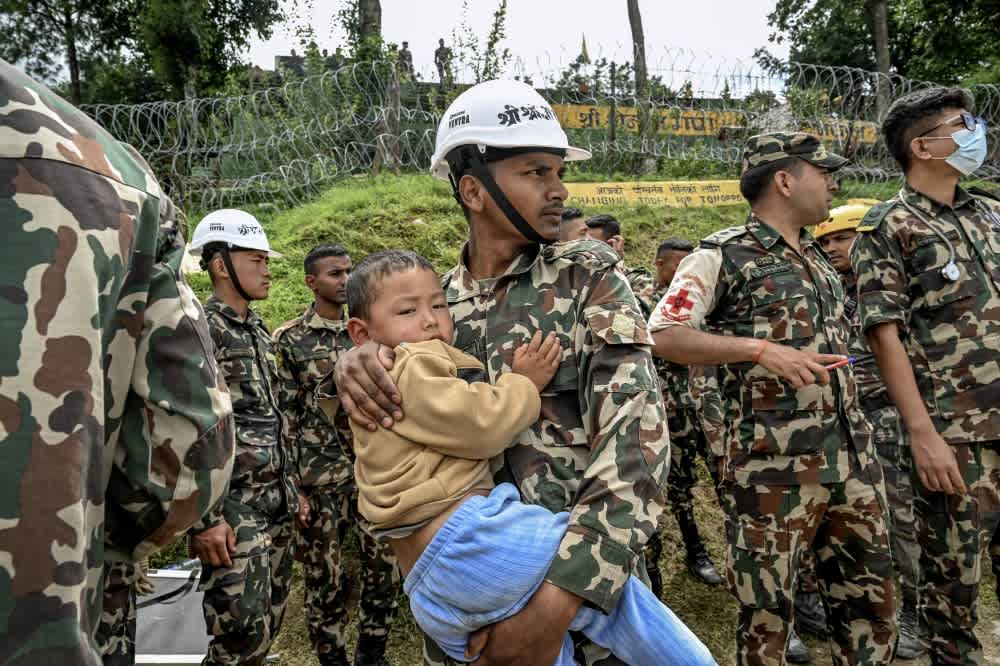
omanobserver+1omanobserver+1omanobserver+1Two days after a catastrophic glacier collapse on the north face of Langtang Lirung sent millions of metric tons of rock and ice crashing into valleys along the Nepal-Tibet border, scientists said Thursday that decades of warming temperatures have destabilised the Himalayan slopes and raised the risk of precisely this type of disaster.
The August 26 event killed more than 500 people and left more than 1,300 missing, including hundreds of foreign nationals from over 30 countries. A group of glaciologists and geologists concluded that the flooding was probably unleashed when an enormous chunk of bedrock collapsed beneath a glacier, triggering a landslide at an elevation of around 5,200 meters, while a section of ice simultaneously detached and cascaded roughly 1,200 meters to the valley floor.omanobserver+3
Scientists drew a direct line between rising global temperatures and the conditions that made the collapse more likely. As fossil fuel emissions warm the planet, the Himalayas are losing permafrost — the frozen mixture of soil, rock, and organic matter that has held mountain slopes together for millennia.
"Permafrost has been the cryospheric glue that's held the rock and the ice and the glaciers together for millennia, and now we're getting increasing evidence that it's being weakened by warming trends," said Alton C. Byers, a senior research associate at the Institute of Arctic and Alpine Research at the University of Colorado Boulder.omanobserver
Ashim Sattar, an assistant professor at the Indian Institute of Technology Bhubaneswar, said that as glaciers retreat and permafrost melts, slopes become more susceptible to failure. "There's a very straight link between climate change and these types of disasters," Sattar said.omanobserver
Experts cautioned that climate change should not be identified as the sole immediate trigger. Stuart Dunning, a professor of applied geomorphology at Newcastle University, said the collapse likely resulted from "a whole variety of factors that are long-term, along with possible short-term things like a strong snow melt component in the last few days". Full analysis could take months.omanobserver
Still, the long-term pattern is stark. About 60 large rock-ice avalanches have been recorded in the Himalayas since 1900, and glacier ice loss rates across the Hindu Kush Himalayan region have doubled since 2000, according to the International Centre for Integrated Mountain Development. Nepal's glaciers melted 65 percent faster in the decade before 2023 than in the preceding one, the United Nations reported.straitstimes+1
The disaster also exposed gaps in Nepal's early warning infrastructure. Austin Lord, a senior fellow at the Stimson Center, said the country's flood monitoring network was not designed to detect this kind of rapid-onset event. "This type of flash flooding, because of the speed at which it moves, means that kind of conventional system is ill-equipped," he said.omanobserver
The impact of the collapse was so powerful that the United States Geological Survey initially classified it as a magnitude 4.4 earthquake before revising it to a magnitude 5.2 seismic event caused by the glacial collapse and debris flow. Benjamin Horton, dean of the School of Energy and Environment at City University of Hong Kong, called the disaster a possible "compound event" and warned that grasping these cascading risks will be crucial to strengthening resilience in high-altitude communities.thebridgechronicle+1