Newsletter Subscribe
Enter your email address below and subscribe to our newsletter

All voices matter

archaeology+1.archaeology+1.archaeology+1.newsnow+1.archaeology+1.Recent archaeological excavations near the village of Crnobuki in North Macedonia have revealed a significant discovery that challenges previous assumptions about the region's ancient settlements, with researchers now believing they may have uncovered Lyncus, the lost capital of the Kingdom of Lyncestis, which dates back to at least the 4th century BCE and features distinctive Hellenistic architectural elements.
Lyncestis was originally an autonomous kingdom in Upper Macedonia that maintained its independence from the Macedonian Argead dynasty until Philip II's conquest in 358 BCE. Under King Arrhabaeus (son of Bomerus), Lyncestis became the strongest tribal state in Upper Macedonia during the second half of the 5th century BCE. The kingdom demonstrated its military prowess during the Peloponnesian War when, in 423 BCE, the combined Lyncestian and Illyrian forces defeated the allied armies of Macedonian King Perdiccas II and Spartan commander Brasidas at the Battle of Lyncestis. This battle occurred amid escalating tensions between Athens and Sparta, with the Lyncestians benefiting from a strategic alliance shift when the Illyrians, originally aligned with Perdiccas II, switched sides to support Arrhabaeus.wikipedia+2
The kingdom's fortunes changed when it was annexed by the Illyrian king Bardylis following his victory over Perdiccas III of Macedon in 360 BCE. However, just two years later, Philip II defeated Bardylis at the Battle of Erigon Valley, incorporating Lyncestis into the Macedonian kingdom. Though conquered, the Lyncestians retained their own basileus (king) and were integrated into Philip's army due to their shared language and were accorded equal status with Lower Macedonians. Philip II solidified this annexation by establishing Heraclea Lyncestis as the region's main city and through strategic marriage alliances—notably, his father Amyntas III had married Eurydice I, a Lyncestian princess with Illyrian connections, effectively completing the political absorption of Lyncestis into the Macedonian realm. This royal connection meant Alexander the Great's grandmother likely hailed from Lyncus, making the recent archaeological discoveries particularly significant for understanding Macedonian royal lineage.livescience+3
The Gradishte archaeological site near Crnobuki, North Macedonia, initially thought to be merely a Roman-era military outpost, has been revealed as a thriving ancient city spanning at least seven acres. Modern archaeological techniques, including ground-penetrating radar and drone-deployed LIDAR funded by Cal Poly Humboldt, have uncovered evidence of a sophisticated urban center that predates the Roman Empire by centuries. Researchers now believe this site could be Lyncus, the lost capital of the Kingdom of Lyncestis, dating back to the 7th century BCE.archaeology+3
Excavations have yielded remarkable artifacts that paint a picture of a prosperous settlement dating to at least 360 BCE, including:
myclassicsportal+1balkaneu+1chronicleheritage+1arkeonews+1now.humboldt+1The site's strategic location along trade routes to Constantinople has led archaeologist Nick Angeloff to suggest that historical figures like Octavian and Agrippa may have passed through while traveling to confront Cleopatra and Mark Antony at the Battle of Actium.archaeology+2
The elite residence discovered at Gradishte represents the northernmost example of Hellenistic Ionic architecture found to date, showcasing the sophisticated architectural influences that reached even peripheral regions of the ancient Macedonian kingdom. This structure, believed to have been home to a local nobleman, sits atop Gradishte hill and features distinctive Ionic architectural elements that were typically associated with more central Hellenistic settlements. The discovery challenges previous assumptions about the cultural sophistication of regions like Pelagonia, which were once dismissed as "illiterate primitive chiefdoms" but are now understood to have had complex social structures with military families constituting the nobility under a local basileus (king).wikipedia+1
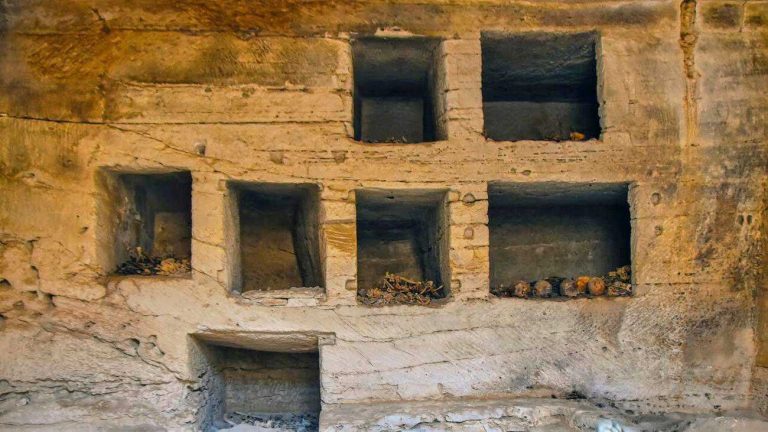
Hellenistic architectural traditions in North Macedonia extended beyond elite residences to include elaborate funerary structures. The region developed distinctive burial practices that culminated in the Hellenistic period with both "Macedonian" type tombs and uniquely "Pelagonian" rock-cut tombs, dated to approximately 275-225 BCE. Rather than representing direct architectural influence from one region to another, these similarities in elite structures across the Hellenistic world likely reflect "shared interregional tendencies" that developed through complex networks between Mediterranean elite groups during the 4th century BCE. This architectural evidence reinforces the understanding that peripheral regions like Pelagonia were active participants in the broader Hellenistic cultural sphere rather than passive recipients of central Macedonian influence.arkeonews+1