



Newsletter Subscribe
Enter your email address below and subscribe to our newsletter
[forminator_form id="25163"]

All voices matter
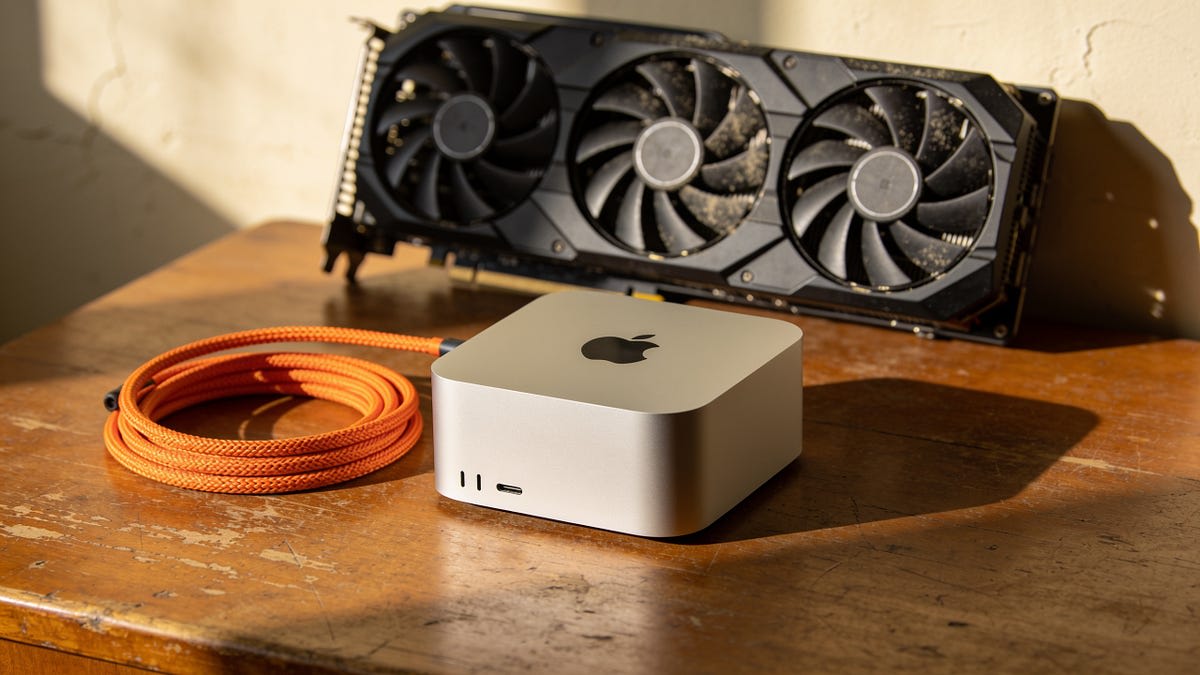
aiweekly+1cryptobriefingaiweekly+1OpenAI has purchased tens of thousands of Apple Mac mini and Mac Studio units to power its reinforcement learning and computer-use agent training, according to a report by The Information published Saturday. The move marks a notable expansion of Apple's role in the AI hardware market, a space long dominated by Nvidia .aiweekly+1
The AI lab's large-scale acquisition is aimed at optimizing its infrastructure beyond traditional GPU-heavy setups, potentially accelerating the development of next-generation models. Anthropic, OpenAI's rival, is also turning to Apple hardware, reportedly renting Mac minis through Amazon Web Services Amazon.com, Inc. for similar reinforcement learning and agent workflows.cryptobriefing+2
The purchases come days after Apple refreshed its Mac mini and Mac Studio desktops on August 25, introducing the M6 chip — Apple's first 2-nanometer processor — alongside M5 Pro, M5 Max, and M5 Ultra configurations. The new Mac mini starts at $899, while Mac Studio pricing begins at $2,499 for the M5 Max version and $5,499 for the M5 Ultra. The machines go on presale immediately and are set to ship on September 22.reuters+1
Apple's unified-memory silicon architecture, which allows its chips to share memory between CPU and GPU, has made Macs increasingly attractive for running local AI workloads. Ben Thompson of Stratechery noted that both Apple's and OpenAI's hardware announcements represent growing pressure on Nvidia. According to The Information's reporting, Nvidia now views Apple as its principal competitor in local AI processing.stratechery+1
The trend extends beyond the major AI labs. Startups have begun building Mac-based data centers for AI workloads, and high-end Mac configurations have been sold out for months. Apple's Mac business is up 29% as developer demand for its hardware has surged.x
The development reframes Apple's consumer-hardware franchise as a training and inference platform for frontier AI labs. Forbes noted that while Macs still struggle to run the largest frontier open-weight models, configurations like the Mac Studio with M5 Ultra and 256GB of unified memory can handle models with up to 284 billion parameters. For reinforcement learning tasks and agent development — where workloads differ from large-scale pretraining — the economics of Apple silicon appear to be compelling enough for OpenAI to invest at scale.forbes+1


