Newsletter Subscribe
Enter your email address below and subscribe to our newsletter

All voices matter
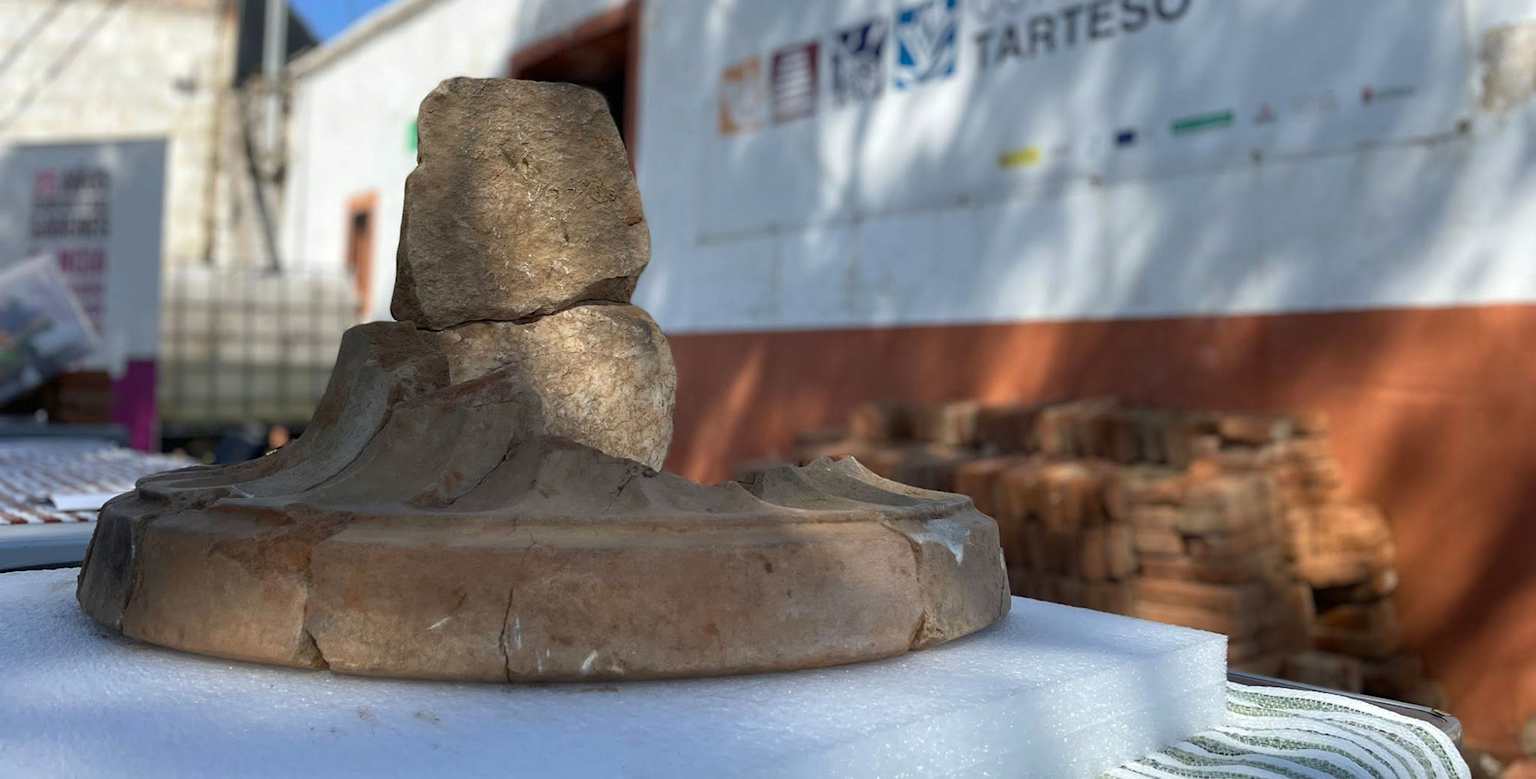
labrujulaverde+2.smarthistory+1.smarthistory.labrujulaverde+1.labrujulaverde+1.Archaeologists from the Institute of Archaeology of Mérida have discovered what is considered the oldest Greek marble altar in the western Mediterranean at the Tartessian site of Casas del Turuñuelo in southwestern Spain, dating to the 5th century BCE and crafted from Proconnesian marble sourced from the island of Marmara in present-day Turkey.
Proconnesian marble, the material from which the altar at Casas del Turuñuelo was crafted, originated from ancient Prokonnesos (modern Marmara Island) in the Sea of Marmara, Turkey. This distinctive medium to coarse-grained white marble, often featuring characteristic gray streaks, was one of the most extensively quarried and widely distributed marbles in antiquity. The island's quarries cover an impressive area of over 40 km², centered around the harbor at Saraylar, which served as the primary export hub for this prized material.marmoraasiatica.uw+1
The marble's exploitation began as early as the Archaic period (6th century BCE), with notable early uses including the first Artemision in Ephesos and the facade of Mausolos' palace in Halikarnassos. While the altar discovered in Spain represents a rare western Mediterranean example, Proconnesian marble was used extensively throughout the ancient world in prestigious projects including the Hagia Sophia and Blue Mosque in Istanbul, the Temple of Artemis at Ephesus, the Basilica of Maxentius, and the Arch of Septimius Severus in Rome. The marble's widespread distribution despite not matching the quality of Luna or Parian marble speaks to the quarries' strategic location with excellent sea access, making it economically viable to transport this heavy material across vast distances.artofmaking+3
The discovery of the Greek marble altar at Casas del Turuñuelo provides compelling evidence of sophisticated trade networks between the Tartessian civilization and the Greek world. This inland site, located far from typical coastal trading posts, contained not only the Proconnesian marble altar but also Athenian drinking cups, Macedonian glass, and Pentelic marble sculpture fragments. These findings challenge the traditional view of Tartessos as merely a passive recipient of Greek and Phoenician culture, instead revealing a society with extensive Mediterranean connections and considerable economic power.arkeonews+1
The presence of such valuable imported goods deep in the Iberian Peninsula demonstrates that Tartessian influence extended well beyond coastal areas, with Greek pottery found as far north as Cabezo de Alcalá in Aragón. The Tartessians leveraged their mineral wealth—particularly metals and ores—to establish these far-reaching trade relationships. Their commercial sophistication is further evidenced by the site's economic infrastructure, including kilns, loom weights, grain mills, and a rare bronze potter's wheel, highlighting the diverse production activities that supported their participation in Mediterranean exchange networks. This complex trading system ultimately transformed Tartessian society, as they rapidly adopted eastern building styles, art forms, and cultural practices while maintaining their distinctive identity.factcheck.afp+1
The dating of the altar to the 5th century BCE places it within a significant period of Greek cultural expansion throughout the Mediterranean. Archaeological analysis confirms this timeframe based on the altar's stylistic features and its discovery context alongside other contemporaneous artifacts at Casas del Turuñuelo. This dating makes it not only the oldest Greek marble altar in the western Mediterranean but also a rare example of Asian marble found this far inland in the Iberian Peninsula.greekreporter+2
The altar's chronology aligns with the flourishing period of the Tartessian culture, which thrived in southern Iberia between the 8th and 5th centuries BCE. Its ceremonial placement among luxury items, including Attic ceramic cups, reinforces the ritual significance of the site during this period. This timing is particularly noteworthy as it represents the height of Greek influence in the region before the eventual rise of Roman power, similar to other Hellenic cultural artifacts found elsewhere in the Mediterranean, such as the altar discovered at Segesta in Sicily.arkeonews+2