Newsletter Subscribe
Enter your email address below and subscribe to our newsletter
[forminator_form id="25163"]

All voices matter

inklReuters+1bloombergElon Musk declared on X that China is "by far" the strongest competitor in artificial intelligence, extending a warning he first made 15 years ago about Beijing's trajectory in rocket technology. His comments came the same day Chinese private rocket company LandSpace successfully landed the first stage of its Zhuque-3 orbital rocket, underscoring the breadth of China's challenge to American technological dominance.
Musk's post was a response to technology commentator Brian Roemmele, who resurfaced a 2011 prediction in which Musk wrote that SpaceX had Boeing, Lockheed, Europe and Russia "near checkmate in rocket technology" and that the "end game is all about China." That prediction gained fresh relevance on Wednesday when LandSpace recovered its Zhuque-3 booster after an orbital launch, becoming China's first private company to achieve a ground-based, leg-assisted orbital-booster recovery. Reuters reported the milestone puts LandSpace alongside SpaceX and Blue Origin as the only private companies to land an orbital-class booster.inkl+2
Musk's pivot to AI competition aligns with mounting evidence that China is closing in on the United States. Stanford University's 2026 AI Index found that the U.S.-China model-performance gap has "effectively closed," with Anthropic's top model leading China's best by just 2.7% as of March — down from as much as 31.6 percentage points in May 2023. The U.S. still produced 59 notable AI models in 2025 compared with China's 35 and attracted $285.9 billion in private AI investment versus China's $12.4 billion.Fortune+3
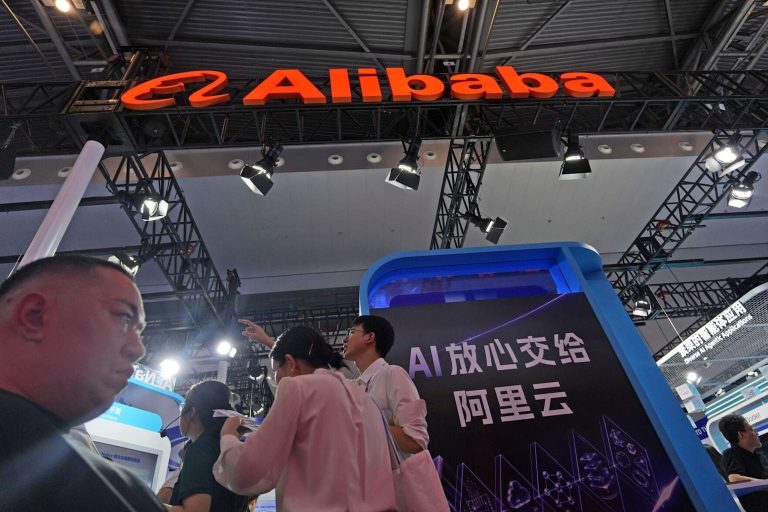
A Bloomberg Businessweek analysis published on August 19 found that Moonshot's Kimi K3 model has nearly matched Anthropic's most advanced offering at a fraction of the cost, while Chinese models now account for more than 60% of market share on OpenRouter, a widely watched platform for AI model usage. Alibaba disclosed its open-weight models have accumulated more than 3 billion downloads in six months, eclipsing Meta Platforms and Alphabet to become the world's most downloaded AI model family.bloomberg
The cost differential is driving adoption. Moonshot charges $15 per million output tokens for Kimi K3, while Anthropic's Fable 5 costs $50 — a gap that has prompted nearly 200 U.S. companies to speak out against any potential ban on Chinese AI models. The tension has reached the White House: President Trump told reporters in late July that "we don't want to restrict them where all of a sudden, we come in second to China."bloomberg
Ruslan Salakhutdinov, a computer science professor at Carnegie Mellon University who taught Moonshot founder Yang Zhilin, offered a sober assessment. "They are all going to be caught up by others at some point," he said.bloomberg