Newsletter Subscribe
Enter your email address below and subscribe to our newsletter
[forminator_form id="25163"]

All voices matter
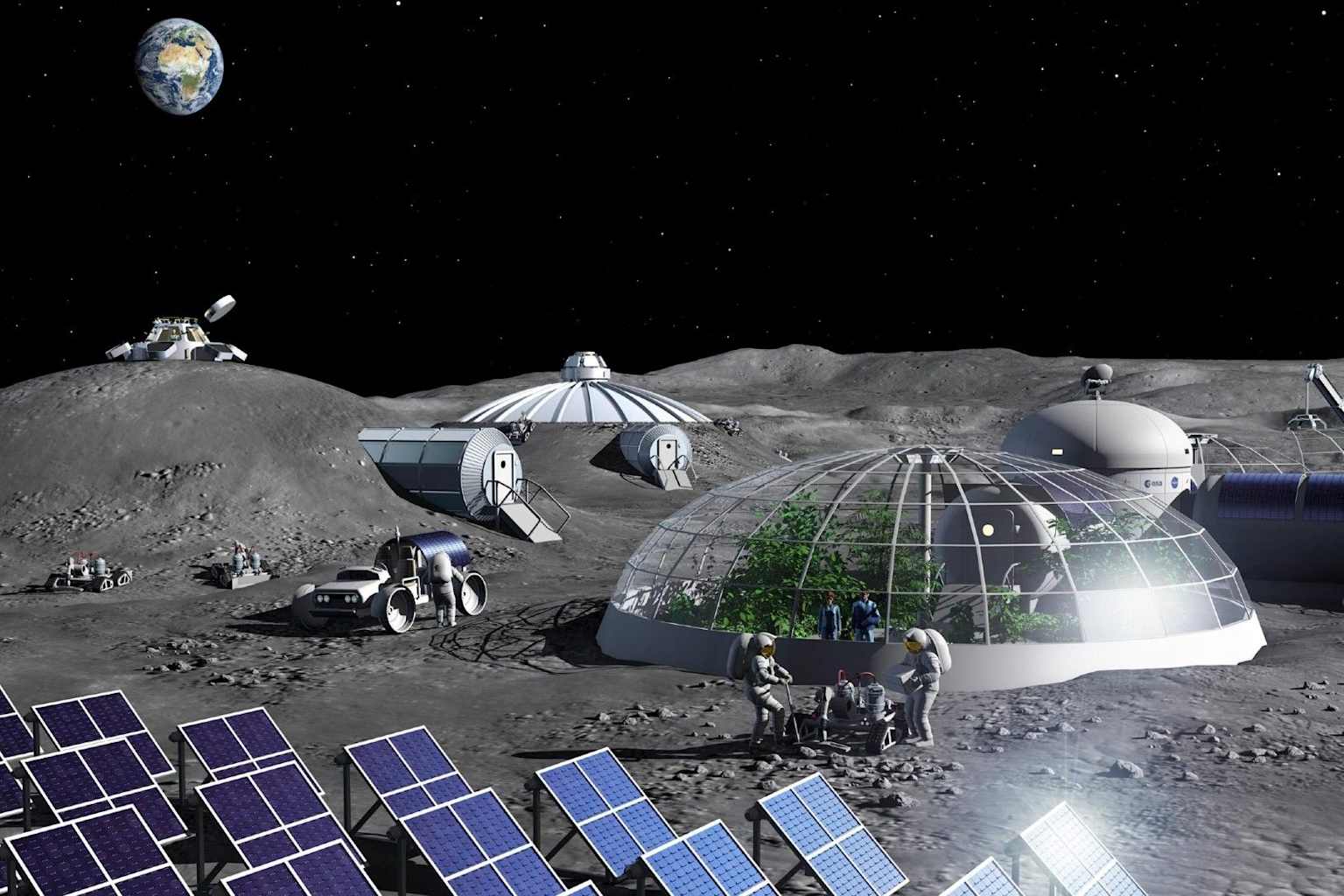
frontiersin+1chosun+1discovermagazine+1Dreams of sprawling cities on the Moon face a fundamental constraint: there simply isn't enough water. A study published this week in Frontiers in Space Technologies by researchers at the Harvard-Smithsonian Center for Astrophysics concludes that even the most generous estimates of lunar water ice cannot sustain a large human settlement for more than about a century.frontiersin+1
The study, titled "No Cities on the Moon: a Billion Tons of Water is Not Enough for Sustainability," was authored by Martin Elvis and Jonathan McDowell. The pair modeled water consumption for lunar populations ranging from 1,000 to one million people, factoring in drinking, hygiene, agriculture, and industrial use.chosun+1
At current U.S. consumption rates, one person requires roughly 125 tons of water per year for personal use and another 500 tons for food production. Without recycling, a city of one million would exhaust an estimated one billion tons of lunar water in just 2.4 years. Even with 98% water recycling efficiency — matching the International Space Station's current capability — such a city would drain its supply in roughly a century.frontiersin+4
Compounding the problem, the researchers noted that current best estimates place the Moon's actual water reserves at about 30 times less than the one-billion-ton upper bound, meaning a large settlement could run dry within a decade.thedebrief+1
The outlook is more favorable for modest outposts. A village of around 1,000 people, or even a town of up to 10,000, could sustain itself on the Moon's water for several centuries or more using ISS-level recycling. If recycling efficiency could reach 99.9%, a one-million-person city could theoretically persist for about 2,000 years.dongascience+3
Power, notably, would not be the bottleneck. The researchers proposed constructing kilometer-tall solar energy towers along the sunlit rims of permanently shadowed craters, which could generate gigawatts of electricity using silicon abundant on the lunar surface. Such infrastructure could even support energy-intensive facilities like AI data centers, creating the foundations of "a true lunar economy," the team wrote.thedebrief
The researchers pointed to several avenues that could change the calculus. Current surveying techniques penetrate only a few meters below the lunar surface, leaving potentially vast deeper reserves undetected. A separate study published in August suggested that seismic measurements from moonquakes could help locate buried ice deposits invisible to orbital sensors. Other options include mining nearby asteroids for water and improving agricultural efficiency through methods like vertical farming.sciencedaily+3
"Unless recycling can be improved by factors of about 10, or a similarly greater water supply is discovered, this result precludes large-scale long-term human habitation of the Moon," the authors concluded.frontiersin