Newsletter Subscribe
Enter your email address below and subscribe to our newsletter
[forminator_form id="25163"]

All voices matter
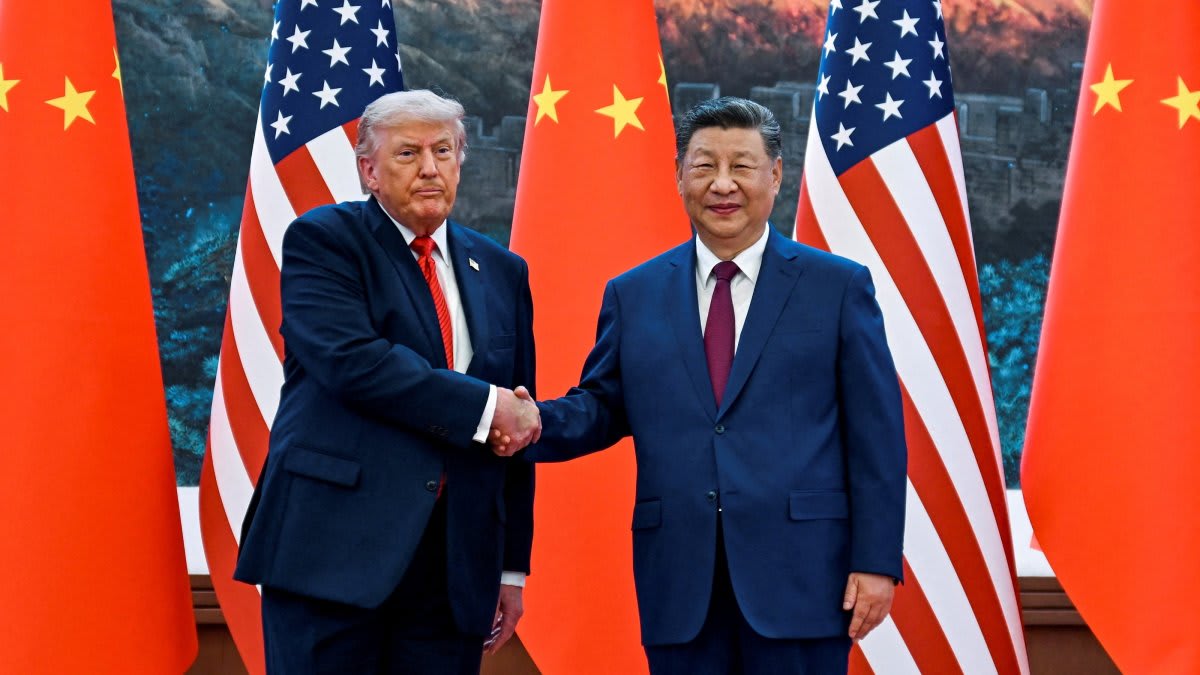
reutersreuters+1reutersAs the United States and China race to build separate artificial intelligence supply chains, investors in both countries are quietly maintaining — and even deepening — their financial ties across the divide. The cross-border capital flows come into focus this week as Chinese President Xi Jinping prepares to visit Washington for a state visit from September 23 to 25, where AI is expected to be a central topic of discussion with President Donald Trump.reuters+1
Wall Street banks have acted as bookrunners on 19 Chinese high-tech equity capital market deals worth $17.2 billion so far this year, according to LSEG data cited by Reuters, accounting for nearly 30 percent of total issuance in the sector. The deals have continued despite Washington's restrictions on exports of advanced chips and chip-making technology to China, and years-old limits on US investment in sensitive AI-related sectors.reuters
A carve-out for publicly traded securities in those investment rules has allowed US banks to participate in China's AI listing wave. Goldman Sachs The Goldman Sachs Group, Inc. , Morgan Stanley and Citigroup served as joint global coordinators on optical components maker Zhongji Innolight's $6.8 billion Hong Kong listing. Goldman Sachs and Morgan Stanley also worked on listings for AI developer MiniMax and chipmakers Montage Technology and Shanghai Iluvatar CoreX Semiconductor, while JPMorgan Chase underwrote a roughly $2.6 billion Hong Kong share sale by Victory Giant Technology.reuters
James Buckley-Thorp, founder and CEO of AI company Atlian, described Wall Street's involvement as "clipping the ticket on both sides of a cold war," adding that portfolios now "need a passport for both" technological ecosystems.reuters
The investment runs in both directions. US stocks account for nearly half of the 1 trillion yuan ($150 billion) managed by China's outbound mutual funds. The value of US equities held by Hong Kong residents and mainland Chinese investors has risen 23 percent over the past year to more than $750 billion, according to US data.reuters
The total value of US AI funding rounds involving investors based in China or Hong Kong climbed from about $436 million in 2023 to roughly $8.9 billion through mid-September, according to S&P Global Market Intelligence data.stratnewsglobal+1
"US and Chinese businesses and investors continue to maintain connectivity and invest in each other despite highly volatile geopolitical conditions," said Fred Hu, founder and chairman of Primavera Capital Group.reuters
US Treasury Secretary Scott Bessent said he and Chinese Vice Premier He Lifeng discussed establishing a US-China AI dialogue, including a notification system for shared goals and threats. Analysts say the mutual financial exposure gives both sides an incentive to keep relations stable — but warn it could unwind if tensions escalate further.reuters+1
Thilo Hanemann, a partner at research firm Rhodium Group, noted that wealthy Chinese investors continue to invest in US tech companies through offshore funds, "but there is very limited visibility into these fund structures and thus the magnitude of exposure".reuters
"There probably won't be a single winner in the US-China AI race," said Xile He, co-founder and CEO of San Francisco-based AI startup BrentX. "From an investor perspective, I think betting entirely on one side is a big risk".reuters