Newsletter Subscribe
Enter your email address below and subscribe to our newsletter
[forminator_form id="25163"]

All voices matter
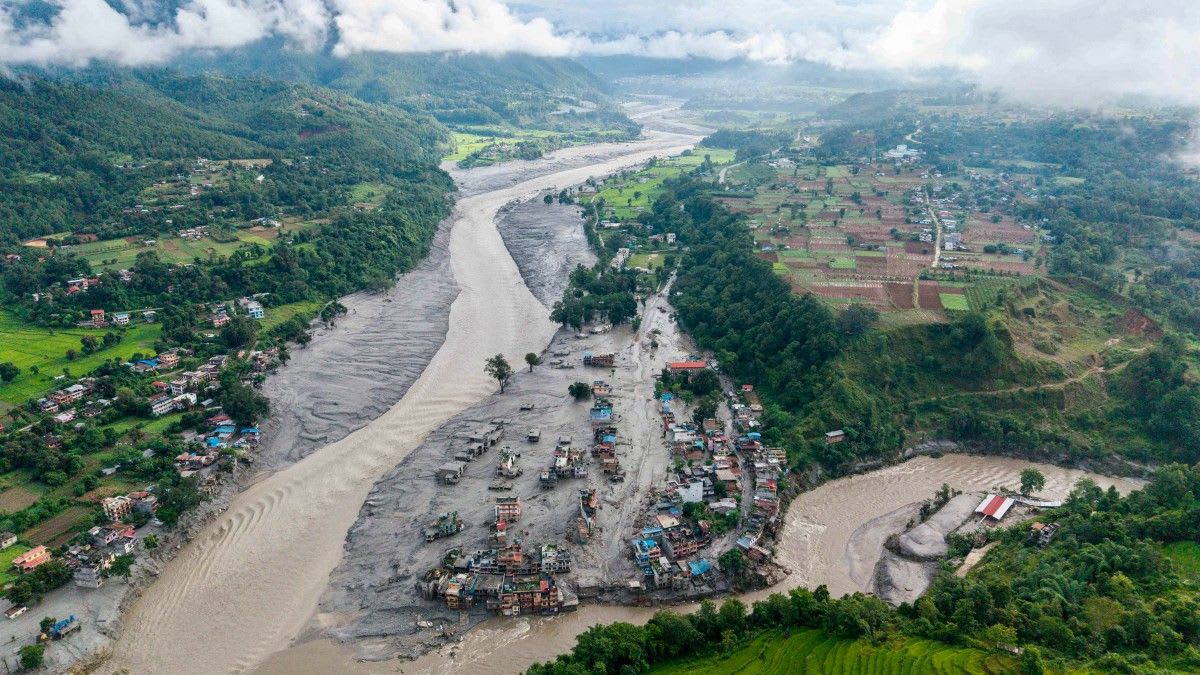
reuterscbsnewsreutersA massive glacial collapse along the Nepal-Tibet border on Wednesday morning sent a wall of water, mud, and rock tearing through Himalayan communities, killing at least 350 people and leaving more than 1,300 missing, including hundreds of foreign tourists and pilgrims from over two dozen countries.
Rescue teams were searching debris-strewn valleys on Thursday as the scale of the catastrophe — one of the worst natural disasters in Nepal's recent history — continued to emerge. Nepal's foreign minister, Shisir Khanal, called it one "of the worst natural disasters we have experienced in recent memory."nytimes
The disaster struck at approximately 8:40 a.m. local time Wednesday when a high-altitude ice avalanche in the Himalayas triggered a debris flow that Chinese government geologist Guo Zhaocheng said traveled at roughly 50 meters per second, extending more than 20 kilometers and leaving people almost no time to react. The U.S. Geological Survey confirmed the event was not an earthquake, as initially reported, but a magnitude 5.2 glacial collapse that generated seismic energy as rock and ice crashed into the valley below.reuters+2
The torrent surged through the Trishuli River valley, a corridor popular with trekkers and pilgrims connecting Kathmandu with Lhasa, sweeping away homes, roads, bridges, and hydropower infrastructure. Nepali police said at least 270 bodies had been recovered in Nepal, with local media reporting the toll as high as 359. In Tibet's Gyirong county, three deaths were confirmed and 558 people were missing, including 260 foreign nationals, according to Chinese state broadcaster CCTV.dw+1
"Everything is finished," said Omkar Joshi, a Nepali customs agent rescued from a hilltop in the border town of Timure. "It is a giant graveyard. All that is left are sand and pebbles, soaked red by human blood."dailysabah
Among those missing in Nepal were 288 Indians, 63 Americans, 51 Malaysians, 34 Australians, 33 Britons, and 25 Canadians, according to Nepali police and tourism officials. Many were Hindu pilgrims returning from Mount Kailash in Tibet, a site sacred to multiple faiths. Indian spiritual leader Sadhguru said in a video message from Tibet that 77 pilgrims from his Isha Foundation were at the Nepal-China border immigration office when the flood struck.aljazeera+1
More than 5,000 army and police personnel were deployed in Nepal, using helicopters to drop supplies donated by India and evacuate survivors from communities cut off by destroyed infrastructure. Chinese Premier Li Qiang traveled to Gyirong on Thursday to oversee rescue operations, signaling Beijing was treating the disaster as a top national priority.reuters+2
Authorities warned that a barrier lake formed by the debris upstream on the Nepal-China border posed a continuing threat. An additional three million cubic meters of water was expected to enter the lake over the next three days, with peak flow anticipated around September 1. The International Centre for Integrated Mountain Development noted this was the second flood in the Lhende Khola river system in 14 months, warning that a warming Himalaya demands urgent early-warning systems.cbsnews+2
The U.N. released $2 million in emergency funds, the U.S. State Department pledged $500,000 and deployed a disaster response adviser, and the International Federation of Red Cross and Red Crescent Societies dispatched $1.4 million in emergency supplies. Pope Leo XIV offered prayers for the victims in a telegram on Thursday.dw+2
Sagar Pandey, head of a Himalayan tourism operator who surveyed the zone by helicopter, described the devastation: "There are no human-made things, no human settlement left. Everything is just flat. So anyone in the hotel, the restaurant, or the car, I believe that everybody is gone."reuters