Newsletter Subscribe
Enter your email address below and subscribe to our newsletter

All voices matter

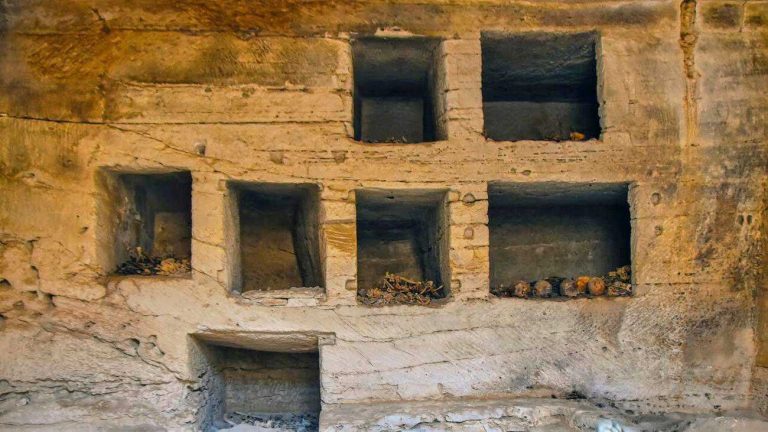
dailynewsegypt+2.dailynewsegypt+2.dailynewsegypt+2.dailynewsegypt+2.indiandefencereview+1.A joint Egyptian-Italian archaeological team has unearthed a series of rock-cut tombs dating back to the Greco-Roman period near the Aga Khan Mausoleum in Aswan, Egypt, featuring well-preserved hieroglyphic inscriptions and a remarkable two-meter limestone sarcophagus belonging to Ka-Mesiu, a high-ranking official whose tomb contained multiple mummified remains and revealed prayers to local Aswan deities.
The centerpiece of Tomb No. 38 is an impressive limestone sarcophagus standing nearly two meters tall, resting on a platform carved directly from the bedrock. This finely crafted funerary container features an anthropoid (human-shaped) lid with meticulously detailed facial features and a traditional Egyptian wig, complemented by intricate decorative elements throughout. Two vertical columns of hieroglyphic text adorn the sarcophagus, containing prayers to local Aswan deities and identifying the tomb's owner as Ka-Mesiu, a high-ranking official. The inscriptions also name several of Ka-Mesiu's family members, providing valuable genealogical information.meobserver+3
Inside the sarcophagus, archaeologists discovered multiple mummified remains, including those of children, suggesting this was a family tomb. The exceptional preservation of both the sarcophagus and its hieroglyphic inscriptions offers rare insights into funerary practices and religious symbolism during the Greco-Roman period in Egypt, making this discovery particularly significant for understanding the cultural continuity of Egyptian burial traditions during foreign rule.instagram+2
The entrance to Tomb No. 38 features a distinctive nine-step stone staircase that descends more than two meters underground, providing access to one of the most architecturally impressive and well-preserved tombs in the Aswan necropolis. This carefully constructed stairway is flanked by mudbrick benches or platforms that archaeologists believe were designed to hold funerary offerings during burial ceremonies and subsequent commemorative rituals. The presence of this elaborate entrance structure indicates the high status of the tomb's occupant and demonstrates the architectural sophistication employed in Greco-Roman period Egyptian burials.popularmechanics+3
The staircase's design exemplifies how the cemetery was organized hierarchically, with elite families buried in tombs on the upper plateau and middle-class individuals interred along the slopes. This architectural feature not only served a practical purpose of providing access to the underground burial chamber but also created a ceremonial pathway that symbolically connected the world of the living with the realm of the dead, maintaining traditional Egyptian funerary practices during the period of Greek and Roman influence.greekreporter+2
The hieroglyphic inscriptions on Ka-Mesiu's sarcophagus reveal fascinating insights into ancient Egyptian religious practices, specifically containing prayers directed to local Aswan deities. These vertical columns of text follow traditional Egyptian prayer formats, similar to those found in other ancient invocations where supplicants would address specific gods with requests for protection and blessings in the afterlife. The prayers demonstrate the continued importance of local regional deities even during the Greco-Roman period, showing how Egyptian religious traditions persisted despite foreign rule.wikipedia+2
Ancient Egyptian prayer traditions typically involved direct appeals to deities, often beginning with praise before making specific requests. In Ka-Mesiu's tomb, these hieroglyphic prayers reflect similar patterns to other known Egyptian invocations like those addressed to Ptah, Hathor, and Thoth, where the deceased seeks divine mercy and protection. The presence of these prayers to local Aswan gods rather than Greek or Roman deities highlights how Egyptian religious identity remained strong in this southern frontier region, with high-ranking officials like Ka-Mesiu maintaining traditional funerary practices that had endured for millennia despite the cultural changes occurring elsewhere in Egypt.egyptian-gazette+3