Newsletter Subscribe
Enter your email address below and subscribe to our newsletter
[forminator_form id="25163"]

All voices matter
reutersaareutersThe global energy transition is entering a new phase. Investment is moving away from solar panels and wind farms and toward the grid infrastructure and battery storage needed to make renewable-heavy power systems work, according to a Reuters commentary published Wednesday and a World Energy Council report released a day earlier.
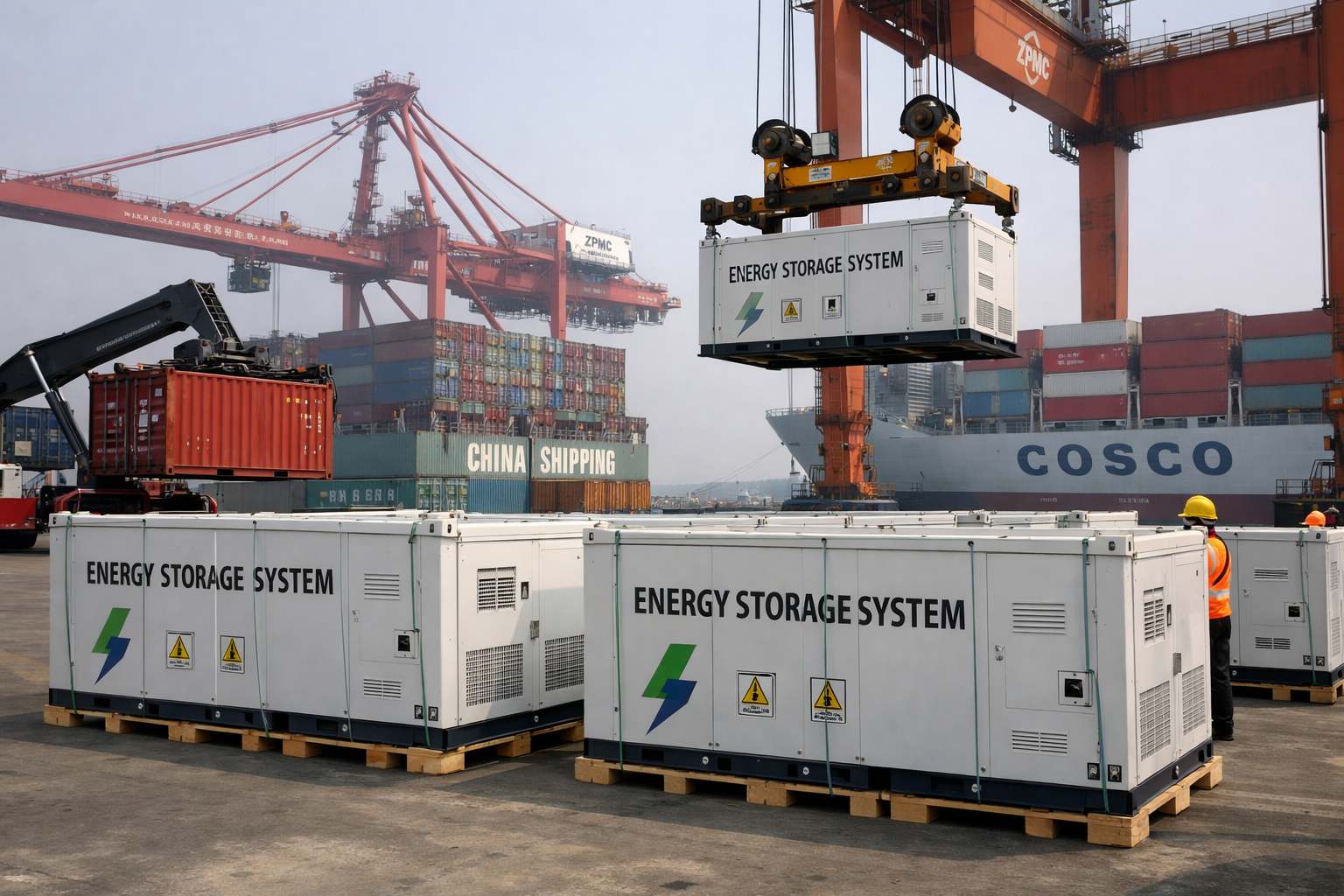
Global imports of Chinese-made solar systems have dropped to roughly half their March 2023 peak of over $5.8 billion, averaging about $2.7 billion per month so far in 2026, according to data from the energy think tank Ember cited by Reuters. Meanwhile, spending on Chinese energy storage batteries and grid equipment reached approximately $75 billion in the first seven months of 2026 — about $20 billion more than during the same period in 2025.reuters
The shift reflects a straightforward reality: many power systems now produce substantial electricity surpluses during sunny periods but lack the infrastructure to store, balance, and redistribute that power. Reuters columnist Gavin Maguire wrote that "investment is increasingly flowing toward the infrastructure that determines how effectively renewable electricity can be used rather than how much can be generated".reuters
Forty countries have each spent more than $1 billion importing Chinese solar systems since 2018, with 12 exceeding $5 billion. That wave of deployment has created an urgent need for tools to manage the variability that comes with heavy solar generation.reuters
Europe led regional demand for batteries and grid equipment, spending about $31.1 billion, followed by Asia at $22 billion. Latin America and Africa both reached record import levels at roughly $3.9 billion and $3.8 billion respectively, while Oceania hit an all-time high above $3.6 billion. North America was an outlier, posting a year-over-year decline to around $7 billion, driven largely by tariffs on Chinese-made products.reuters
The World Energy Council's report, "Rebalancing World Energy: Trade-Offs and Transformations," based on discussions with more than 275 senior energy leaders from 65 countries, identified grids, energy storage, and system integration as the most common barriers to further progress.aa
"The challenge is no longer simply how quickly countries can build renewable or other new generation capacity," the report found. "Increasingly, it is whether power systems can absorb that capacity and deliver electricity to where it is needed".aa
WEC Secretary General Angela Wilkinson said, "Integration and interoperability are now critical: connecting the parts of each system and enabling different systems and pathways to work together".aa
The challenges vary by region. Brazil's power system is roughly 90 percent renewable but faces rising curtailment of clean energy, while around 600 million people in Africa still lack electricity access — a gap that cannot be closed by generation alone without investment in transmission and distribution. China has deployed nearly 50 ultra-high-voltage transmission projects delivering more than 420 gigawatts of cross-regional capacity. Disruptions linked to the war against Iran have meanwhile constrained Middle Eastern imports and added urgency to energy security concerns across multiple regions.aa+1
The slowdown in solar imports, Maguire argued, "is less a sign of fading momentum than of a maturing transition".reuters