Newsletter Subscribe
Enter your email address below and subscribe to our newsletter
[forminator_form id="25163"]

All voices matter
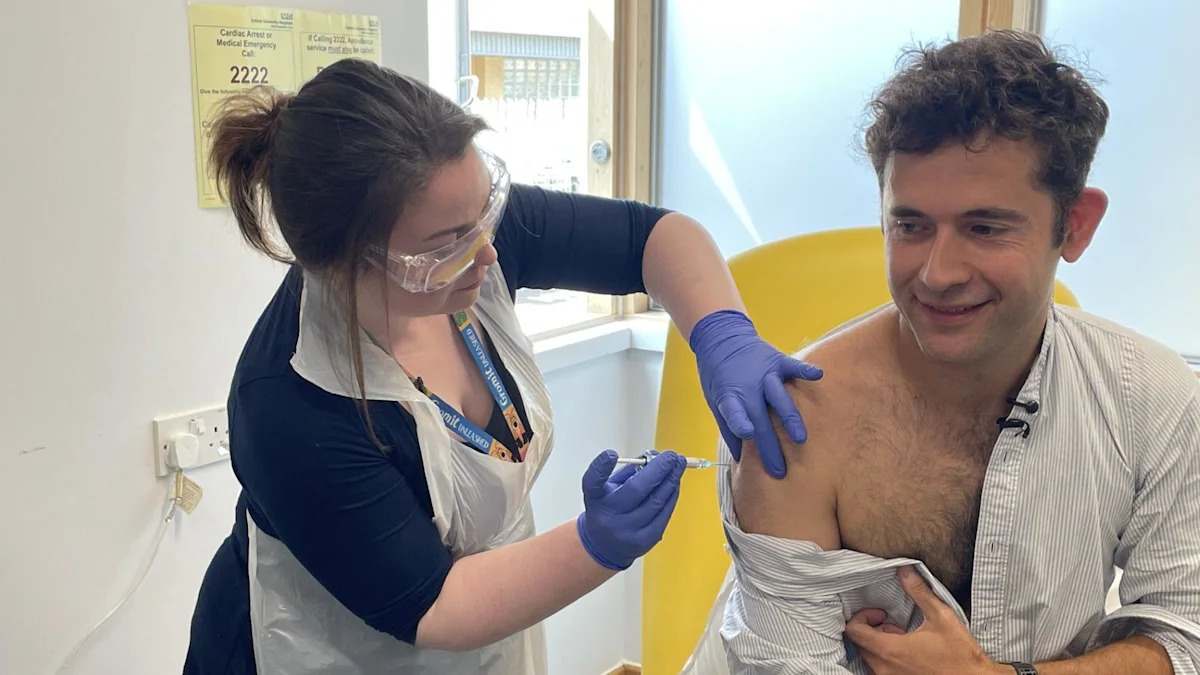
bbc+1apnews+1bbcA 37-year-old man from Oxford, England, became the first person in the world to receive an experimental vaccine targeting the Bundibugyo strain of Ebola on Friday, as the deadly outbreak in the Democratic Republic of Congo surpassed 1,000 deaths.bbc+2
Ed Hunt received the ChAdOx1 BDBV vaccine at the University of Oxford, where scientists developed the candidate in just eight weeks using the same adenovirus-vector technology behind AstraZeneca's Covid-19 vaccine. Hunt told the BBC he wanted to help after seeing news reports about the crisis unfolding in central Africa.scmp+1
The Phase I trial, designated BD-Ebov and launched on July 13 after receiving UK regulatory approval, will assess the safety and immune response of the vaccine in 50 healthy adults aged 18 to 55. It is the first of four Bundibugyo Ebola vaccines in development to enter human testing.newsaf.cgtn+3
The outbreak, declared a Public Health Emergency of International Concern by the WHO in May, has been spreading faster than the 2014-2016 West African epidemic. According to the Associated Press, the death toll crossed 1,000 nearly three times faster than that earlier outbreak. Médecins Sans Frontières reported 2,536 confirmed cases and 1,033 deaths in the DRC as of July 21.afro.who+2
Unlike the more common Zaire species of Ebola, which has a licensed vaccine and approved monoclonal antibody treatments, the Bundibugyo strain has no approved countermeasures. The strain was first identified in Uganda in 2007, and the current outbreak represents only the third documented Bundibugyo epidemic.cdc+3
The Oxford team said a second small trial is due to begin soon in Uganda, followed by a larger efficacy study in the DRC. The Serum Institute of India has already manufactured 600,000 doses, ready for deployment if trials succeed.bbc
"We will not be giving anybody Ebola in this trial or any trial," an Oxford researcher told the BBC. "The aim of the phase one clinical study is to look for the safety of the vaccine, and also to see if we're getting a strong immune response that could be protective against the Bundibugyo species of Ebola."bbc