Newsletter Subscribe
Enter your email address below and subscribe to our newsletter
[forminator_form id="25163"]

All voices matter
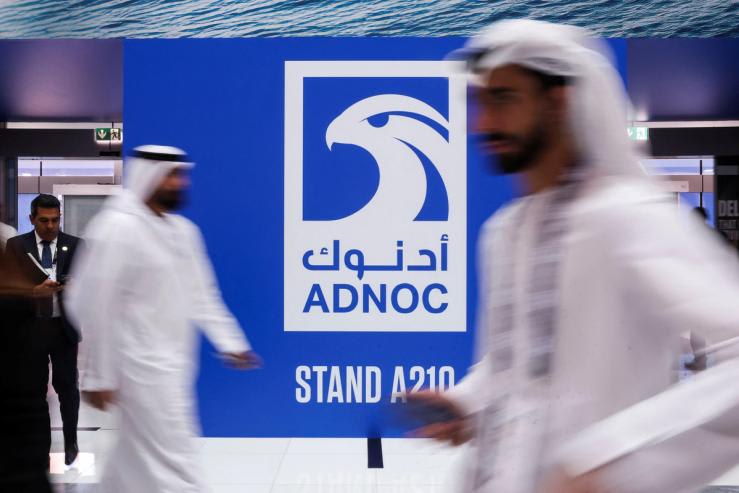
thenationalnews.com.us.cnn.com+1.thenationalnews.com.Energy executives at the ADIPEC conference in Abu Dhabi said on Tuesday, November 3, that their companies are preparing for another possible escalation in the Iran war. They also warned that staying operational through the conflict is getting more expensive, The National reported. Their comments followed limited US strikes on Iran's Qeshm Island on Monday, November 2. US officials described the strikes as defensive, made in response to Iranian fire at a US aircraft, and said they did not mark a return to major combat.thenationalnews.com+2
The Wall Street Journal News Corp first reported the strikes. It said they were the latest in a series of undisclosed US attacks, kept quiet so they would not signal a wider campaign. Qeshm sits at the mouth of the Strait of Hormuz. It has a large underground missile facility and a naval base. Shipping remains a pressing concern. The International Maritime Organisation said at least 125 vessels have been attacked in and around the strait since the war began, including 34 in October, the highest monthly total so far.afp.com+2
Sharif Foda, chief executive of NESR, said the company uses 30-, 60- and 90-day contingency plans. It stockpiles spare parts and chemicals inside the countries where it works. "We are not going to evacuate. We are staying," he said. George Alexopoulos, deputy chief executive of HELLENiQ Energy, said the company replaced disrupted crude cargoes from Basra with supplies from the North Sea, the US and West Africa. "Optionality has a cost and especially at times of crisis," he said, noting that tanker charter rates on Gulf-to-China routes had reached $1 million a day. Robin Mills of Qamar Energy said "there's a limit to what can be done in the space of eight months".thenationalnews.com
On a separate panel, speakers said resilience depends on building redundancy into grids, pipelines and supply chains before a crisis hits. Khalid Abdul Samad of ADNOC Upstream called resilience "a must to have." He said the industry faces "a compound" scenario, where one backup is no longer enough. He also noted that global spare capacity, at 3–4% of demand, leaves the market without a buffer. Still, he warned that redundancy that fails when needed "is not a resilience; it is a cost."energyconnects.com
Luc Koechlin, chief executive of EDF Middle East, said grids are "most of the time a limiting factor." A 400 kV transmission line can take five to seven years to build, compared with two to three years for a large solar plant. He compared the grid to a spider's web. "If your net is small with just a few strings, it can be destroyed easily," he said.energyconnects.com
Alexopoulos summed up the mood. "Options have a cost, but in this environment you have to pay the 'option premium' in order to be able to handle this and the next and the next crisis," he said.thenationalnews.com