Newsletter Subscribe
Enter your email address below and subscribe to our newsletter
[forminator_form id="25163"]

All voices matter
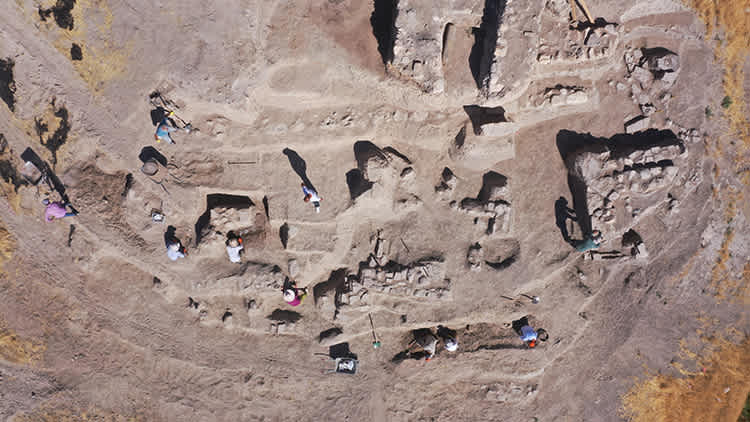
greekreporter+2.greekreporter+2.arkeonews+1.greekreporter+2.greekreporter+2.Archaeologists have uncovered a 6,000-year-old temple complex in eastern Turkey's Elazığ Province that features a ritual blood channel containing human and animal remains alongside an altar stone marked with knife cuts, providing rare insight into ancient sacrificial practices from the Late Chalcolithic and Early Bronze Age in the Upper Euphrates region.
The ritual blood channel and altar discovered at Tadım Höyüğü align with a broader pattern of Chalcolithic sacrificial practices emerging across Europe and the Near East. During this period (roughly 5500-3500 BCE), ritual sacrifice became increasingly formalized and incorporated into socio-religious power structures, with evidence suggesting elites began controlling ritual ideology as a strategy to consolidate authority. The bull-shaped ceramic vessel recently found in Bulgaria's Solnitsata ritual pit (dated to around 4350 BCE) demonstrates the widespread symbolism of bulls representing male strength and fertility across Chalcolithic cultures, similar to the bull motifs adorning the sacred hearths at Tadım. These findings reveal that Chalcolithic communities invested significant resources into creating dedicated ritual spaces where sacrificial practices occurred.archaeologymag+1
Archaeological evidence indicates these ritual practices often involved specialized ceremonial vessels, purposefully-constructed platforms or altars, and specifically-designed architectural elements to facilitate the collection and channeling of blood. At sites like Anemospilia in Bronze Age Crete, researchers found evidence of bound human sacrificial victims alongside specialized collection vessels for blood, paralleling the sophisticated channel system at Tadım. The presence of both human and animal remains in ritual contexts suggests complex belief systems where different types of offerings served distinct ceremonial purposes, often connected to agricultural cycles, food security, and community gatherings. This cross-regional pattern of ritual architecture and sacrificial practices demonstrates how deeply embedded these ceremonies were in Chalcolithic social structures across a wide geographic area.labrujulaverde+1
The ongoing excavations at Tadım Höyüğü, a 35-meter-tall mound covering approximately 210 by 160 meters in Elazığ Province, have revealed remarkable insights into ancient Anatolian religious practices beyond the recently discovered blood channel temple. Among the most significant finds are two unique sacred hearths decorated with bull motifs dating to 4000-3000 BCE, which researchers believe were used for religious ceremonies and symbolized family unity during a time when fire held sacred significance. These ceremonial artifacts were discovered alongside twelve Karaz pottery vessels from the same period and a painted pot adorned with mountain goat motifs dated to around 3200 BCE.greekreporter+4
The excavation site, led by the Elazığ Museum Directorate, has uncovered six distinct cultural layers spanning from the Neolithic period through the Ottoman era, demonstrating continuous human occupation for thousands of years. In addition to the temple complex with its ritual elements, archaeologists have found various ceremonial and domestic items including Nakhchivan-style pottery, seal stamps used for agricultural transactions, arrowheads, tools, spindle whorls for textile production, and symbolic figurines crafted from stone, clay, and bone. These findings collectively illuminate the site's importance as both a religious center and thriving settlement in the Upper Euphrates region.arkeonews+4
Archaeological analysis of the blood channel found at the Tadım temple complex has revealed compelling evidence of ancient sacrificial practices. The narrow channel contained both human and animal remains that show signs of violent death, supporting theories that this 6,000-year-old ritual site hosted both animal and human sacrifices as offerings to deities during the Late Chalcolithic and Early Bronze Age periods. The blood channel's design—connecting to the stone altar which bears deep knife marks—suggests a sophisticated understanding of ritual architecture where blood from sacrifices would flow along a predetermined path.greekreporter+2
The discovery represents one of the earliest known examples of such ritual infrastructure in the Upper Euphrates Basin, providing archaeologists with tangible evidence of how early spiritual beliefs were physically manifested in architectural elements. This finding, along with the temple's four podiums likely used for votive offerings and the sacred hearth, paints a comprehensive picture of an elaborate ceremonial space where ancient communities engaged in ritualized sacrifice as part of their religious expression. The careful preservation and documentation of these human remains offer valuable insights into not just how these individuals died, but also into the complex belief systems that characterized early settlements in eastern Anatolia.arkeonews