Newsletter Subscribe
Enter your email address below and subscribe to our newsletter
[forminator_form id="25163"]

All voices matter
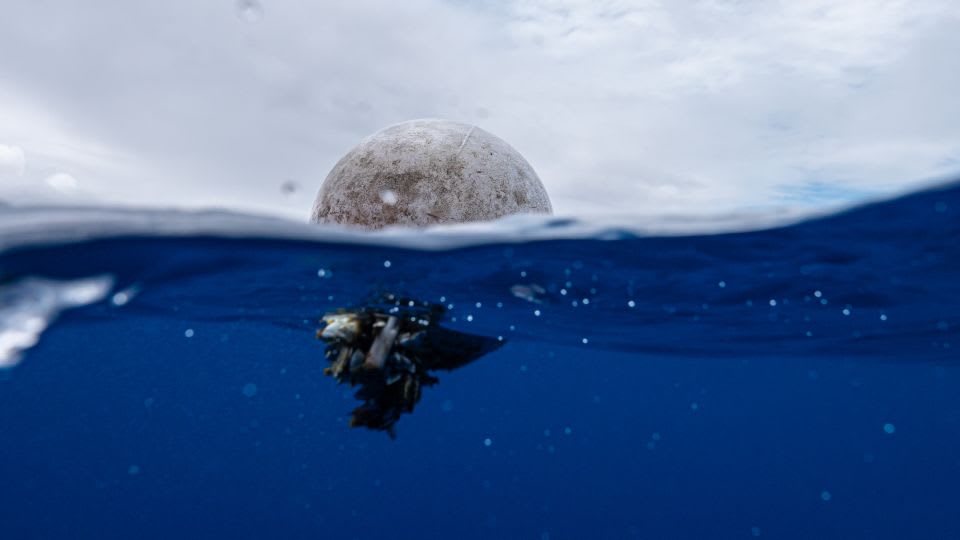
nature.com.nature.com.edition.cnn.com+1.For two decades, a stretch of the North Pacific between Hawaii and California has been getting brighter in blue and green light. Researchers in Norway say a buildup of tiny plastic particles may be part of the reason. A study published Thursday, Nov. 5, in Communications Earth & Environment looked at three satellite records from 2002 to 2022. All three showed statistically significant brightening in both bands in and near the Great Pacific Garbage Patch, which together produced a cyan tint.nature.com
The authors are Shea Cheatham, Daniel Koestner and Børge Hamre, all at the University of Bergen. They say the satellite pattern matches the optical signature that suspended microplastics would produce. They also stress that the satellite data by itself does not prove plastic is the cause.phys.org
The team used three ocean-color products: MODIS imagery from NASA's Aqua satellite, Europe's Ocean Colour Climate Change Initiative data and Copernicus-GlobColour. The cyan areas were clearest between 30 and 40 degrees north, roughly where microplastics are expected to collect. In some areas, blue wavelengths brightened by about 10% and green by 2% to 4% over the 20 years.dongascience.com+1
"What's interesting about the optical signature of microplastics is that they generally do not absorb much light at all across the visible spectrum, and are strong scatterers," Cheatham told ScienceAlert.sciencealert.com
The researchers also ran simulations of how light reflects off seawater. When only natural factors were varied, the cyan pattern showed up in 3% of the brightening cases. When microplastics were added, that share rose to 13%, more than four times as often. In the models, about 5 milligrams of microplastics per cubic meter of water was enough to produce a change satellites could detect.nature.com+1
The three satellite products did not agree everywhere. The authors point to known drift in the MODIS sensor and to differences in how the products correct for the atmosphere. Natural changes can also produce the cyan pattern, but only with large drops in suspended particles and dissolved organic matter and a shift toward smaller phytoplankton. The authors do not rule out disruption of the ecosystem as another cause or a contributing one. Very small microplastics under 300 micrometers have never been measured directly in the patch's upper waters.nature.com
Cheatham told CNN that more work is needed to prove the color "is directly and exclusively caused by plastics." The next step is to take measurements at the patch itself, which is difficult and expensive. If the link is confirmed, the authors say satellite color readings could become a way to track microplastic buildup from space.edition.cnn.com+1
"We're still one step away from proving definitively that microplastics are causing the shift in color that we're seeing," Cheatham told Scientific American. "We just have to get in there to verify."scientificamerican.com