Newsletter Subscribe
Enter your email address below and subscribe to our newsletter
[forminator_form id="25163"]

All voices matter
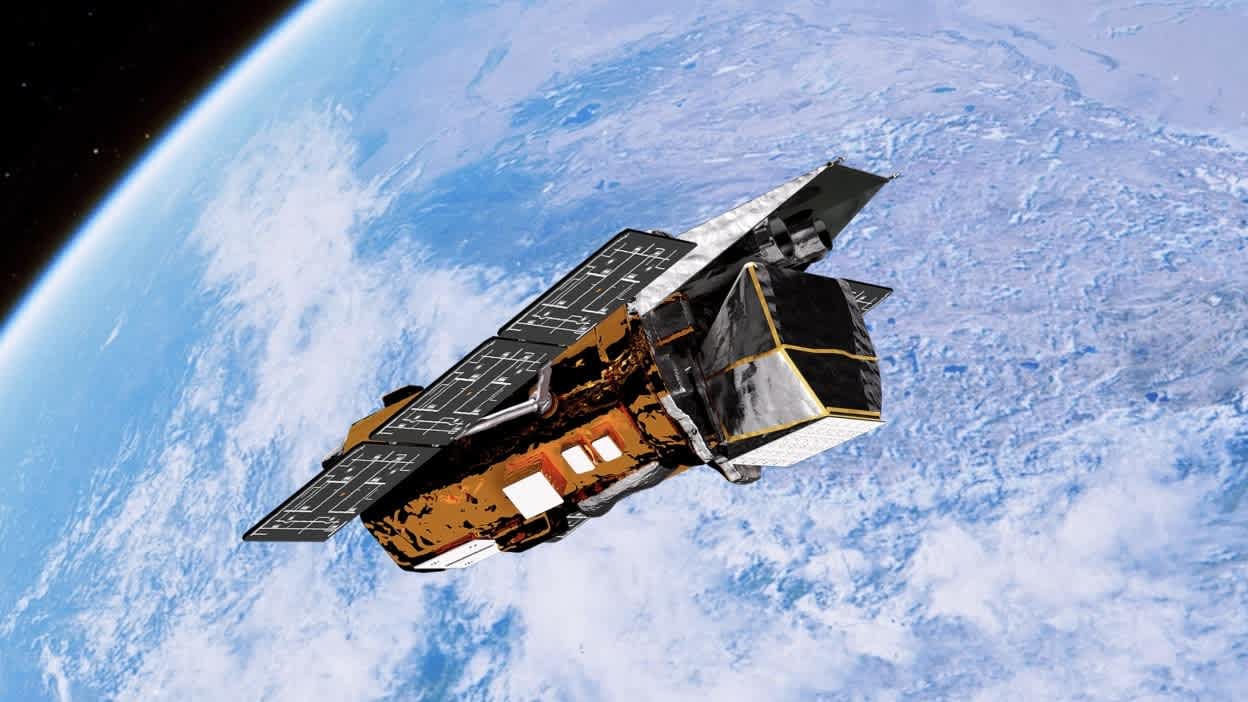
science.nasa.gov.science.nasa.gov+1.cbsnews.com+1.NASA's Neil Gehrels Swift Observatory came down through Earth's atmosphere on Wednesday, Nov. 4, almost 22 years after it launched. The U.S. Space Force confirmed that the spacecraft re-entered at 7:39 a.m. EST over the North Sumatra region of Indonesia, at about 3.4 degrees north latitude and 98.6 degrees east longitude, NASA said. The agency had expected most of the spacecraft to burn up, but it said some components may have survived.science.nasa.gov
The uncontrolled re-entry ends a mission that began in 2004 to study gamma-ray bursts, the most powerful explosions in the universe. Swift was planned for a two-year prime mission. It went on to serve for more than two decades as a quick-response observatory that sent alerts to other telescopes so they could follow up on short-lived events, according to NASA.science.nasa.gov
The exact timing was hard to pin down in the days before the fall. On Monday, Nov. 2, the Space Force predicted re-entry at about 3:30 a.m. EST on Nov. 4, with an uncertainty of 11 hours. NASA put the risk of harm to anyone on Earth at about 1 in 2,100, and its low-inclination orbit meant any surviving fragments would land between 20.6 degrees south and 20.6 degrees north latitude, the agency said. Later estimates moved the time back. The Aerospace Corporation projected 5:19 a.m. EST, and astrophysicist Jonathan McDowell cited revised Space Force data pointing to about 7:45 a.m., Dawn reported. Indonesia's space research center at BRIN had predicted re-entry near the northern tip of Sumatra, Kompas reported.science.nasa.gov+2
Mission chief scientist Brad Cenko said dense tungsten parts and some mirror pieces could survive the descent, CBS News reported.cbsnews.com
Swift had no onboard propulsion. Solar activity increased atmospheric drag on it, and a fast-turnaround servicing mission ended in August without ever trying to boost the observatory, NASA said. Arizona-based startup Katalyst had launched a spacecraft called LINK in July to grab the telescope and tow it to a higher orbit, but the effort failed after the vehicle ran into propulsion problems, Daily Times reported.science.nasa.gov+1
After the rescue was called off, Swift went back to science work and observed hundreds of targets. That increased drag again. On Oct. 20, at 171 miles (275 kilometers) up, the spacecraft entered safe mode, and the operations team at Penn State sent a command that effectively ended the mission, according to NASA.science.nasa.gov
Over its career, Swift studied active galaxies powered by supermassive black holes, stars giving off X-ray flares, supernovas, and comets and asteroids in our own solar system, NASA said. Before re-entry, NASA spokesperson Elizabeth Shaw said the agency and the Space Force "will continue to monitor the re-entry and update predictions," Spaceflight Now reported.spaceflightnow.com+1