Newsletter Subscribe
Enter your email address below and subscribe to our newsletter
[forminator_form id="25163"]

All voices matter
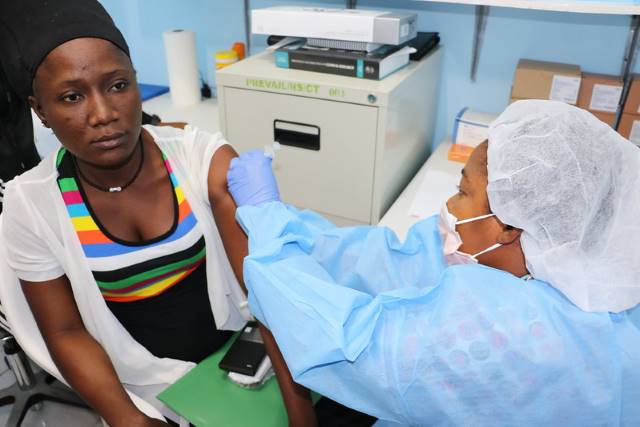
ipsnews+1ipsnews+1whoThe World Health Organization has released updated emergency guidance on the use of the Ervebo vaccine in the Democratic Republic of Congo, where the deadliest Ebola outbreak on record has now claimed more than 3,000 lives. The guidelines come as a broader crisis in global health funding threatens to slow the development and deployment of new vaccines against the Bundibugyo virus strain driving the epidemic.
As of September 1, the DRC had recorded 6,250 confirmed cases and 3,039 confirmed deaths, according to the U.S. Centers for Disease Control and Prevention. The outbreak, which began in May 2026, is caused by the Bundibugyo virus — a strain genetically distinct from the Ebola virus targeted by Ervebo, the only licensed Ebola vaccine.ipsnews+1
The WHO concluded that existing evidence "remains insufficient to support the programmatic use of Ervebo for the prevention of BDBV disease," recommending instead that the vaccine be tested in a carefully controlled trial. In August, the International Coordinating Group on Vaccine Provision allocated 70,000 doses to the DRC — 20,000 for a Phase 3 clinical trial and 50,000 for frontline health workers — while cautioning that it remains unknown whether Ervebo will protect against Bundibugyo.globalissues+3
WHO Director-General Tedros Adhanom Ghebreyesus said on September 2 that most deaths were still occurring in communities rather than treatment centers, warning that "until every chain is broken, the epidemic will continue to pose a threat to the DRC, its neighbours and the region as a whole".ipsnews
Two Bundibugyo-specific vaccine candidates have entered Phase 1 safety trials — one developed by Moderna using mRNA technology and another by the University of Oxford. The Coalition for Epidemic Preparedness Innovations committed up to $50 million for Moderna's candidate and $8.6 million for Oxford's effort, which is based on the same ChAdOx1 platform behind the Oxford/AstraZeneca COVID-19 vaccine.thehill+3
But these efforts face headwinds from a wider collapse in global health funding. External health aid is projected to have dropped by 30 to 40 percent in 2025 compared with 2023, according to the WHO, disrupting vaccination, disease surveillance, and emergency response in low- and middle-income countries. The dismantling of the U.S. Agency for International Development and deep cuts to CDC staffing have further weakened outbreak preparedness, with USAID funding to the DRC falling from nearly $1.2 billion in fiscal 2024 to roughly $67 million in the final quarter of 2025.who+2
The WHO has also launched trials of two experimental therapeutics — the monoclonal antibody cocktail MBP134 and the antiviral remdesivir — to reduce mortality among Bundibugyo patients. Still, response officials stress that in the absence of proven countermeasures, containment depends on traditional public health measures: early isolation, contact tracing, infection control, and safe burials.doctorswithoutborders+1
"WHO has recommended inclusion of the vaccine in a Phase 3 trial, which we hope to start as soon as possible," Tedros told reporters in August, underscoring the urgency of a crisis where the tools to fight the virus are still being built even as it continues to spread.statnews