


Newsletter Subscribe
Enter your email address below and subscribe to our newsletter
[forminator_form id="25163"]

All voices matter
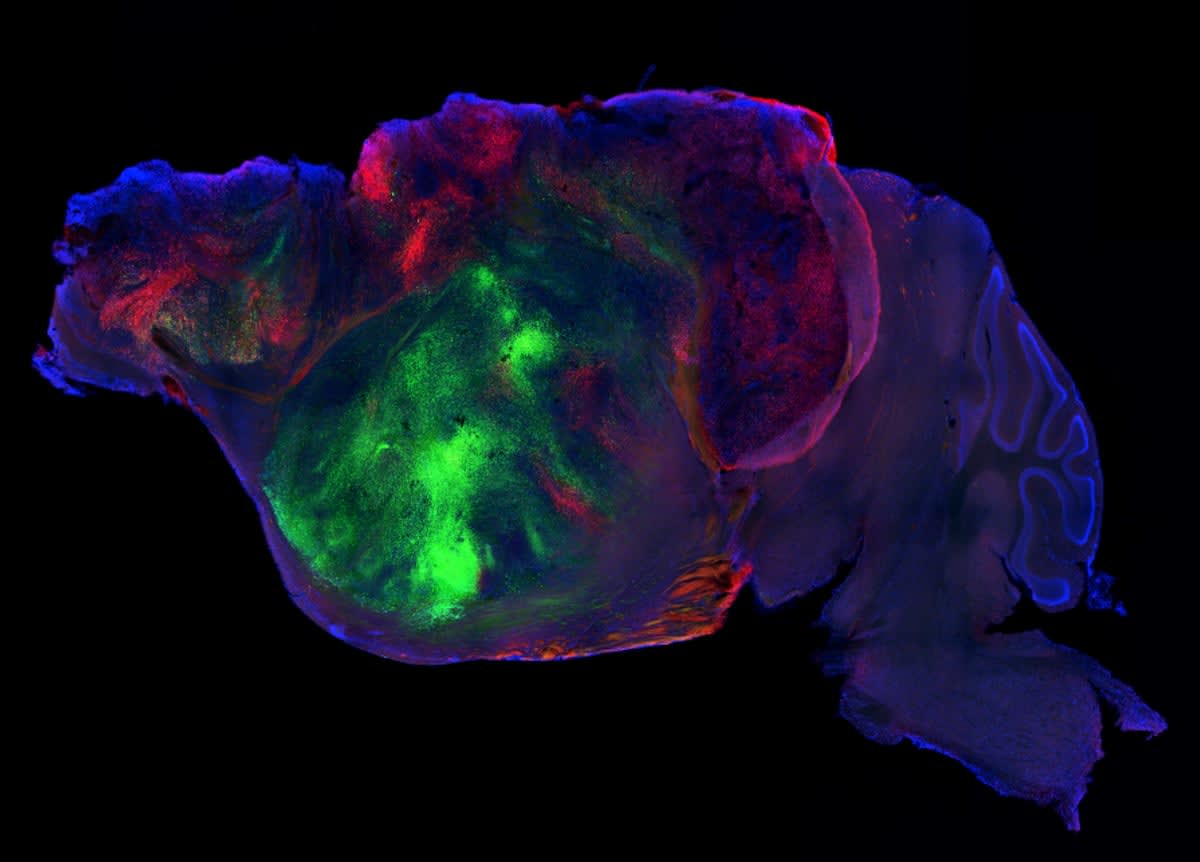
reuters+1sciencealert+1reuters+1Scientists at Stanford University have transplanted lab-grown human brain tissue into mice engineered to lack most of their cerebral cortex, creating hybrid animals whose brains are roughly half human by volume — a advance that researchers say could reshape the study of psychiatric and neurodevelopmental disorders.
The study, published Wednesday in the journal Nature, describes how the team led by neuroscientist Sergiu Pașca grew three-dimensional clusters of human cortical neurons called organoids from reprogrammed skin cells, then surgically placed them into newborn mice whose cerebral cortex and hippocampus had been genetically eliminated during development. Within three months, the human tissue had expanded to make up more than 90 percent of the cortical volume, forming functional connections throughout the mouse nervous system and extending projections as far as the spinal cord.reuters+3
The researchers call the resulting animals "xenocortical" mice. Previous attempts to graft human neurons into rodent brains were limited because human neurons develop roughly 20 times more slowly than mouse neurons, leaving them unable to compete for wiring space. By genetically removing the cells that would normally form the mouse cortex, Pașca's team gave the human tissue room and time to grow.npr
"The space normally occupied by the mouse cortex allowed us to transplant human cortical organoids shortly after birth and gave the human tissue room to grow extensively," Pașca said. Despite missing about half the volume of their brains, the engineered mice were surprisingly functional before transplantation — a testament to the developing brain's plasticity.iflscience+1
The grafts also produced rare von Economo neurons, large cells implicated in social cognition and frontotemporal dementia, that had never before been generated in a living laboratory model.sciencealert+1
In behavioral tests, cortex-depleted mice that received human organoids performed better on a working memory maze task than those without transplants, approaching the level of normal mice. When exposed to low oxygen — a condition mice typically tolerate well but that can cause cerebral palsy in humans — the xenocortical mice showed neural damage and gait impairments, mimicking a distinctly human vulnerability.thetransmitter+3
"Psychiatry has one of the lowest success rates for clinical trials," Pașca said at a press conference. "Drugs that seem to be working really well in animal models fail dramatically in the clinic. That tells us we are missing a lot of information about human biology".bbc
The researchers emphasized these are not mice with human brains. The animals retain mouse sensory organs and subcortical structures, and the transplanted tissue lacks the layered architecture of a mature human cortex. The team deliberately ended experiments before the human neurons reached a developmental stage associated with markers of consciousness.newscientist+2
Still, outside experts said the work opens new ethical territory. "This brings us into new gray areas for which there are not clear ethical guidelines or norms," said Duke University bioethicist Nita Farahany, who was not involved in the study. Hongkui Zeng of the Allen Institute cautioned that similar procedures in larger, longer-lived animals would raise far more serious concerns.npr
Pașca acknowledged the tension but pointed to the cost of inaction. "Neurological and psychiatric disorders affect nearly one in five people," he said, "and for many of these conditions we still do not understand the underlying biology well enough to develop effective treatments".reuters


