Newsletter Subscribe
Enter your email address below and subscribe to our newsletter
[forminator_form id="25163"]

All voices matter
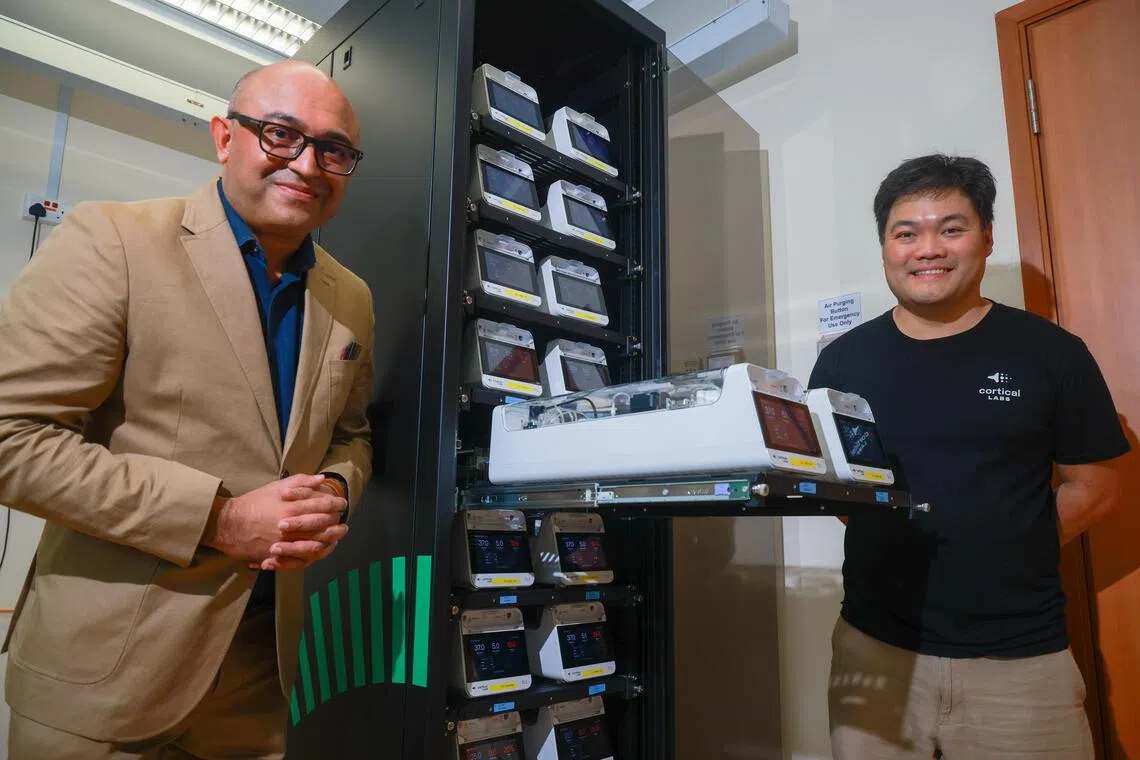
itbrief+1straitstimesitbrief+1A consortium of three organizations launched what they describe as the world's first independently operated biologically integrated server rack on Monday in Singapore, marking a step toward computing infrastructure powered by living human neurons rather than conventional silicon chips alone.
DayOne Data Centers, Melbourne-based Cortical Labs, and the National University of Singapore's Yong Loo Lin School of Medicine unveiled the 20-unit CL1 biological computing system at the NUS Life Sciences Institute. The prototype was demonstrated in a live research setting with microelectrode array integration and real-time neural network activity, according to the partners.straitstimes+1
Biological computing uses living neurons grown from human stem cells and connected to silicon hardware to process information. The neurons receive electrical signals, respond, and adapt over time. Each CL1 unit draws just 30 watts, comparable to a household appliance, while conventional data centre chips can use hundreds of watts. The neurons can be kept alive for up to six months within the unit's internal life-support system.datacenterdynamics+2
"By growing living human neurons from stem cells and pairing them with rigorous engineering, we're not only building a more efficient alternative to silicon; we're creating a platform that can help us understand learning and adaptation at their biological source," said Professor Rickie Patani, Professor of Neuroscience at NUS Medicine.latestly+1
The prototype represents a transition from laboratory research toward potential commercial use. Cortical Labs first demonstrated an earlier version of its technology in 2022 with DishBrain, a system where neurons learned to play Pong. The CL1, launched commercially in 2025 at $35,000 per unit, is now also available through a cloud-based "Wetware-as-a-Service" model at $2,200 per month.biopharmatrend+2
The partners are exploring a larger deployment of up to 1,000 units in a DayOne facility in Singapore, subject to technical validation and regulatory approvals. DayOne's first Singapore data centre, SG1, achieved structural topping out in May 2026 and is expected to be operational in early 2027.datacenterdynamics+2
The project aligns with Singapore's Green Data Center Roadmap, which sets higher energy efficiency standards as the government expands capacity for AI workloads. Hon Weng Chong, founder and CEO of Cortical Labs, said the prototype "shifts the conversation from research to commercial application," adding that biological computing supplements AI "in areas where data is sparse, learning from far less and adapting as conditions change".latestly+1
Potential applications include drug discovery, neurological disease research, humanoid robotics, and cybersecurity.itbrief+1