Newsletter Subscribe
Enter your email address below and subscribe to our newsletter
[forminator_form id="25163"]

All voices matter
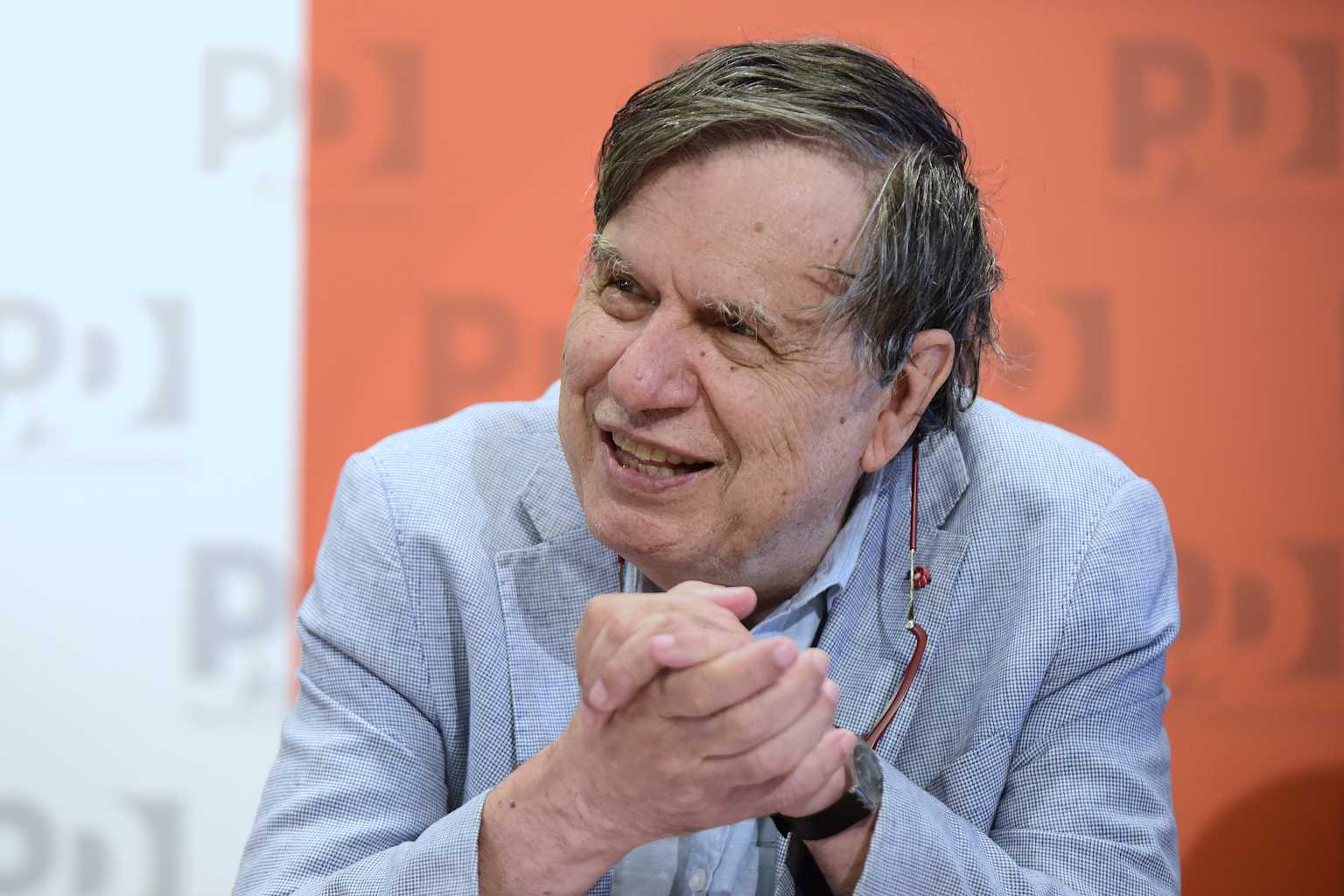
eurekalert+1miragenewseurekalert+1A mathematical conjecture that stumped physicists for more than ten years has been proven through an unlikely collaboration between two theoretical physicists and an AI system. The paper, published July 1 in the Journal of Statistical Mechanics: Theory and Experiment, documents how Anthropic's Claude contributed a key insight to the proof.eurekalert+1
Nobel laureate Giorgio Parisi and Francesco Zamponi, both of Sapienza University of Rome, first identified the puzzling relationship in 2014. Working on the physics of jamming — the process by which a fluid-like system of particles suddenly becomes rigid while remaining disordered — they noticed that two mathematical parameters of their model, denoted a and b, always summed to one in numerical calculations. The relationship implied that their theoretical framework and a competing approach developed independently by French physicist Matthieu Wyart at EPFL in Lausanne led to identical physical laws.miragenews+1
Despite the numerical evidence being overwhelming, no one could formally prove why the identity held. Researchers spent years searching for a deep mathematical structure or hidden symmetry that might explain it, but the proof eluded them. The problem eventually faded from most researchers' attention — but not from Parisi's. "It really bothered him that we had never managed to prove it," Zamponi recalled.eurekalert
When generative AI models emerged, Parisi saw an opportunity. The physicists chose Claude because it "seemed to have somewhat more advanced mathematical reasoning abilities," according to Zamponi. They began by asking the model to reproduce numerical calculations the group had developed over a decade earlier, testing how far it could go with a real mathematical problem.eurekalert
Once Claude successfully reproduced the results, the next question followed naturally: can you prove why a+b equals one? "Quite quickly, Claude came up with an initial idea that was essentially correct," Zamponi said. The proof contained errors and required multiple rounds of verification and revision by the authors, but the underlying intuition proved sound.miragenews+1
Perhaps the most surprising aspect was not that an AI solved it, but what the solution revealed. The physicists had long imagined the proof would uncover new mathematical structures. Instead, Zamponi said, "The answer was right there, and we simply hadn't seen it."eurekalert
The work, conducted over roughly 40 iterations of dialogue with Claude, represents a rare documented case of a large language model contributing to a peer-reviewed physics result — one authored by a Nobel Prize winner, no less.facebook+1