Newsletter Subscribe
Enter your email address below and subscribe to our newsletter
[forminator_form id="25163"]

All voices matter
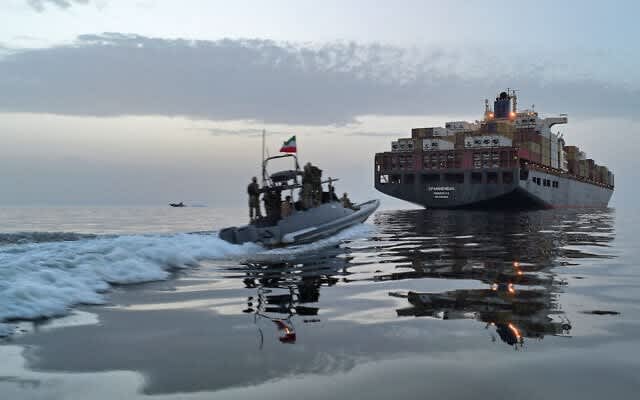
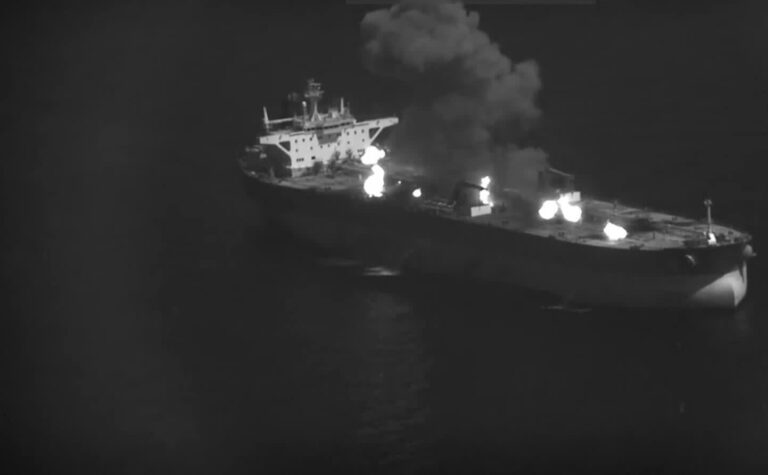
democrata+1turkiyetoday+1ibtimesIran's Islamic Revolutionary Guard Corps Navy said Saturday it attacked six vessels in and around the Strait of Hormuz, striking back after U.S. forces destroyed three Iranian oil tankers earlier in the day in an escalation of the months-long maritime crisis gripping one of the world's most vital shipping lanes.
The IRGC Navy said it targeted three oil tankers it claimed were transiting the Strait of Hormuz without authorization, along with three other vessels it described as linked to "the child-killing America" in other areas of the Gulf. The retaliatory strikes followed U.S. Central Command's announcement that American forces had "permanently disabled" two Iranian crude oil carriers — the M/T Downy off Kharg Island and the M/T Stark 1 near Jask — and "completely destroyed" a third, the M/T Kylo, in the Gulf of Oman. CENTCOM said the strikes came after the IRGC launched ballistic missiles at two U.S. Navy warships, and framed the operation as part of its "tanker for tanker" policy announced days earlier.democrata+3
"Let the message to the IRGC be clear: If you shoot at two of our ships, we will impose an even higher economic cost — taking out three of yours," CENTCOM commander Adm. Brad Cooper said.turkiyetoday
The IRGC issued a warning to all vessels operating in the Persian Gulf, telling them not to be "deceived by the American terrorist army" and to avoid "suspicious movement to cross unauthorized routes or you will be attacked". IRGC Navy spokesman Ali Mohammadi said Iranian naval forces had "punished" and "fined" between two and five ships per night over the preceding ten days, including engaging vessels that refused to comply. Iranian state media reported no casualties from the U.S. strike near Kharg Island and said crews from the two tankers hit in the Gulf of Oman were evacuated by lifeboat.timesnownews+1
The latest exchange marks another escalation in a conflict now more than six months old. The Strait of Hormuz remains effectively closed to normal commercial traffic, with just six ships transiting on August 30 compared with a pre-crisis baseline of roughly 85 per day, according to the independent tracker Straits.live. Oil volumes through the strait have collapsed from over 20 million barrels per day before the conflict to just 4.9 million barrels per day by the second quarter of 2026. Qatar has been pushing diplomatic efforts to de-escalate the crisis, holding talks with Oman and Pakistan, while Oman and Iran have separately discussed options for restoring safe navigation through the waterway. Brent crude has remained elevated throughout, reflecting sustained market anxiety over the disrupted chokepoint through which roughly a quarter of the world's seaborne oil once flowed.newsonair+2