Newsletter Subscribe
Enter your email address below and subscribe to our newsletter
[forminator_form id="25163"]

All voices matter
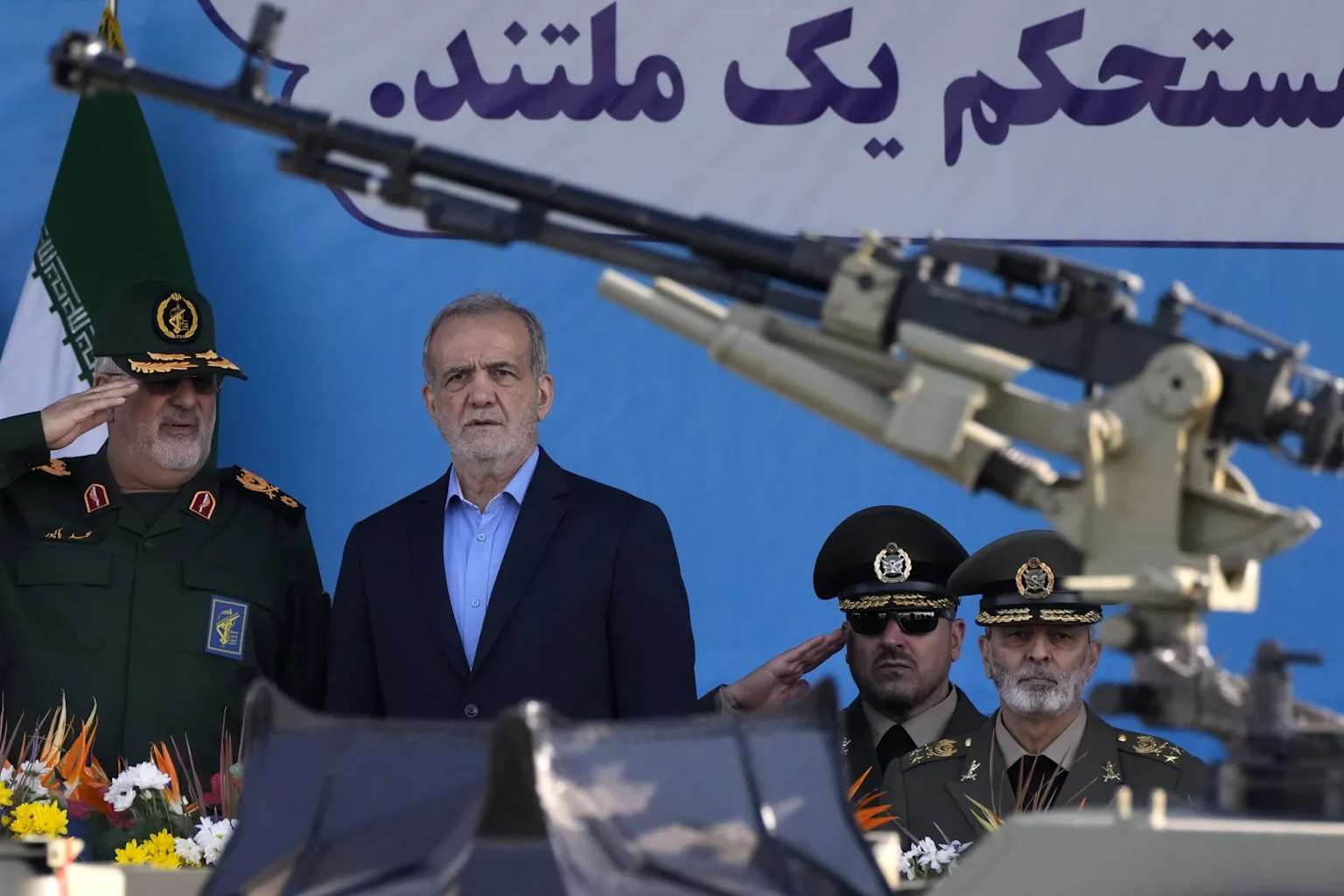
wsjwsjwsjEven as Iranian diplomats engaged with Washington over a memorandum of understanding signed in June, Supreme Leader Mojtaba Khamenei was quietly reorganizing Iran's military and security apparatus for a broader confrontation, according to a Wall Street Journal News Corp investigation citing Iranian and Arab officials.wsj
The dual-track approach has widened what the Journal describes as "an enormous gulf" between how Washington and Tehran perceive the current stage of the war that began on February 28 with joint US-Israeli strikes that killed Khamenei's father, former Supreme Leader Ali Khamenei.britannica+1
Over the past two months, Khamenei positioned seven key security leaders across revamped military institutions. Mohsen Rezaei, who led the Revolutionary Guard during the 1980s Iran-Iraq war, was named secretary of the Supreme National Security Council. Veteran Hossein Taeb was returned to lead the Basij, tasked with transforming the volunteer force into a "popular intelligence network." New Revolutionary Guard Commander Ahmad Vahidi was formally ordered to pursue "powerful offensive operations against the enemy."wsj
The reorganization aligns with what the Critical Threats Project at the American Enterprise Institute documented on August 10, noting that Khamenei instructed Armed Forces General Staff Chief Major General Ali Abdollahi to "complete the process" of merging military command structures under unified Revolutionary Guard influence.criticalthreats+1
Arab intelligence officials intercepted communications showing the Revolutionary Guard sending commanders to Yemen, Iraq, and Lebanon to coordinate stepped-up attacks, according to the Journal. Plans reportedly include pre-emptive strikes, sabotaging internet cables in the Persian Gulf, creating political unrest in countries with Shia communities, and potentially ground operations in Kuwait.wsj
The Revolutionary Guard used the calm created by the June 17 memorandum of understanding to lay this groundwork, the officials said. The result has been escalating violence through July and August, including Houthi attacks closing the Bab al-Mandeb Strait to Saudi shipping, drone strikes on Saudi oil facilities from Iraqi militias, and Iranian ballistic missile strikes on US forces in Jordan that killed three American servicemembers.wsj
Revolutionary Guard spokesman Brigadier General Hossein Mohebbi confirmed publicly in July: "We took full advantage of the ceasefire period. We enhanced our capabilities, accelerated our missile production rate and improved missile accuracy."wsj
The divergence between diplomacy and war preparations has blocked progress on reopening the Strait of Hormuz. Iran and Oman recently agreed on shipping routes through the strait, but Iranian Foreign Minister Abbas Araghchi said this "does not constitute negotiation" with the United States. Meanwhile, the Revolutionary Guard has continued attacking vessels, with six UAE ships struck over recent weeks.allisraelnews+2
IRGC adviser Mohammad Reza Naghdi told PBS NewsHour that Iran could prolong the war into the next US presidential term to impose costs and deter future attacks. "The number of missiles we manufacture every day is more than the number we launch," he said.iranintl
Mehdi Mohammadi, a strategic adviser on Iran's negotiating team, described the current stalemate as "the calm before the storm," citing a "generational project for blood vengeance" for the killing of the elder Khamenei. "Iran is prepared for the great confrontation," he said.wsj