Newsletter Subscribe
Enter your email address below and subscribe to our newsletter
[forminator_form id="25163"]

All voices matter
FXStreetTRADING ECONOMICSS&P Global Market IntelligenceFlash PMI data released on Thursday painted a cautiously optimistic picture of European manufacturing, with both the United Kingdom and Germany reporting readings above the 50-point threshold that separates expansion from contraction.
The S&P Global UK Manufacturing PMI eased to 51.5 in August from 51.9 in July, according to flash data, marking a five-month low but still beating market expectations of 50.9. The reading extends the sector's streak of expansion to a tenth consecutive month.tradingeconomics+2
Manufacturing output growth slowed to a marginal pace as precautionary stock-building cooled, while geopolitical uncertainty and elevated cost pressures constrained activity. Input cost inflation remained elevated, largely due to higher energy prices and supply disruptions linked to the Middle East conflict, pushing up fuel surcharges, transportation costs, and raw material prices. However, business optimism improved, supported by hopes for a turnaround in broader economic conditions.TRADING ECONOMICS
S&P Global noted that the broader UK economy picked up pace in August, with the headline Composite PMI Output Index rising to 52.5 from 52.2 in July.S&P Global Market Intelligence
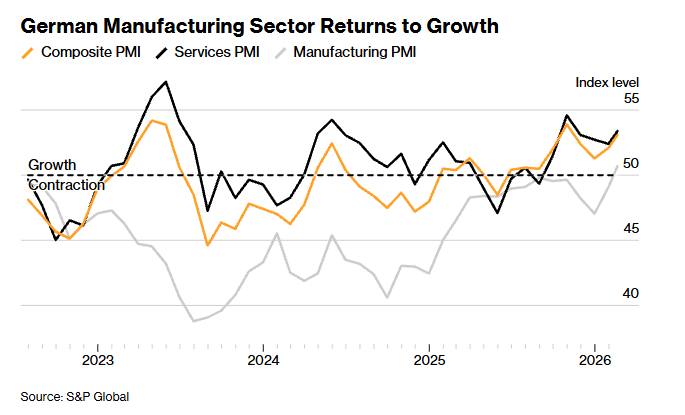
Germany's HCOB Manufacturing PMI jumped to 54.1 in August from 52.2 in July, well above the consensus forecast of 52.0, as reported by FXStreet. The reading represents the strongest manufacturing expansion in Germany in recent months and follows a July performance that had already marked a robust start to the third quarter.investinglive+2
The outperformance in manufacturing contrasted with weakness in services. Germany's Services PMI fell to 48.5 from 49.8, missing the expected 50.1 and signaling contraction. The composite PMI slipped to 51.0 from 51.3, suggesting that manufacturing strength partially offset the drag from services.FXStreet+1
The two readings together suggest European manufacturing retains momentum heading into autumn, even as headwinds persist. For the UK, supply chain disruptions and input cost inflation remain constraints on growth, while Germany faces a disconnect between a thriving factory sector and a struggling services economy. Analysts and policymakers will watch closely whether Germany's manufacturing rebound — driven by strong export sales and output growth — can sustain itself, and whether the Bank of England's monetary policy stance will shift in response to the UK's steady but unspectacular expansion.Investinglive