Newsletter Subscribe
Enter your email address below and subscribe to our newsletter
[forminator_form id="25163"]

All voices matter
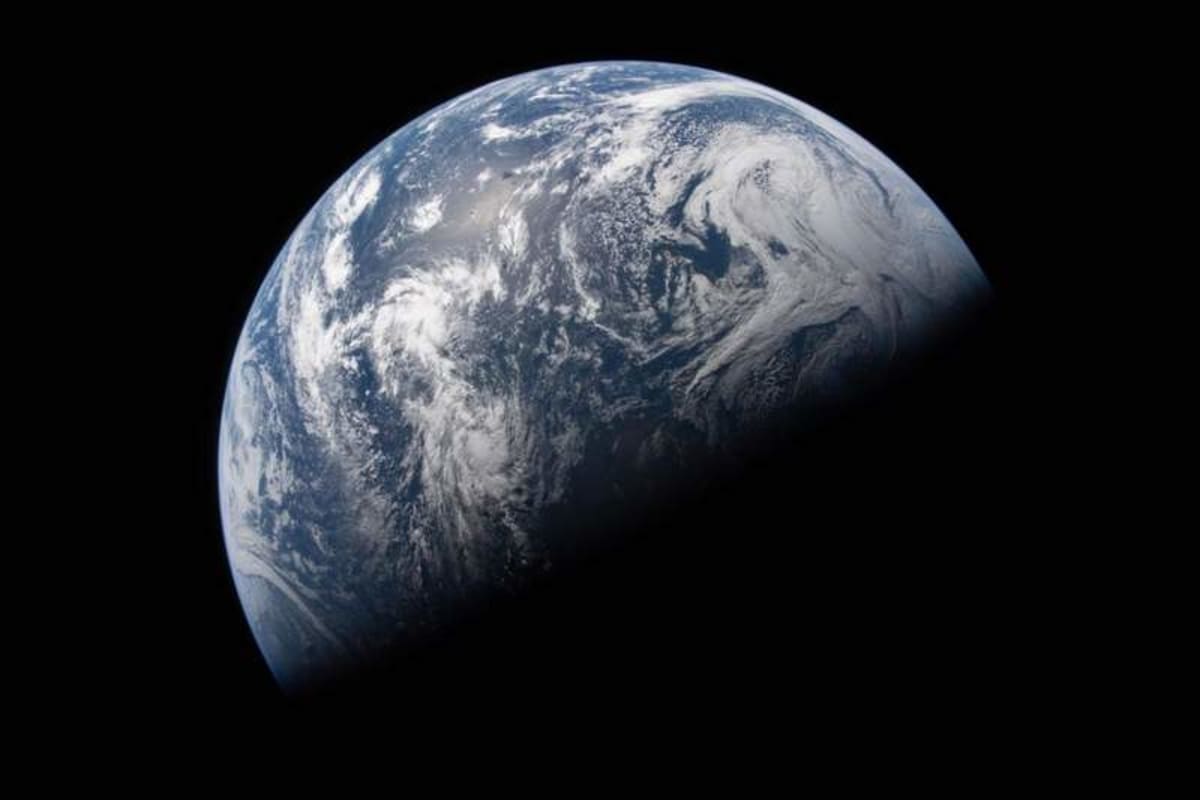
gizmodo.gizmodo.gizmodo+1.Earth's solid outer shell repeatedly reoriented relative to its spin axis in fast bursts during the Jurassic and Cretaceous periods, according to a study published Thursday in Science. The researchers found the evidence in records of ancient sea-level change.science+1
The study challenges a long-standing view that this process, called true polar wander, was minor or always slow. "These findings refute the view of TPW as negligible or persistently slow," the authors wrote. They argue it should be treated "as an episodic control on sea level change and likely other global environmental and biological dynamics".miragenews+1
During true polar wander, the crust and mantle shift together relative to the spin axis. The core and the planet's climate belts stay tied to that axis. This is different from movement of the magnetic north pole, which is driven by liquid iron in the core. The effect is that whole regions can drift toward or away from the equator.radiomitre.cienradios+1
The process is hard to separate from ordinary plate tectonics, and paleomagnetic studies have produced conflicting results. The team, led by University of Oslo geoscientist Mathew Domeier, took a different approach. Earth's rotation keeps a bulge of ocean water at the equator. When the solid surface slides, the oceans adjust unevenly, so some coastlines flood while others are left exposed. The researchers looked at maps of flooded and exposed land at 10-million-year intervals across the past 320 million years. They then used statistical models to find patterns that match rapid polar wander.miragenews+2
The analysis found four intervals with strong signals:gizmodo+1
The results broadly match earlier paleomagnetic and plate-motion studies. The data also cut against some existing ideas. The study found little evidence of rapid polar wander for most of the Cenozoic. It found no strong signal that polar wander drove the northward movement of the supercontinent Pangea in the late Carboniferous and Permian. The authors said the Jurassic signal needs more study.miragenews+1
Even "rapid" episodes unfolded over millions of years. As Radio Mitre noted, one degree per million years can't be felt, but over 10 million years it adds up to enough to change the latitude of whole continents. True polar wander is still happening today at about 10 centimeters a year, according to the paper.radiomitre.cienradios+1
The study does not go into detail about effects on life. The authors suggest similar fast episodes probably occurred earlier in Earth's history too. "They further imply that similar episodes of fast true polar wander are likely to have punctuated earlier intervals of Earth history," they wrote.gizmodo