Newsletter Subscribe
Enter your email address below and subscribe to our newsletter
[forminator_form id="25163"]

All voices matter
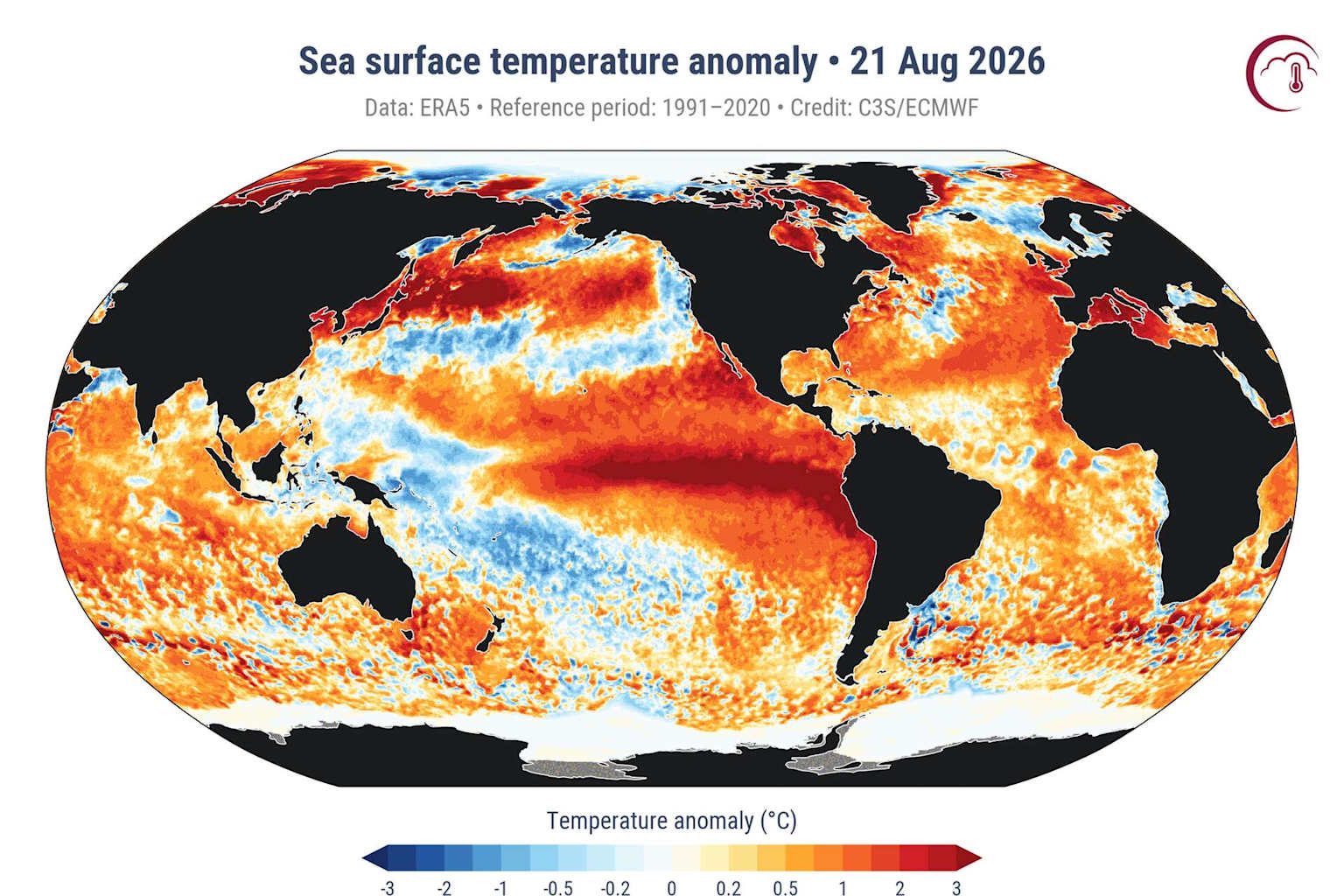
sfchroniclenature+1sfchronicle+1Global sea surface temperatures reached their highest level in recorded history on Friday, as a surging El Niño compounds decades of human-caused warming to push the planet's oceans into uncharted territory.
The average sea surface temperature hit 21.1 degrees Celsius (70 degrees Fahrenheit), breaking the previous record of 21.09 degrees Celsius set multiple times in early 2024, according to the Copernicus Climate Change Service. The measurements, based on data from satellites, buoys, and ships between 60 degrees south and 60 degrees north latitude, represent the warmest day of ocean surface temperatures since daily records began in 1979 and the warmest month since at least 1854.sfchronicle
The record comes as a historically powerful El Niño continues to strengthen in the Pacific. Nature reported in July that the 2026 event is on track to be the largest in at least 150 years, with Britain's Met Office predicting it will peak at more than three degrees above average — "unheard of in modern climate records," according to Adam Scaife, head of long-range forecasting.gulftoday+1
"If this continues on the current trajectory, this is going to be an El Niño event that is without precedent," said JP O'Brien, a climate scientist at Lawrence Berkeley National Laboratory.sfchronicle
Climate Central, a nonprofit research organization, emphasized that "although El Niño events often provide a temporary boost to global temperatures, these new global climate records are ultimately being driven by human-caused climate change." The ocean has absorbed more than 90 percent of the excess heat from greenhouse gas emissions.sfchronicle
The record ocean heat is already reshaping weather patterns worldwide. The Eastern Pacific hurricane season has been supercharged, with Category 5 Hurricane Genevieve in late July and Tropical Storm Lala devastating Hawaii's Big Island last week. Meanwhile, drought grips Panama, Puerto Rico, and the U.S. Virgin Islands.cbc+1
Josh Willis, a climate scientist at NASA's Jet Propulsion Laboratory, warned that the full effects are only beginning. "El Niño's impacts are going to be large and broad across a huge area," he said. "Get ready, because it's going to be a wild ride".cbc
Scientists predict the final months of 2026 will break global heat records, with extremely high temperatures continuing through 2027, which will almost certainly become the warmest year ever recorded.sfchronicle+1