Newsletter Subscribe
Enter your email address below and subscribe to our newsletter
[forminator_form id="25163"]

All voices matter
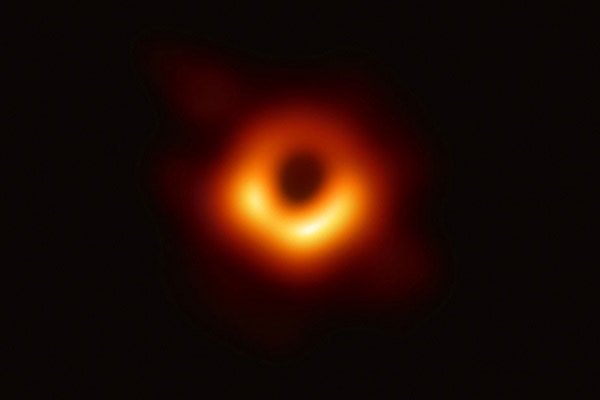
nature.com.theconversation.com.nature.com+1.A four-person team at CSIRO, Australia's national science agency, reprocessed the original Event Horizon Telescope (EHT) data from scratch and recovered the same ring-shaped black hole shadow first shown in 2019. The result, published November 11 in Nature, answers researchers who argued that the ring was an artifact of image processing. It also strengthens the evidence that Einstein's general relativity accurately describes space-time around a black hole, New Scientist reported.newscientist.com+1
The paper's authors are Samuel Lai, Nithyanandan Thyagarajan, O. Ivy Wong and Foivos Diakogiannis. They report that their reconstruction "unequivocally" reproduces a ring with an angular diameter of 42.2 ± 1.5 microarcseconds. That size corresponds to a black hole of about 6.5 billion solar masses, seen roughly 20 degrees from its approaching jet, according to the study.nature.com
The EHT links radio dishes around the world into a virtual telescope the size of Earth. But it has only a handful of stations, and the atmosphere distorts signals at its very short wavelengths. "It has only a handful of telescopes spread across the globe, which leaves large gaps in its measurements that the imaging algorithm has to fill in," Thyagarajan told New Scientist.newscientist.com
The standard method combines measurements from pairs of telescopes. The CSIRO team instead used quantities called "closure invariants," built from three telescopes at a time, which cancel out errors from the instruments and the atmosphere. They then fed this data into a machine-learning imaging method called GenDIReCT, which they trained on everyday pictures of things like cats, dogs and cars so it "had no idea what a black hole looked like," Lai and Thyagarajan wrote in The Conversation. The team locked its procedure before running it on the M87 data on December 4, 2025. A second method based on traditional statistics produced the same structure.theconversation.com
Starting in 2022, Kobe University astrophysicist Junichiro Makino and his colleagues applied one of the EHT's own techniques with slightly different assumptions. Their result showed a glob of radio emission rather than a ring, Nature's news team noted. The new images match the EHT results in diameter and overall orientation. They differ in finer details such as ring width and how brightness varies around the ring, the authors said.nature.com+1
"This is the first truly independent validation of the EHT image, an important step in the scientific process," Lai said in a CSIRO statement, adding that the task was "like standing in your backyard and trying to take a photo of a doughnut on the moon."phys.org
EHT Collaboration director Laurent Loinard welcomed the study. "It is extremely gratifying to see that GenDIReCT, an elegant, entirely independent method, recovers the ring structure of M87* across several years, in excellent agreement with the EHT Collaboration's published results," he said.csiro.au