Newsletter Subscribe
Enter your email address below and subscribe to our newsletter
[forminator_form id="25163"]

All voices matter
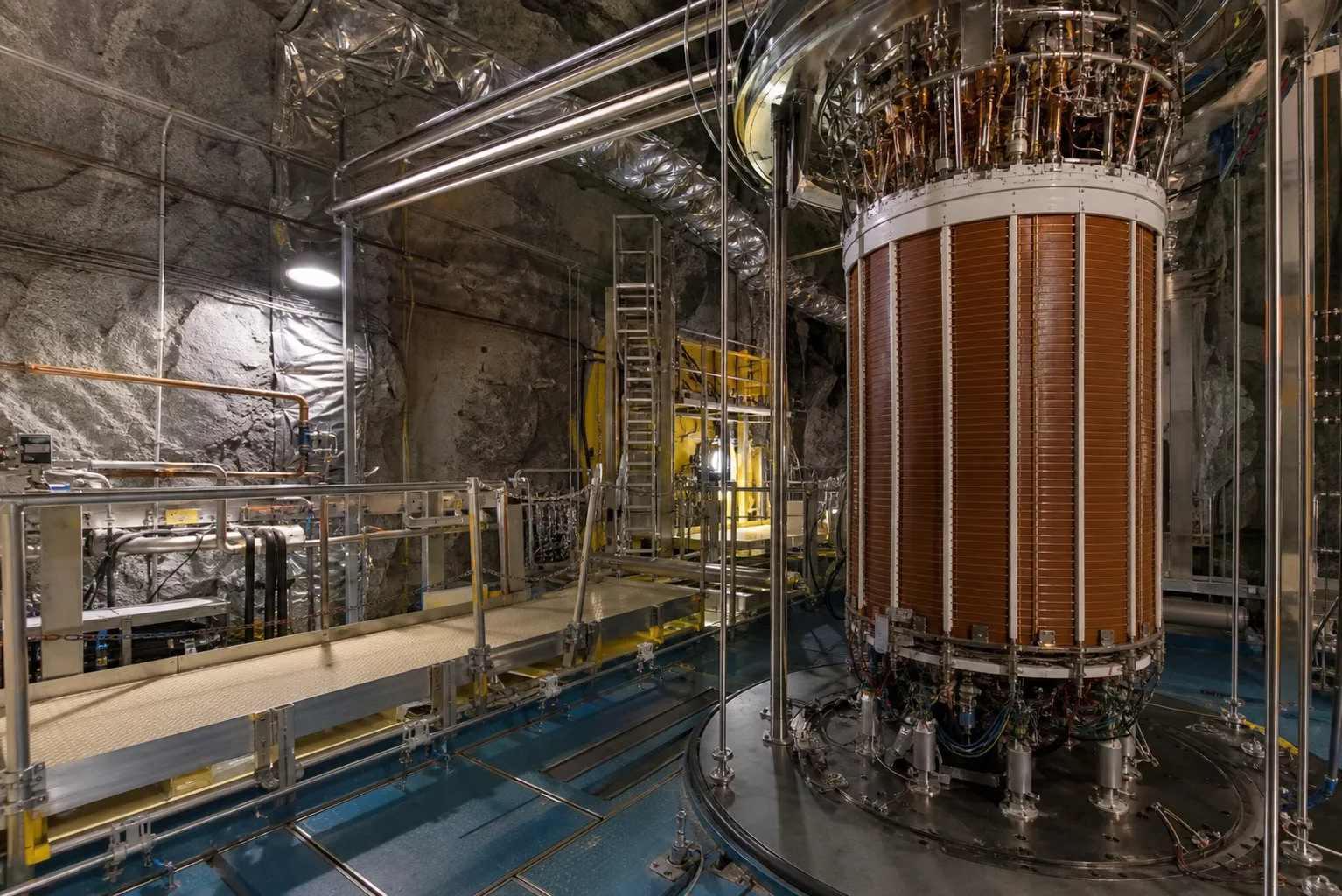
dwthenewworldthenewworldOn September 1, 2026, scientists working with the LUX-ZEPLIN dark matter detector in South Dakota reported a single, unexplained particle interaction that some physicists believe could represent the first direct trace of dark matter — the invisible substance thought to make up roughly 85% of all matter in the universe.dw+1
The international team of 250 physicists stopped short of calling the observation a discovery, but the finding has sent ripples through the particle physics community and reignited debate over how best to search for reality's missing ingredients.newscientist+1
The LUX-ZEPLIN detector, known as LZ, sits 1.5 kilometers underground in the former Homestake Mine at the Sanford Underground Research Facility. Its heart is a chamber filled with ultra-pure liquid xenon, monitored constantly for faint flashes of light and pulses of electric charge that would signal a collision between a passing particle and a xenon nucleus.realnoevremya+1
After years of silence, the detector registered a single energy burst at 248 kilo-electronvolts — far stronger than expected for a standard interaction and too powerful, researchers say, to be easily dismissed as background noise. The probability that the detection is merely a random signal is roughly one in 200, according to Philip Ball writing in The New World. While that may sound encouraging, particle physicists typically require odds of one in several million before claiming a confirmed detection.thenewworld+1
If the event was caused by a dark matter particle — specifically a weakly interacting massive particle, or WIMP — it presents a paradox. As New Scientist reported, the signal appears to have derived from a more complex interaction than previously envisaged. NYU cosmologist Neal Weiner noted that such a high-energy collision would normally be accompanied by many lower-energy events, of which there has been no sign. This could suggest dark matter is itself a composite of several types of unknown particles.newscientist+1
"There's not a lot you can say with one event… we are left waiting for more data," Weiner said.thenewworld
The LZ team is continuing to collect data, aiming for 1,000 days of clean observations before drawing firm conclusions. Other dark matter detection experiments around the world are now expected to look at the same energy range to see if they can corroborate or rule out the finding.realnoevremya+1
Public interest in the facility is surging. A free event titled "An Evening With America's Underground Lab," scheduled for September 17 in Sioux Falls, sold out quickly, prompting organizers to add a livestream and waitlist. The evening will feature Dr. Kevin Lesko of the University of Oxford, a leading LZ researcher.siouxfalls
For now, the physics world watches and waits — aware that a single flash of light in a vat of liquid xenon could mark either a statistical fluke or the beginning of an answer to one of science's oldest open questions.